SIEM Deployment: Implementation and Best Practices
Security information and event management (SIEM) deployment involves setting up and configuring a system to aggregate security event logs across an organization’s infrastructure.

Security information and event management (SIEM) is integral to the current trend in modern cybersecurity, assisting an organization in maintaining a platform to collect, analyze, and respond to real-time security threats. This, in turn, mandates detailed planning in terms of infrastructure integration as well as deploying the best measures for ongoing management.
The following section elucidates the optimal procedure to undertake the proper SIEM deployment as well as guidelines for performance improvement.
 What Is SIEM Deployment?
The process for the deployment of SIEM involves setting up and configuring a system that would collect security event logs within the infrastructure of an organization. SIEM tools correlate such events, give real-time monitoring, and allow immediate detection of a potential threat by security teams. This highlights all aspects of a network for potential anomalies that might indicate cyberattacks or breaches.
 On-premise vs. Cloud-Based SIEM Deployment
Organizations must decide whether to deploy SIEM on-premises or to use a cloud-based solution. Both approaches have distinct advantages and drawbacks:
- On-premise SIEM: On-premise SIEM deployments are more controlling and customizable but require a lot of resources. The organization needs to provide infrastructure, including hardware and storage and must have an in-house team to manage and maintain the system. Larger organizations with specific compliance or data sovereignty needs would benefit largely from using on-premises solutions.
- Cloud-based SIEM: Cloud-based SIEM solutions are flexible and scalable. In cloud deployments, there is no need for physical infrastructure, and the providers manage updates and scaling. This solution is much cheaper for smaller organizations or those that need to scale rapidly. However, in some industries, strict data privacy creates compliance issues. The flexibility to scale up quickly without large upfront investments makes cloud SIEM more attractive.
Infrastructure Requirements For SIEM Deployment
To ensure a smooth deployment, it’s crucial to assess the organization’s infrastructure needs. Both on-prem and cloud-based SIEMs require the following considerations:
- Storage and bandwidth: SIEM systems are data collectors and processors that require huge storage capacity and high bandwidth connections. Ideally, it would support logs from firewalls, Intrusion Detection Systems(IDS), and endpoints.
- Processing power: Real-time data analysis requires much processing power. Organizations should plan for the number of events processed per second to ensure that the SIEM system can run without delay.
- Scalability: Increased volumes result in increases in the load imposed on the SIEM system. A scalable SIEM system can tackle such scenarios with minimal lead time.
Planning For SIEM Deployment
Effective SIEM deployment begins with detailed planning. Organizations should take the following steps:
- Assess organizational needs: Every organization has unique security requirements. It’s essential to understand what the SIEM system needs to achieve, such as compliance with regulations like GDPR or PCI-DSS, improved incident response service, or enhanced threat detection.
- Define objectives and goals: To set clear objectives, you must understand the needs of the organization. Does the organization need to have better visibility into the internal threats, faster incident response times, or perhaps more automated security workflows? These goals will shape the configuration of the SIEM system.
- Allocate budget and resources: Technology and human resources investments are pretty high in the case of SIEM systems. You must have a budget for initial deployment, followed by recurring ones: staff training, periodic updates of the software, and scaling up. SIEM’s value addition occurs only after many years as it is a system that is constantly monitored and updated. Hence, one will always be planning their operational cost.
Preparing for SIEM Deployment
Preparation is key to a successful deployment. Organizations should follow these steps:
- Set up a deployment team: SIEM deployment requires collaboration between IT, security, and compliance teams. One must create a dedicated team responsible for the deployment, configuration, and maintenance of the SIEM system.
- Train staff and develop their skill sets: SIEM tools are complex in nature and require proper training in management. Therefore, the deployment team needs to be well-equipped in SIEM system handling, data collection, use case creation, and alert response. One must provide continuous training to keep the team abreast of new features and emerging threats.
- Identify data sources: Identify the most critical data sources, which include firewalls, antivirus, Intrusion Detection Systems(IDS), and network logs. The more detailed the data inputs, the higher the SIEM’s capabilities are in identifying potential threats.
- Network and system configuration requirements: Ensure the network is configured to send logs to the SIEM. Proper network configuration ensures that all points of data are captured in such a way that they do not overwhelm the system. Ensuring secure connections between endpoints and SIEM can prevent security vulnerabilities.
Implementation Phases
SIEM deployment involves several stages, each requiring careful management:
- Initial setup and configuration: The installation of SIEM software or hardware includes not just the deployment but also a comprehensive configuration that accommodates unique security needs across the organization. It allows for custom dashboards that provide real-time visibility on all the key security metrics, configures the threshold for the alerts, and sets up notifications according to past incidents and security goals. Those custom elements make the SIEM solution proactive, making it better for faster response and supporting long-term security strategies.
- Integration with existing systems: This would require the integration of the SIEM system with the organization’s entire infrastructure, including components, such as firewalls, Intrusion Detection Systems (IDS), Intrusion Prevention Systems (IPS), endpoint security tools, and network monitoring systems, among other elements.
- Data collection and normalization: SIEM systems collect logs from different sources which exist in varying formats. Data normalization ensures the same format is given to the logs so that they can be processed by the system for analysis.
- Use case and policy creation: Use cases define the patterns of activity that are recognized by the SIEM as threats. Organizations are required to develop use cases that are customized for the security needs of their specific organization. For example, a financial organization might build a use case based on detecting unusual attempts to log in to banking applications.
- Testing and validation: After integration and configuration, some tests should be run to validate the performance of the system. Validation should be done to confirm if an alert is sent out correctly and if the SIEM is sensitive enough to normal threats as well as unusual ones. Configuration changes should be made according to the test output.
Common Challenges in SIEM Deployment
SIEM deployment can be complex and is often accompanied by various challenges:
- Data overload and noise: SIEM systems process enormous amounts of data, sometimes leading to false positives or irrelevant alerts. Organizations must fine-tune their SIEM rules and filter out unnecessary data to focus on actionable intelligence.
- False positives and negatives: This makes it quite difficult to set up the SIEM system so that false positives are decreased and actual threats do not pass through. Upgrades to correlation rules and feeds in threat intelligence enhance the precision.
- Scalability issues: The SIEM system will need to process greater volumes of data as an organization grows. If a system is not scalable, it can become saturated by growth, which can deteriorate the performance level of such a system. Solutions such as cloud-based models or hybrids can help control scalability issues.
- Integration with other security tools: One of the significant challenges is ensuring that this SIEM system will coexist with other security tools, such as firewalls and Endpoint Detection and Response (EDR) platforms. Incomplete data analysis or missed threats may be a result of integration gaps.
Best Practices for Successful SIEM Deployment
To overcome challenges and ensure a smooth deployment, follow these best practices:
- Start small and scale gradually: You will have to start by implementing SIEM on the reduced subset of infrastructure, like critical servers or specific departments, to give you enough time to fine-tune the system before full-scale deployment.
- Ensure comprehensive logging: Capture logs from all sources that are relevant, including firewalls, servers, applications, and intrusion detection systems. The more comprehensive logging is, the more data SIEM has, in order to detect threats effectively.
- Regularly update use cases: As such, the threat landscape is constantly in motion, so use cases and correlation rules have to be updated regularly; otherwise, your SIEM system will not always detect new types of threats.
- Incorporate threat intelligence: You can use external threat intelligence feeds to enrich the ability of your SIEM to detect advanced threats. Comparing internal events with known patterns of threats will make your SIEM generate better alerts, both in terms of time and accuracy.
 Post-Deployment Maintenance
A successful SIEM deployment is not a “set it and forget it” process. It needs to be maintained constantly to be effective. After the SIEM system has been deployed, follow these best practices to keep it current:
- Regular policy reviews: Periodically review and update your SIEM rules and policies. Because new threats keep coming up, your system should be up-to-date to respond accordingly.
- Ongoing training: Continuously educate your team on the new features and best practices in SIEM. Continuous education ensures that your team remains qualified to manage and optimize the system.
- Performance monitoring: Monitor the performance of your SIEM system regularly to ascertain whether it is processing the data efficiently. Identify and scale resources for bottlenecks.

The Industry’s Leading AI SIEM
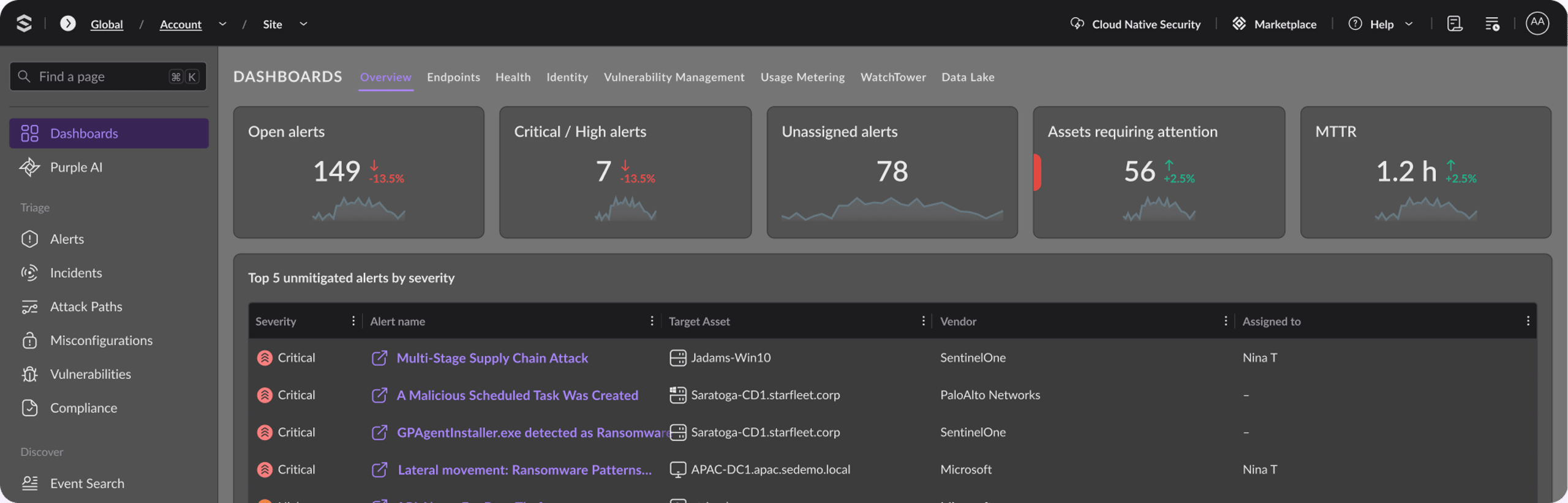
Target threats in real time and streamline day-to-day operations with the world’s most advanced AI SIEM from SentinelOne.
Strengthen Your Security Posture With SIEM
It is a daunting yet essential task for any serious organization looking to secure its cybersecurity through the installation of an SIEM solution. Right planning, cautious implementation, and subsequent support are what make all the difference, ensuring that SIEM delivers real-time detection, effective responses, and response to threats as promised. Efficiency is maximized when organizations start small and use adequate data collection while updating the rules about threat detection regularly.
FAQs
On-prem SIEM has better control but requires a lot of infrastructure. Cloud-based SIEM is scalable and much easier to manage since the provider handles updates and maintenance.
The time required to deploy will depend on the size and complexity of an organization. Smaller deployments might take only a week or two, while large or complex infrastructures may take months.
SIEM should integrate data from firewalls, intrusion detection/prevention systems, servers, endpoint protection tools, and application logs to provide comprehensive coverage.
Policies, use cases, and threat intelligence feeds must change with the changing threats. We need to continue to monitor performance and train the staff continually.
One way you might avoid false positives is by tweaking alert thresholds, and correlation rules, and including threat intelligence. The only way you’d truly be able to keep accuracy would be to review and adjust those settings constantly.
Discover More About Data and AI




Ready to Revolutionize Your Security Operations?
Discover how SentinelOne AI SIEM can transform your SOC into an autonomous powerhouse. Contact us today for a personalized demo and see the future of security in action.