What is Behavior Monitoring? Methods & Strategies
The article explores the importance of behavior monitoring in cybersecurity, features, and implementation strategies. Learn how to select the right tools to safeguard your organization against threats.

Cyber attack is no longer a ‘what if’ case for businesses and organizations. Unless accompanied by robust protective measures, the company might be playing a victim role in devastating attacks that convey sensitive data compromise apart from disrupting crucial operations. To avoid such events, behavior monitoring has come as a proactive solution in dealing with such challenges. This allows organizations to continue monitoring activities over the network to detect and thwart threats before they become grave security threats.
This article discusses the role of behavioral monitoring in cybersecurity, including key features and how to implement strategies and integrate them with other security controls. The article will also guide you in choosing appropriate tools and discuss what the future holds for behavior monitoring in strengthening your organization’s defenses.
 What is Behavior Monitoring?
Behavior monitoring is a cybersecurity technique for tracking and analyzing user, application, and device behaviors across an IT environment. It looks for any deviation from baseline rule-of-normal activity that can be indicative of a security threat. This enables an organization to detect and respond to threats before too much damage is caused. Behavior monitoring systems can thus use advanced analytics and machine learning to trace even the slightest changes in behavior that might easily go unnoticed.
Key Features of Behavior Monitoring
- Real-Time Analytics – Real-time analytics in behavior monitoring is essential as it detects anomalies instantly. Organizations will be better positioned to identify and respond on time to potential threats by constantly criticizing data from all endpoints, networks, and applications. The ability to detect patterns and anomalies is indicative of security breaches, which reduces the reliance on manual monitoring.
- Endpoint Monitoring – Endpoint monitoring is centered on the activity of specific users and devices. This includes analysis of user activities, such as login time, file access, and application usage, that behavior monitoring systems can operate to recognize suspicious behavior that may point to a possible security risk. Also, device Integrity checks guarantee that any connected devices in the monitored network have not been exploited by unauthorized changes or malware. This includes identifying unusual software installations, system setting changes, or unexpected communication with external servers.
- Network Security – Behavior monitoring is critical to network security. It analyzes traffic for unusual patterns, such as unexpected data transfers, communication with unknown IP addresses, or unusual spikes in traffic volume. Integrating behavior monitoring with traditional intrusion detection systems enhances the ability to detect and respond to potential threats. This allows organizations to analyze behavior across a network in search of malicious activity, which can then be identified and blocked before sensitive data is compromised.
- Malware Protection – Traditional protection from malware relied upon signature-based detection, which recognized only known threats. Conversely, monitoring behaviors enable the detection of new and unknown malware in real time through file and application activities. In the event of any detection of the propensity for suspicious behavior, behavior monitoring systems can automatically quarantine or block affected files or processes from propagating themselves over the network in case malware has infected them.
Why Behavior Monitoring is Important in Cybersecurity?
Behavior monitoring in cybersecurity is significant for several reasons. This solution contributes to a proactive strategy for threat detection as organizations can identify and deal with potential threats before causing significant damage. This becomes essential in a threat landscape where cyberattacks are continuously becoming sophisticated and difficult to detect with traditional security measures.
Behavior monitoring also allows organizations to comply with some regulatory requirements. Since many industries have strict regulations over data security, behavioral monitoring contributes to compliance by giving a continuum of monitoring and reporting. Finally, behavior monitoring improves the general security posture by integrating other security measures within endpoint protection, network security, intrusion detection systems, etc. This gives an all-rounded approach to cybersecurity and, thus, a way for organizations can protect their sensitive data and maintain business continuity.
Strengths of Behavior Monitoring
1. Proactive Detection of Threats
Through constant monitoring of user and network behavior institutions can easily nip any potential threat in the system well before it has the power to wreak further havoc. It is proactive, making it very efficient for insider threat identification and zero-day attacks.
2. Reduced Response Time
As soon as the behavior monitoring system detects any suspicious behavior, it will trigger an alert and initiate automated responses. This reduces the time needed to respond to the security incident and its impact on the organization.
3. Enhanced Incident Response
Behavior monitoring complements other security measures, such as endpoint protection, network security, and intrusion detection systems. This ensures holistic cybersecurity, safeguarding sensitive information, and ensuring business continuity.
4. Improved Compliance
Different regulations require continued monitoring of the IT environment regarding the protection of data. Behavior monitoring provides the relevant organizations with the necessary tools for continuous monitoring, hence saving them from related costly fines and penalties.
Implementing Behaviour Monitoring
To implement behavior monitoring, an organization or business needs to go through various steps. This includes identifying monitoring goals and choosing the right tools. The following segments will guide how to implement behavior-based intrusion detection in cyber security strategy plans.
1. User Behavior Analytics (UBA)
UBA is a method that focuses on analyzing the behavior of individual users. By monitoring login patterns, file access, and other user activities, UBA can identify unusual behavior that may indicate a security threat. UBA systems set up baselines of normal user behavior through machine learning algorithms and then detect deviations. This allows very early detection of potential insider threats or compromised accounts.
2. Network Behavior Analysis (NBA)
NBA or Network Behavior Analysis focuses on monitoring network traffic for unusual patterns. By analyzing data flows, communication with external servers, and other network activities, NBA can identify potential security threats. NBA can be integrated with conventional intrusion detection systems to increase its potential to detect and respond to network-based threats.
3. Application Behavior Monitoring
This monitors application behavior in an IT environment. Such behavior monitoring systems can identify unusual activity that might indicate a security threat by observing application usage. Monitoring application behavior helps detect and prevent application-level attacks, such as SQL injection and cross-site scripting.
Behavior Monitoring Strategies in Cybersecurity
Behavior monitoring methods are important in detecting and responding to emerging threats in real-time. Understanding user and network behavior is crucial for setting a proactive security posture and mitigating risks before they escalate.
Describe how to develop a strategy for monitoring behavior, starting by identifying all the critical assets being used. These include sensitive data, critical applications, and network infrastructure. After identifying the key assets, it is followed by establishing their baselines of normal behavior. These shall form a basis against which anomalies are to be detected.
Choosing the Right Tools
Organizations should understand how to choose the appropriate behavior-monitoring tools to enhance cybersecurity within the organizational framework. Ranging from tools that provide features and capabilities used for threat detection, response automation, or analytics in real-time, the table below presents the leading tools available on the market today by comparing them:
| Tool | Features | Pros | Cons |
|---|---|---|---|
| SentinelOne | Real-time analytics, automated threat detection | Detailed threat intelligence, user-friendly interface | Resource-intensive |
| Splunk | Advanced data analytics, machine learning | Highly customizable | Complex to set up and manage |
| Darktrace | AI-driven anomaly detection, automated response | Cutting-edge technology | Significant investment required |
| IBM QRadar | Real-time threat detection, integration capabilities | Highly scalable | Expensive for smaller organizations |
| Palo Alto Networks Cortex XDR | Unified approach to cybersecurity, endpoint protection | Comprehensive protection | Requires significant expertise to manage |
1. SentinelOne
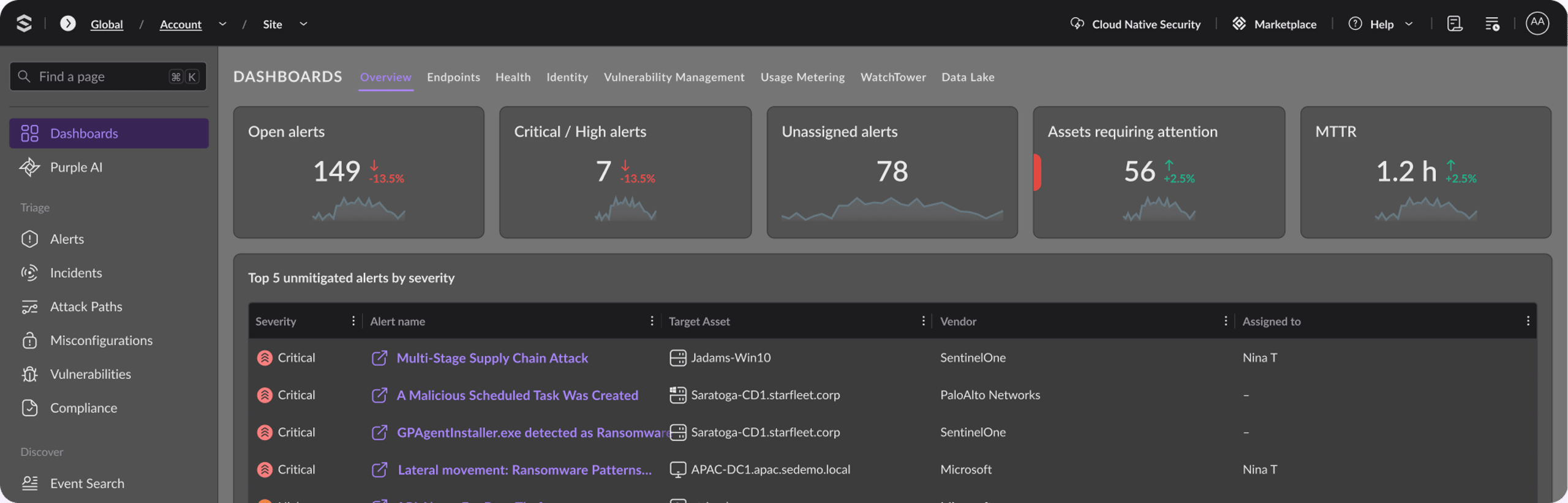
SentinelOne Singularity XDR is a widespread behavior monitoring solution that integrates well with endpoint protection, network security, and intrusion detection systems to give real-time analysis. The tool intends to provide real-time analytics and automated threat detection so that organizations can respond quickly. This software delivers granular threat intelligence to the business, identifying and mitigating risks before they become full-blown disasters. SentinelOne’s tool is among the best choices for organizations with a user-friendly interface and complete threat-detection capabilities.

Singularity™ Platform
Elevate your security posture with real-time detection, machine-speed response, and total visibility of your entire digital environment.
2. Splunk
Splunk is a powerful tool for highly advanced data analytics and machine learning capabilities. It also provides real-time insight into user and network behavior; hence, behavior monitoring within it is perceived as quite significant. At the same time, the high level of customization offered in Splunk makes it possible for companies to tailor this tool to their specific needs. Its configuration and management, however, may get complicated and require additional expertise. Organizations looking for a high degree of customizability with robust analytics should look to Splunk—provided that the core requirement is that they have the resources to handle its complexity.
3. Darktrace
Darktrace relies on Artificial Intelligence to track different behaviors within an organization’s Information Technology setup. It tends to be brilliant at spotting potential threats before they do too much damage. In its AI-driven anomaly detection and automated response, Darktrace is genuinely one of a kind in behavior monitoring. With this investment, businesses will have top-notch technology working for them, though it may prove to be an intensive investment. This tool is needed in any organization that values being ahead of innovation in cybersecurity.
4. IBM QRadar
IBM QRadar provides a security intelligence platform that encompasses behavior monitoring, threat detection, and incident response. It scales out of the box, making it suitable for large enterprises and smaller entities with expansion plans. Its integration with other security products from IBM enhances its overall effectiveness. However, its price tags may be high for some smaller organizations. When you search for a scalable and deeply integrated security solution, IBM QRadar will be hard to beat when enterprises are already using other IBM products.
5. Palo Alto Networks Cortex XDR
Correlating behavior monitoring with endpoint protection, Palo Alto Networks Cortex XDR uses a unified approach to cybersecurity. It detects threats in real time and is capable of articulated automatic responses. This program ought to protect an IT environment from unwanted presences. Businesses that use this system would be working on complete security networking; however, the administrative expertise required for this tool may be very high. Such infrastructure or devices are more suitable for large organizations with sophisticated requirements regarding their security architecture.
Integrating Behavior Monitoring with Other Security Measures
Behavior monitoring should be associated with endpoint protection, network security, intrusion detection systems, and other mitigating controls to offer an all-around cyber security approach. It will ensure that, in case of any threat arising, integration with incident response plans ensures timely detection and mitigation.
Best Practices for Implementation Regularly Update Monitoring Tools
It is important to update behavior-monitoring tools regularly to ensure their currentity so that they can detect newer threats. This will involve software patches, updating threat intelligence databases, and, where necessary, hardware upgrades.
- Run Regular Security Audits – Regular security auditing lets businesses assess how effective behavior monitoring is and which areas need improvement. This means reviewing logs associated with monitoring, analyzing incident reports, or testing the system on its capacity to detect and respond to threats.
- Train Staff on Best Practices in Cybersecurity – Ensuring behavioral monitoring requires staff to have proper cybersecurity awareness. This learning should include matters touching on cyber security, phishing, security management policies as well as the right procedure to follow when dealing with suspicious cases. This approach adds to the general security posture of the organization because it makes all the people working for the organization stakeholders in the entire security process.
- Monitor Third-Party Access – Monitoring the behavior of third-party vendors and contractors is critical, given that most of them get access to sensitive data and systems. Enforcing rigorous access control coupled with activity monitoring enables protection against a possible security breach.
Challenges in the Implementation of Behavior Monitoring
1. Data Privacy Concerns
One key challenge in executing behavior monitoring is maintaining a delicate balance between two compelling reasons for counteracting security and data privacy. Organizations should ensure that the monitoring they have implemented is completely compliant with data protection regulations—for instance, GDPR—while the relevant threats are satisfactorily detected and responded to.
2. Resource Intensive
Setting up behavior monitoring can be very resource-intensive, requiring significant spending on technology, people, and training. This calls for very careful consideration of the cost-benefit ratio for behavior monitoring within the organization and ensuring that all requisite resources are in place.
3. False Positives
The behavior monitoring systems will sometimes produce false positives, naming some genuine transactions suspicious. This can usher in unwarranted investigations and strain security resources. Organizations must tune their monitoring systems to minimize false positives and ensure they focus on real threats.
Future Aspects of Behavior Monitoring: Technological Advancements
1. AI and machine learning integration
Advanced Threat Detection: AI and machine learning integrated into behavior monitoring systems can enhance threat detection and responsive measures. Additional capabilities of AI to analyze huge amounts of data in real time will permit the identification of subtle patterns that may point toward a security threat.
2. Cloud-Based Behavior Monitoring
Cloud behavior monitoring solutions are highly scalable and flexible, letting organizations monitor behavior across multiple environments, such as on-premises, cloud, and hybrid environments.
3. Behavior Monitoring as a Service (BMaaS)
BMaaS is a future trend in which organizations outsource the behaviors to be monitored to professional service providers. This is a budget-friendly option for organizations that need more resources to retain in-house behavior monitoring programs.
Conclusion
Behavior monitoring is critical to effective cybersecurity strategy since this offers a proactive approach to threat detection and response. It continuously monitors user and network behavior to detect potential threats that may already exist or are on their way so that measures to mitigate them before they do substantial harm can be enforced. However, issues like data privacy concerns and resource requirements surround the implementation of behavior monitoring. But its benefits far outweigh the risks.
With evolving technology, the application of behavior monitoring becomes all the more relevant to the cybersecurity of organizations. The fact that AI and machine learning are increasingly applied, cloud computing is gaining ground, and Behavior Monitoring as a Service demand is on the rise. Through the adoption of behavior monitoring solutions like SentinelOne’s Singularity XDR, any organization can be better positioned regarding cybersecurity, protect their valuable assets, and secure business continuity.
FAQs
Behavior monitoring refers to continuously observing and analyzing activities by users, applications, and devices within an IT environment. The approach is focused on spotting deviations from the baseline patterns of regular activity to identify possible security threats.
Monitoring behavior in cybersecurity provides a proactive approach toward threat detection. Organizations can identify anomalies and suspect behavior in real-time to respond to potential threats before they can cause significant damage. This improves firms’ general security.
The most popular behavior monitoring methods in cybersecurity are User Behavior Analytics, Network Behavior Analysis, and Application Behavior Monitoring. Each technique focuses on different areas within an IT environment to identify potential threats.
Behavior monitoring establishes baselines of ‘normal’ activity and continually surveils user behaviors across the network and on applications. If anomalies in these baselines are detected, an alert triggers a response to mitigate the potential threat.
The challenges associated with behavior monitoring are linked to concerns regarding data privacy, cost in terms of resources, and management of false positives. Therefore, organizations must plan well and commit resources to ensure effective behavior monitoring while adhering to data protection regulations.
Discover More About Cybersecurity


Experience the Most Advanced Cybersecurity Platform
See how the world’s most intelligent, autonomous cybersecurity platform can protect your organization today and into the future.