Cyber Security Framework: Definition and Best Practices
Cyber security frameworks essentially serve as guidelines that companies use to protect themselves from cyber threats. In this post, we will cover their different types and other essentials.

A cybersecurity framework is a collection of guidelines, best practices, and standards designed to help companies manage, reduce, and mitigate cyber risks. It acts as a blueprint for finding and mapping vulnerabilities, protects your assets, and gives you effective roadmaps that help you respond to different incidents.
Why do organizations need it?
Companies need a cybersecurity framework because it helps them enhance their digital defenses and improve compliance with global regulatory standards. A good cybersecurity framework will add structure to their security strategy. It helps them layer their security and build more scalable methodologies instead of relying on just ad-hoc and patchwork solutions.
Cybersecurity framework components can improve communications between business leadership, technical teams, and board members. They also help you craft good incident response plans and quickly recover from incidents, thus building trust among clients and consumers.
Some of the best and most common cyber security frameworks you have heard of are the NIST CSF, ISO 27001, and CIS Controls
What is the NIST Cybersecurity Framework (CSF)?
The NIST Cybersecurity Framework (CSF) is the most widely accepted cybersecurity framework in the U.S. It is published by the National Institute of Standards and Technology (NIST). It helps businesses of all sizes and types to develop an understanding of their cybersecurity risks.
Unlike many other standards, the NIST Cybersecurity Framework is outcome based, rather than prescriptive. It does not include a detailed list of controls with specific requirements. Instead, the framework asks more generic and pressing questions like:
- What are the cybersecurity outcomes that your business/organization must meet in order to reduce its risk?
- How to identify the best tools and practices to meet those said requirements, all based on your company's unique situation?
NIST announced their 2 year anniversary of CSF 2.0 in February 2026, and has launched the CSF 2.0 Informative References guide which is open for public comments until May 2026. CSF 2.0 is the most current version and published version of the NIST Cybersecurity Framework.
Why is the NIST cybersecurity framework so widely adopted?
It's because it brings flexibility and government-backed "gold standards" for international cyber risk management. Compliance is mandatory for all U.S. federal agencies, private contractors, and subcontractors who do business with governments.
Unlike other cybersecurity frameworks which are just rigid checklists, the NIST cybersecurity framework is risk-based and outcome-focused. You tailor security controls based on your specific business needs, risk tolerance levels, and budgets, which makes it a great fit for SMBs and multinational corps alike.
Also, it's simple to understand, non-technical and great for high-level business executives. Plus, it maps to other international standards like COBIT, PCI DSS, and ISO 27001.
NIST Cybersecurity Framework Functions
The NIST cybersecurity framework serves different functions and it’s important that you become aware of them. They are as follows:
Govern
The newest addition to the CSF 2.0 framework is also probably the biggest departure from how organizations think about and address cybersecurity. Govern puts all cybersecurity issues directly into the hands of leadership (C-suite) as opposed to an IT function. Govern will ensure your leadership defines what constitutes acceptable levels of risk; it assigns appropriate roles and responsibilities for security and integrates security decision making with the overall goals of your organization. If your board isn’t engaged in discussions about cybersecurity, you are behind, and govern addresses this.
Identify
Before you can take action to protect yourself from an incident, you need to understand what you are protecting. This is where the Identify process comes in. It requires that your organization makes an inventory of all of your physical and digital assets, data, and systems, along with third-party dependencies; you will also evaluate potential risks associated with all of them. Since business ecosystems and their supply chains are complex, supply chain risk management is a key component of the identification function.
Protect
Protect is when organizations reduce the chances of an incident occurring by implementing various security measures such as identity management, access controls, data security, security awareness training, etc. Organizations lower the amount of damage caused by an incident. Those who do not complete or rush this process will suffer from paying more expenses due to business downtimes and delays due to more time spent on focused threat detection and response.
Detect
Even the best security measures will fail at some point. Detect allows you to do active monitoring and anomaly detection. It lets you identify and spot cybersecurity events as they happen in real-time. And the sooner you can detect an event, the quicker you can contain it. Dwell time is one of the key metrics used in this which causes the most impact. It is the amount of time a threat actor stays inside your environment and Detect will reveal that.
Respond
When something goes wrong, Respond defines how your organization reacts. This includes your incident response plans, internal and external communication protocols, and mitigation strategies. The NIST Respond function keeps an incident from becoming a full-scale crisis. It also ensures that the right people are doing the right things in the right order, all without scrambling.
Recover
After an incident, your business needs to get back on its feet fast. The Recover function covers restoring systems and services. It incorporates lessons learned and communicates transparently with stakeholders. Organizations that handle recovery well often come out with stronger trust and better processes than they had before the incident. Those that don't often don't recover at all.
NIST CSF Implementation Tiers
Implementing the NIST CSF framework for your business isn’t as hard as you think. It isn’t difficult if you understand its different implementation tiers and how they work. Here is how you go about each of them:
Tier 1: Partial
At this level, cybersecurity risk management is largely reactive and ad hoc. There's limited coordination between teams, no formal policies organization-wide, and security is usually addressed after something goes wrong. Most small businesses or organizations new to formal cybersecurity programs start here; and that's okay, as long as you have a plan to move forward.
Tier 2: Risk-informed
Here, leadership has started paying attention. Risk management practices are approved at the management level, and there's a growing awareness of cybersecurity risks and how they connect to business operations. The catch? These practices often aren't consistently applied across the whole organization. Pockets of security exist, but cohesion is still missing. Tier 2 is where many mid-sized organizations find themselves sitting.
Tier 3: Repeatable
This is the tier that separates reactive from resilient. Formal policies are documented, implemented, and consistently enforced across the enterprise. Risk assessments happen on a regular schedule, teams understand their responsibilities, and when an incident hits, there's a plan, and people follow it. If you're operating in a regulated industry or handling sensitive customer data, Tier 3 should be your minimum standard.
Tier 4: Adaptive
At Tier 4, cybersecurity is woven into the fabric of how your organization operates. Real-time threat intelligence, predictive analytics, and continuous monitoring drive decisions. The organization doesn't just respond to the threat landscape - it anticipates it. Cybersecurity solutions like SentinelOne’s AI-SIEM, adaptive policies, and machine learning-powered detection and response are incorporated at this level.
Note: You don't have to be at the same tier across every function. An organization might operate at Tier 3 for Protect activities while remaining at Tier 2 for Detect. And that may be the right posture given its specific context. Make use of these tiers selectively based on where your highest security risks actually live.
How to Implement a Cybersecurity Framework
The rules and best practices we will lay down now won’t apply to just the NIST.
Want to know how to implement cybersecurity frameworks so that they work for you? Here are general guidelines to follow, especially for businesses that don’t want to break their customers’ trust:
Assessing Current Security Posture
You cannot start building a roadmap without knowing where you are starting from. This is where an honest, thorough assessment of your current state of security controls, gaps, and vulnerabilities needs to be done. This means looking at your asset inventory, your existing policies, your detection and response capabilities, and all that against your chosen framework. This will be your current profile. It will also be your baseline for measuring everything else that follows.
Defining Scope and Objectives
Not all parts of a cybersecurity framework will be relevant or applicable to every organization. When you establish your scope, you are really refining what that means for your organization, especially what systems, processes, and assets are included within your framework. Your objectives should balance both business and security outcomes.
Ask yourself:
- What does "good" look like for our organization in 12 months?
- What regulatory requirements do we need to satisfy?
- What is our acceptable risk tolerance?
This will help build your target profile, which will inform all decisions moving forward.
Developing Policies and Procedures
This is where governance and operations meet. While your policies define the rules, your procedures define the manner by which the rules are implemented. Every single function within the NIST system, whether it's access control or dealing with a third-party vendor, should have a procedure and a policy backing it. This is where this documentation comes in handy, should you need to be audited.
Training and Awareness Programs
Your workforce remains the most targeted attack vector, whether through phishing, social engineering, and credential theft, among others. A cybersecurity framework is only as effective as the people inside your organization who understand it and follow it accordingly.
Training is not something you do once, tick the box, and call it a day; training has to be continuous, role-based, and reflect the current tactics of the attacker.
Continuous Monitoring and Improvement
Threats change over time, environments change too, and new vendors appear on the scene as regulations change. Continuous monitoring means you're constantly monitoring your state of security, not just once a year. Then you add a structured improvement process to the mix, and what was once a simple compliance check is now an adaptive, dynamic security program.
Your improvement process should also feed back into the Govern function. Security results need to be fed back to management and used to make decisions on how to allocate resources.
Popular Cybersecurity Frameworks
Here’s a snapshot of how popular cybersecurity frameworks compare:
| Cybersecurity Framework | Industry | Use Case | Focus Areas |
| NIST CSF | Critical infrastructure operators, industrial firms, large enterprises, public-sector bodies | Organize cybersecurity risk management and reporting across business and technical teams | Governance, risk management, and lifecycle functions (Govern, Identify, Protect, Detect, Respond, Recover) |
| ISO/IEC 27001 | Global organizations, SaaS vendors, and regulated industries that need formal certs | Establish and certify an information security management system | Risk-driven controls, management processes, documentation, and continual improvement of an ISMS |
| CIS Controls | Small and mid-sized companies, security operations teams, and cloud and infrastructure owners | Prioritizes technical safeguards for hardening systems and services | Security actions across 18 control areas, organized into three implementation groups (IG1–IG3) |
| COBIT | Finance and cross-border regulated industries | Aligns IT governance and risk management with business objectives | Governance objectives, process maturity, performance metrics, and regulatory mapping across IT and security |
| PCI DSS | Any sectors of any sizes that uses or accepts payments via credit/debit cards (or any other types of payment cards) | Protect payment card data and meets payment security standards globally in general for all kinds of online, offline, and POS transactions | Technical and operational controls for cardholder-data environments. These are all validated through formal assessments across different levels |
NIST vs ISO 27001 vs CIS Controls
NIST CSF, ISO/IEC 27001, and CIS Controls frequently coexist within a maturity roadmap. However, they are utilized for different purposes. NIST CSF is a general structure for articulating current and future states of security posture. ISO/IEC 27001 outlines auditable requirements for a management system. CIS Controls provide fine-grained controls.
NIST CSF is suitable for organizations that need a reference model without the need to achieve certification. ISO/IEC 27001 seems to be more suitable for global companies and service providers that must demonstrate to customers and regulators the design of controls independently of their own management processes.
CIS Controls are best suited to organizations of smaller size or those that must grow quickly and need a series of actions they can implement in phases through implementation groups according to their sizes and risk profiles. Many organizations use CIS Controls as a working list, map it to NIST CSF functions, and then use ISO/IEC 27001 when a certifiable ISMS is necessary.
Benefits of Cybersecurity Frameworks
A cybersecurity framework lays a strong foundation upon which your continuous security strategy will be built. This affects every person on your team and every business operation. The following are the many benefits of cybersecurity frameworks in 2026:
Improved risk management
A cybersecurity framework offers a systematic approach to identifying assets, threats, and vulnerabilities. Then it ranks these risks by impact and probability. By employing a cybersecurity framework, organizations avoid a reactive approach and can focus on areas where they can make the most impact.
Standardized security practices
A cyber security framework offers shared terms, common activities, and common controls that can be reused, saving organizations from having to start from scratch. This makes it easier for different business units, security, IT, development, and business teams to collaborate on security needs and understand how these efforts contribute to overall security.
Regulatory and customer compliance
Several regulatory models and industry programs either reference specific frameworks or similar ones you are already using. This means using a cybersecurity framework can help you satisfy these requirements for compliance. It also helps when it is time for audits, as it becomes easy since you know what’s accepted or rejected across widely known requirements.
Better incident response and recovery
Most major cybersecurity frameworks offer guidance on incident response and recovery. This helps improve response and recovery from cybersecurity events. It also helps avoid confusion when responding to an incident.
Post-incident reviews are also made easier because information can be fed directly into existing risk registers, control sets, and management reviews.
Challenges in Cybersecurity Frameworks
When it comes to implementing cybersecurity frameworks, the biggest challenges include:
1. Integration with Existing Systems
Incorporating a cybersecurity framework into an outdated or legacy system can be quite complex. Older systems might also lack modern security features and may require costly updates. Integrating the framework with existing systems might even lead to potential downtime.
2. Budget Constraints
Implementing and maintaining robust security measures can be quite expensive, especially for small and mid-sized companies with limited resources.
3. Evolving Threat Landscape
Cyberthreats are continuously evolving, including zero-day exploits, phishing, and ransomware, and require frameworks to be adaptable to defend against these new threats. This requires ongoing monitoring and frequent updates to techniques, tools, and policies.
4. Compliance Complexity
Adhering to regulatory requirements and preparing for audits is frequently time-consuming and resource-intensive. Companies often need to document processes, which can strain resources, especially when regulations frequently change. Also, compliance requirements may change depending on the industry you are in. If you are not careful, you can be slapped with regulatory fines and heavy penalties suddenly.
Best Practices for Cybersecurity Framework Implementation
Here is a list of the best cybersecurity framework practices you should follow in 2026 and beyond. They will also ensure a smooth implementation of your chosen framework:
Align with business goals
Your cybersecurity framework has to address one question: what does the business need to protect? Let’s talk about the new Govern function of NIST CSF 2.0. It gives business leadership, not IT, control over security decisions. When you talk about security controls in relation to business objectives: like revenue generation, customer loyalty, and product release, you’re no longer talking about technical shortcomings, you’re talking about business risk. This gets the budget approved and keeps security from being a silo.
Prioritize critical assets
You can't protect everything equally. Start with your authorization boundary: the systems, information, and vendors you'd be most concerned about if they were compromised. Use a classification scheme such as FIPS 199 to rate your assets on how they affect confidentiality, integrity, and availability. Concentrate your Protect and Detect efforts on your most important assets first. This way, you're directing your limited resources where they are most needed, rather than trying to protect everything equally, which isn't possible anyway.
Automate security processes
Manual security workflows are not able to keep up with the pace of threats today. With AI tools, detection occurs on a large scale, where billions of events are analyzed for anomalies that might be overlooked by humans. Additionally, automation can help you in responding quickly. High volumes of threat information can be collected, threats can be contained, and warnings can be sent out before a situation gets out of hand.
With the NIST Cyber AI Profile, you can get a plan for using AI for defense, as well as the risks involved with it. Instead of focusing on responding to alerts, you should be making decisions.
Regular audits and updates
Your cybersecurity framework is a living system, not a one-time project. Run gap analyses against your chosen framework control by control, then build a Plan of Action and Milestones to track remediation. Update risk assessments more often than annually. It’s because your risk environment is evolving much more quickly than once a year.
Update system security plans based on actual and not desired states. When you audit continuously instead of annually, you can catch gaps before adversaries do.
Conclusion
Cybersecurity frameworks essentially serve as the guidelines that companies should use to ensure security and protect themselves from cyber threats. In this post, we’ve covered the different kinds of security frameworks, along with some of the most popular ones. While different frameworks have different approaches and an organization can choose to comply with different frameworks, they all help improve security and protect organizations from cyberattacks. And combined with SentinelOne’s Singularity Platform, you can protect your company with unparalleled speed and efficiency.
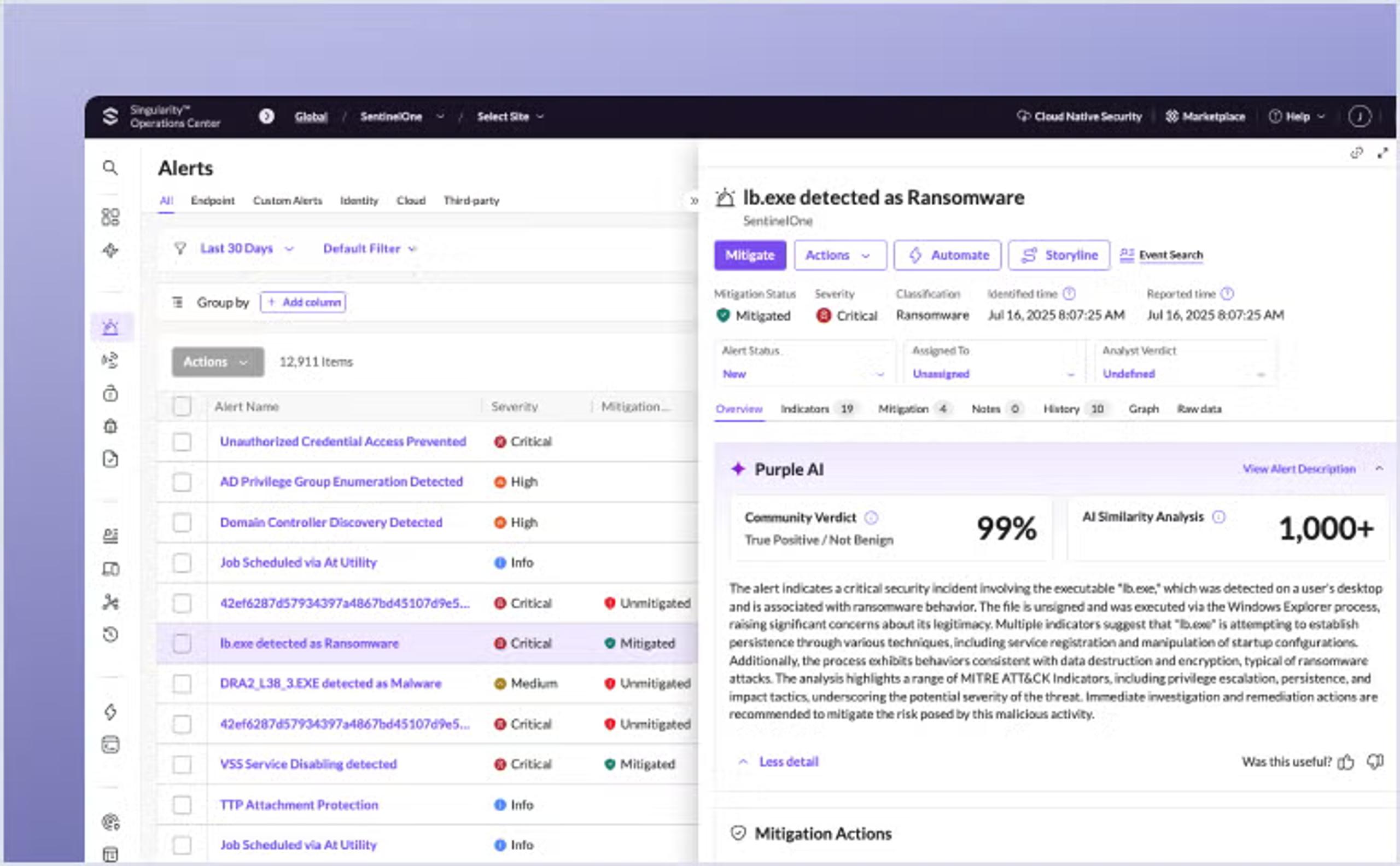
AI-powered endpoint detection and response.
FAQs
Frameworks in cybersecurity are essentially documents that describe the best practices, standards, and guidelines for managing security risks. They help organizations recognize vulnerabilities in their security and outline steps they can take to keep themselves safe from cyberattacks.
NIST CSF is a cybersecurity framework created by the National Institute of Standards and Technology. It gives you a common language to manage and reduce security risks. You can use it to benchmark your security posture, whether you're a small business or a large enterprise. It’s a flexible guide, not a rigid set of rules.
The framework is built around six core functions. You start with Govern to set your strategy. Then you Identify assets, Protect them with controls, Detect threats when they happen, Respond to incidents, and Recover from them. It gives you a clear cycle to manage your security program from start to finish.
The 5 standards of NIST are:
- Identify: Identifying the devices and systems vulnerable to threats
- Protect: Protecting data with measures like access control and encryption
- Detect: Monitoring systems and devices to detect security incidents
- Respond: Responding to cyber threats in the right way
- Recover: Plan of action you have in place to recover from a cyberattack
It depends on who you are. For most private companies, NIST CSF is voluntary, it’s a good best practice to follow. But if you work with the U.S. federal government, you will be required to comply with it. It’s also mandatory for many organizations in critical infrastructure sectors like energy or healthcare.
The 5 Cs of cybersecurity are:
- Change: This refers to how adaptable organizations are to change. With cyber threats constantly evolving, businesses should be quick to embrace changes like adopting new solutions to stay ahead of threats.
- Compliance: Organizations should adhere to legal and industry-specific frameworks to build trust with consumers and avoid penalties.
- Cost: This refers to the financial aspect of implementing cybersecurity measures. While investing in security might look like an expensive overhead, the potential loss from a cyberattack can be more devastating.
- Continuity: This focuses on making sure that business operations can continue as normal after a cyberattack. Having a continuity plan in place can also minimize downtime.
- Coverage: This ensures that your cybersecurity measures cover all aspects of business, including third-party vendors and internal devices. Attackers usually target the weakest link in your ecosystem, making comprehensive coverage essential.
There is no single "best" framework. If you are a commercial business, NIST CSF is a good choice because it’s flexible. If you have to meet strict compliance rules, you might look at ISO 27001. If you are in the government sector, you will likely use NIST SP 800-53. You should pick the one that fits your industry and legal requirements.
Discover More About Cybersecurity




Experience the Most Advanced Cybersecurity Platform
See how the world’s most intelligent, autonomous cybersecurity platform can protect your organization today and into the future.