What is Cyber Security Asset Management?
Cyber security asset management gives you authoritative data about your organization’s digital inventories and their status. Protect your resources, ensure compliance, and enhance risk management.

Cybersecurity asset management (CSAM) involves continuously managing an organization’s assets to protect it from threats. This includes consistent monitoring, taking inventory records, tracking assets to monitor their behavior and making sure they’re working properly, and remediating breaches.
As attackers incorporate AI and speed up vulnerability exploitation workflows, it is imperative that organizations catch up. A rise in hacktivism, global conflicts, and widespread distribution of malware make asset management in cyber security a top priority. The threat landscape is dynamic and adaptable, and despite public awareness, security breaches can happen at any time.
In this post, we’ll provide an overview of cybersecurity asset management and cover the best practices.
 What Is Cyber Security Asset Management?
Cybersecurity asset management involves monitoring and managing an organization’s digital assets to mitigate vulnerabilities. Any piece of software or hardware that may contain company data can be considered a cybersecurity asset. This includes software like messaging apps and hardware like servers. Physical assets that interface with software components are also classified as cyber security assets.
 Proper asset management includes taking stock of and tracking inventory so that you’ll know how many items you have and their location at all times. It also includes compliance with industrial regulations. The most crucial aspect of asset management in cybersecurity is assessing and preparing for potential risks. You’ll need specialized software for this, which we’ll get into later.
Why is Cybersecurity Asset Management Important?
Categorizing your assets tells you which are most valuable and where you should pool your resources. Constant assessment from monitoring software also helps you spot vulnerabilities and respond quickly to any budding security concerns.
In several countries like the US, regulators mandate some level of cybersecurity asset management. Proper asset management ensures that companies are in compliance with these regulations and, in turn, reduces costs.
In short, cybersecurity asset management is important because it helps with the following:
- Safeguarding organizational assets: By keeping an inventory of your assets, you can categorize them and determine which to focus on.
- Managing risks: A big part of asset management involves managing risks and fixing vulnerabilities.
- Complying with regulations: Regulators have strict requirements that organizations must comply with.
- Reducing costs: You can reduce costs by preventing losses from security breaches and regulatory fines.
What Are Cyber Assets?
Cyber assets are digital and physical resources that require cybersecurity protection. They include physical items like servers, computers, and physical documents; software like messaging apps; data like databases, digital documents, usernames and passwords, etc.
How can you tell the difference between a regular device and a cybersecurity asset? TechTarget.com says that “If an asset—be it physical, virtual or cloud-based—connects to or interacts with other assets on an organization’s network, it falls within the scope of CSAM.”
Examples include the following:
- Traditional endpoints, such as desktops, laptops, and mobile devices
- Underlying network infrastructure, including cloud assets and instances
- Internet of Things (IoT) sensors
- Virtual and hardware appliances
- Operating systems
- IP-connected operational technology (OT), including supervisory control and data acquisition systems, human-machine interfaces, and programmable logic controllers
- Physical infrastructure, such as office buildings and on-premises data centers
What Is Asset Inventory and Tracking?
Asset inventory and tracking involves several steps. The first is taking stock of organizational assets, including hardware, software, and data. Organizations also plan the life cycle of these items, starting with the planning stage, often with specialized tools.
ServiceNow and SolarWinds are two security platforms with asset management capabilities. They can scan networks to detect what devices are connected and what services run on the networks.
What Is Risk Assessment and Prioritization?
Risk assessment and prioritization is the process of spotting potential vulnerabilities to different assets and evaluating which are the most crucial. It involves not only finding vulnerabilities but also ranking them in terms of the danger they pose, knowing which to tackle first, and determining what resources will be allocated to each vulnerability and when.
Vulnerabilities are usually ranked according to the assets they affect and how valuable said assets are to the organization, with larger-scale assets taking more priority.
What Is Asset Life Cycle Management?
Asset life cycle management is another part of the asset management process. It can sometimes be considered part of the inventory process. Ask yourself: What do you intend to do with each asset presently, in the near future, and over the long term? Do you have any planned upgrades? Life cycle management answers these questions while also planning for any potential vulnerabilities that may arise. Doing so helps organizations expand the longevity of their assets by making sure they’re constantly updated and used efficiently.
For many assets, proper disposal is the most important part of their life cycle. Sensitive data must be properly managed to ensure that it doesn’t leak, and hardware must be properly disposed of to avoid pollution.
Implementing Security Controls
Access control is a key part of security infrastructure. Just as not every person has clearance to access every room in your office building, not every worker should have access to your data.
By segmenting who has access to data at any given time, organizations can reduce the possibility of a data leak. Monitoring software can then be used to monitor each asset connected to your network simultaneously. Coupling automated incident response software that alerts network admins to new devices or strange behavior creates a robust network infrastructure.
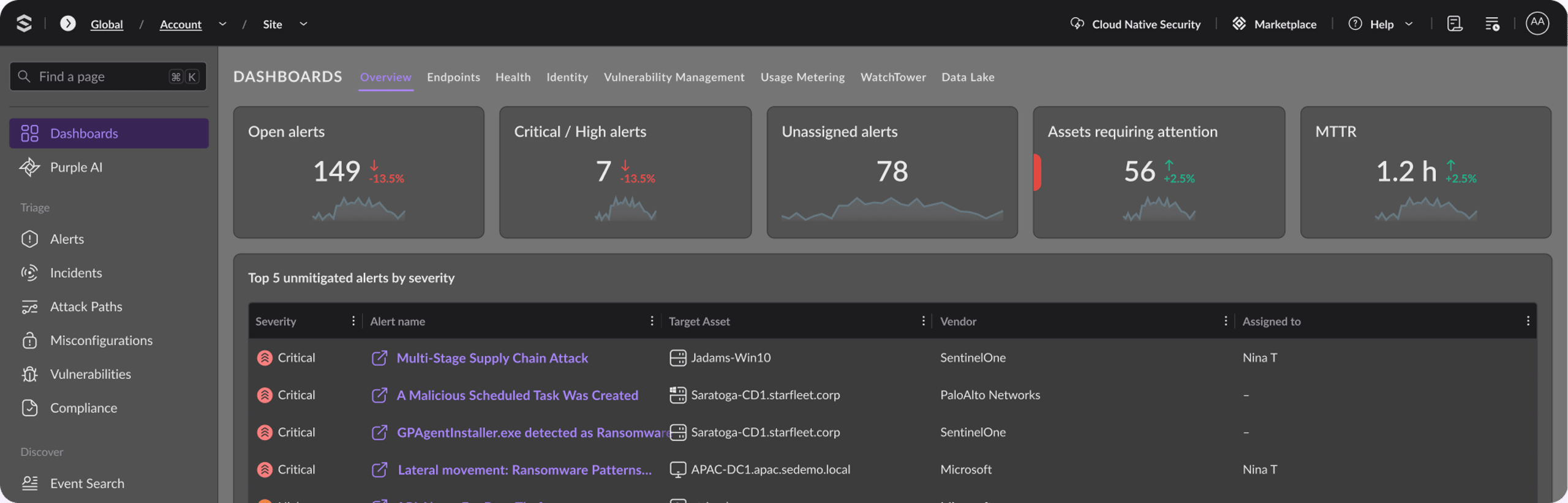
Software like SentinelOne’s AI-powered Singularity Platform can both monitor your network and perform incident response, reducing organization overhead and streamlining the security infrastructure.
Compliance and Regulatory Considerations
When managing their cyber assets, companies must conform to industrial regulations. There are a variety of regulations in each sector, but general guidelines ensure that companies maintain certain privacy standards. Refer to your regional and industrial laws for specifics, but in general, these regulations provide standards related to security access protocols, data encryption, documentation, and reporting. Choosing standard monitoring and documentation software will usually help. Some policies also demand that staff receive regular training to keep them abreast with best practices in their fields.
Challenges in Cybersecurity Asset Management
So as an IT professional, what do you need to watch out for when it comes to your cyber assets?
First, you must understand the ever-evolving nature of cybersecurity. As IT professionals, we’re taught from day one that our field is constantly evolving. Cybersecurity is no different. Each cybersecurity tool has the potential to be exploited, and cybercriminals develop more sophisticated ways to do so every day.
Asset management is a major challenge for large organizations. Companies can rapidly pile on physical inventory during expansions and mergers, and monitoring the newly added inventory items can become a serious challenge. Options like SentinelOne’s Singularity XDR platform circumvent this by monitoring all devices connected to an organization’s network for you.
You also need to account for network security. Aside from choosing a good security tool and limiting unauthorized access, admins must prevent authorized devices from being compromised. This is where two-factor authentication comes into play. Staff must also be trained on best practices and informed about how to keep their devices virus-free.
Benefits of Cybersecurity Asset Management
Proper cybersecurity asset management should be a key part of any organization’s security protocol. It allows organizations to mitigate cyber risks by doing the following:
- Offering end-to-end visibility into the company’s network
- Performing real-time monitoring and network analysis
- Continuously allowing companies to monitor and inventory security assets
- Giving organizations the ability to rapidly assess network changes
Cybersecurity asset management not only improves security; it reduces costs in the long run and optimizes the use of resources, thereby allowing companies to respond faster to potential incidents as they arise. Proper asset management also boosts customers’ confidence in the organization by minimizing risks and optimizing efficiency.
 Risks of Poor Cybersecurity Asset Management
The biggest risk associated with poor asset management in cybersecurity is increased vulnerability. Software without the latest security patches is more vulnerable to breaches and data theft. But there are other risks associated with poor cybersecurity asset management, starting with the fact that it’s harder to respond to security incidents and network disruptions when you’re suffering from mismanagement. Furthermore, regulators often have guidelines regarding asset management, and failing to fall within these guidelines can lead to direct financial and legal consequences.
All in all, poor cybersecurity asset management can potentially lead to data loss and network disruptions. It makes organizations slower and sometimes leads to regulatory punishment.
Cybersecurity Asset Management Tools
There is a plethora of network security tools on the market. Some handle threat detection and removal, others provide end-to-end visibility, and some do a little bit of both.
- SentinelOne: SentinelOne’s Singularity™ Platform is a unified visibility and security tool that provides AI-powered threat detection and response. Users get unfettered visibility into their infrastructure and automatically detect malicious activities across networks for their swift resolution.
- Singularity™ XDR AI is supercharged by Purple AI and powered by Singularity™ Data Lake for data ingestion and analysis. It provides complete security for all endpoints, identities, and clouds.
- Singularity™ Cloud Workload Security extends security and visibility across VMs, servers, containers, and Kubernetes clusters.
- Singularity™ Endpoint is the best-in-class EDR, eliminates alert fatigue, and correlates telemetry across your endpoints for holistic context into various threats. Singularity™ XDR extends its capabilities and comes with RemoteOps to scale remediations and speed up responses.
- Singularity Identity offers proactive, real-time defense to mitigate cyber risk, defend against cyber attacks, and end credential misuse.
- Singularity Network Discovery uses built-in agent technology to actively and passively map networks, delivering instant asset inventories and information about rogue devices.
SentinelOne is trusted by Fortune 500 companies and backed by industry-leading security experts. It is #1 in real-world protection and features record-breaking ATT&CK evaluation.
2. SolarWinds: SolarWinds is a popular full-stack observability platform. The SolarWinds network performance monitor focuses on device discovery and delivering network insights. However, to get the most out of SolarWinds, you’ll need to pair it with an intrusion prevention or removal system.
3. Dynatrace: Dynatrace is another popular monitoring platform. Like SolarWinds, you can use it to monitor network health and view the connected devices. It also features automated threat response and alert features. However, like SolarWinds, it should be accompanied by comprehensive threat prevention software.
Be Proactive and Choose Tool That Fits Your Needs
As you can see, asset management in cybersecurity is a complex and multifaceted topic. Organizations must consider multiple factors when designing their asset management infrastructure.
However, regardless of the size of your operation, SentinelOne can be a useful part of your cybersecurity arsenal. t will help you ensure holistic protection for all your sensitive assets.

Singularity™ Platform
Elevate your security posture with real-time detection, machine-speed response, and total visibility of your entire digital environment.
FAQs
Cybersecurity asset management is the process of monitoring an organization’s devices (such as servers, computers, and mobile devices) and software (such as apps) to enhance their effectiveness and avoid cyber threats.
Cybersecurity assets include any IT devices and software that are connected to an organization’s network. This includes apps hosted on the organization’s networks, devices connected to the networks, and even company servers. These devices and software all require cybersecurity protection.
Cybersecurity asset management allows devices to run in optimum condition and avoids threats by constantly monitoring an organization’s network. In the long run, this could save the company money and boost brand confidence.
Risk assessment may be the first step to proper asset management. It involves spotting potential vulnerabilities to an organization’s assets and deciding which to address first.
Discover More About Cybersecurity



Experience the Most Advanced Cybersecurity Platform
See how the world’s most intelligent, autonomous cybersecurity platform can protect your organization today and into the future.