Understanding the Difference Between EDR, SIEM, SOAR, and XDR
EDR, SIEM, SOAR, and XDR are distinct security solutions: EDR focuses on endpoint detection, SIEM on log analysis, SOAR on automation, and XDR on extended detection and response, each addressing unique security challenges and requirements in the modern threat landscape.

The cybersecurity industry is awash with jargon, abbreviations, and acronyms. As sophisticated attack vectors multiply, from endpoints to networks to the cloud, many enterprises are turning to a new approach to counter advanced threats: Extended Detection and Response, giving rise to yet another acronym: XDR. And while XDR has gained a lot of traction this year from industry leaders and the analyst community, XDR is still an evolving concept, and, as such, there is confusion around the topic.
- What is XDR?
- How does XDR differ from EDR?
- Is it the same as SIEM & SOAR?
As a leader in the EDR market and a pioneer in emerging XDR technology, we are often asked to clarify what it means and how it can ultimately help deliver better customer outcomes. This post aims to clarify some common questions around XDR and differences compared to EDR, SIEM, and SOAR.
What Is EDR?
EDR provides an organization with the ability to monitor endpoints for suspicious behavior and record every single activity and event. It then correlates information to provide critical context to detect advanced threats and finally runs automated response activity such as isolating an infected endpoint from the network in near real-time.
What Is XDR?
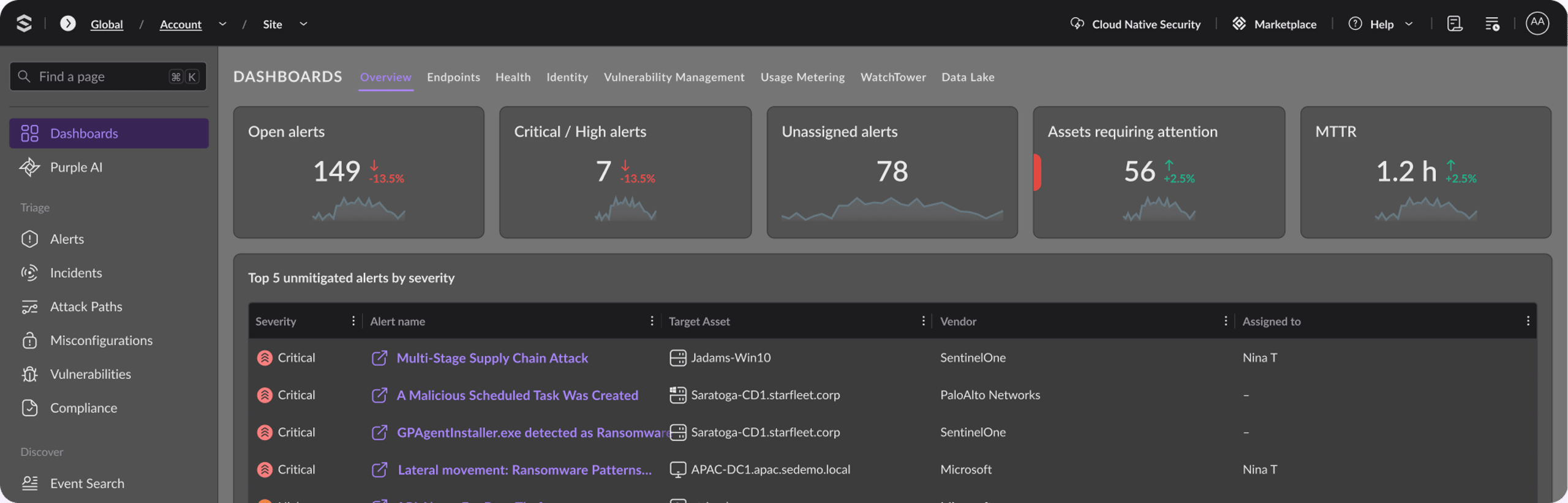
XDR is the evolution of EDR, Endpoint Detection, and Response. While EDR collects and correlates activities across multiple endpoints, XDR broadens the scope of detection beyond endpoints to provide detection, analytics, and response across endpoints, networks, servers, cloud workloads, SIEM, and much more.
This provides a unified, single pane of glass view across multiple tools and attack vectors. This improved visibility provides contextualization of these threats to assist with triage, investigation, and rapid remediation efforts.
XDR automatically collects and correlates data across multiple security vectors, facilitating faster threat detection so that security analysts can respond quickly before the scope of the threat broadens. Out-of-the-box integrations and pre-tuned detection mechanisms across multiple different products and platforms help improve productivity, threat detection, and forensics.
In short, XDR extends beyond the endpoint to make decisions based on data from more products and can take action across your stack by acting on email, network, identity, and beyond.
How Is XDR Different From SIEM?
When we talk about XDR, some people think that we are describing a Security Information & Event Management (SIEM) tool in a different way. But XDR and SIEM are two different things.
SIEM collects, aggregates, analyzes, and stores large volumes of log data from across the enterprise. SIEM started its journey with a very broad approach: collecting available log and event data from almost any source across the enterprise to be stored for several use cases. These included governance and compliance, rule-based pattern matching, heuristic/behavioral threat detection like UEBA, and hunting across telemetry sources for IOCs or atomic indicators.
SIEM tools, however, require a lot of fine-tuning and effort to implement. Security teams can also get overwhelmed by the sheer number of alerts that come from a SIEM, causing the SOC to ignore critical alerts. In addition, even though a SIEM captures data from dozens of sources and sensors, it is still a passive analytical tool that issues alerts.
The XDR platform aims to solve the challenges of the SIEM tool for effective detection and response to targeted attacks and includes behavior analysis, threat intelligence, behavior profiling, and analytics.
How Is XDR Different From SOAR?
Security Orchestration & Automated Response (SOAR) platforms are used by mature security operations teams to construct and run multi-stage playbooks that automate actions across an API-connected ecosystem of security solutions. In contrast, XDR will enable ecosystem integrations via Marketplace and provide mechanisms to automate simple actions against 3rd-party security controls.
SOAR is complex, costly, and requires a highly mature SOC to implement and maintain partner integrations and playbooks. XDR is meant to be ‘SOAR-lite’: a simple, intuitive, zero-code solution that provides actionability from the XDR platform to connected security tools.
What Is MXDR?
Managed Extended Detection and Response (MXDR) extends MDR services across the enterprise to get a fully managed solution that includes security analytics and operations, advanced threat hunting, detection and rapid response across endpoint, network, and cloud environments.
An MXDR service augments the customer’s XDR capabilities with MDR services for additional monitoring, investigations, threat hunting, and response capabilities.
Why Is XDR Gaining Traction and Generating Buzz?
XDR replaces siloed security and helps organizations address cybersecurity challenges from a unified standpoint. With a single pool of raw data comprising information from across the entire ecosystem, XDR allows faster, deeper, and more effective threat detection and response than EDR, collecting and collating data from a wider range of sources.
XDR provides more visibility and context into threats; incidents that would not otherwise have been addressed before will surface to a higher level of awareness, allowing security teams to remediate and reduce any further impact and minimize the scope of the attack.
A typical ransomware attack traverses the network, lands in an email inbox, and then attacks the endpoint. Addressing security by looking at each of those independently puts organizations at a disadvantage. XDR integrates disparate security controls to provide automated or one-click response actions across the enterprise security estate such as disabling user access, forcing multi-factor authentication on suspected account compromise, blocking inbound domains and file hashes and more – all via custom rules written by the user or by logic built into the prescriptive response engine.
This comprehensive visibility leads to several benefits, including:
- Reducing Mean Time to Detect (MTTD) by correlating across data sources.
- Reducing Mean Time to Investigate (MTTI) by accelerating triage and reducing time to investigate and scope.
- Reducing Mean time to respond (MTTR) by enabling simple, fast, and relevant automation.
- Improving visibility across the entire security estate.
Moreover, thanks to AI and automation, XDR helps reduce the burden of manual work on security analysts. An XDR solution can proactively and rapidly detect sophisticated threats, increasing the security or SOC team’s productivity and returning a massive boost in ROI for the organization.

Unleash AI-Powered Detection and Response
Discover and mitigate threats at machine speed with a unified XDR platform for the entire enterprise.
Parting Thoughts
Navigating the vendor landscape is challenging for many enterprises, particularly when looking at detection and response solutions. Often the biggest hurdle is understanding what each solution provides, especially when terminologies vary from vendor to vendor and can mean different things.
As with any new technology entering the marketplace, there is a lot of hype, and buyers need to be wise. The reality is, not all XDR solutions are alike. SentinelOne Singularity XDR unifies and extends detection and response capability across multiple security layers, providing security teams with centralized end-to-end enterprise visibility, powerful analytics, and automated response across the complete technology stack.
SIEM vs SOAR vs XDR vs EDR FAQs
SIEM gathers logs from firewalls, servers, and apps, then raises alerts and compliance reports. SOAR bolts onto that stack and turns alerts into automated runbooks that close tickets or block IPs without human clicks.
EDR lives on endpoints, watches processes, and kills malware locally. XDR widens the lens by pulling endpoint, email, cloud, and network telemetry into one hunt console for unified detection and response.
EDR keeps its gaze on each host: file writes, process trees, registry edits, plus isolation or wipe actions. XDR fuses that endpoint data with signals from email gateways, identity services, cloud workloads, and the network, then correlates cross-layer events to expose a campaign in one view. In short, EDR defends the laptop; XDR defends the whole estate.
EDR reacts quickest when a threat lives only on an end-user device. SIEM shines if you already pipe every log source with finetuned rules but can drown you in noise. XDR sits between: it auto-correlates multi-layer signals out-of-the-box, giving fewer false positives than a raw SIEM and broader visibility than pure EDR, so most teams see sharper alerting with XDR.
Pick SOAR when analysts drown in repetitive alert triage. If your SIEM already spits thousands of tickets, SOAR lets you wire playbooks that enrich, prioritize, and auto-close low-risk alarms, stitching firewall blocks and user-disable steps into one flow. Without that automation layer, a SIEM can flood the queue faster than you can click.
SMBs usually start with EDR; it’s lighter to deploy, priced per endpoint, and wins fast against ransomware. When the business adds cloud apps or remote sites, XDR grows attractive because it folds those feeds into the same console without extra hires.
If budgets are tight and the attack surface is simple, stay on EDR; once signals sprawl, graduate to XDR.
Yes—if the team spends hours gluing those tools together. XDR ingests the same endpoint data, enriches it with cloud and email feeds, and surfaces one prioritized incident instead of ten separate alerts. Many platforms even sync rules with your SIEM.
If your SOC already correlates logs smoothly and alert fatigue is low, you can hold off and save the spend.
Discover More About XDR



Ready to Revolutionize Your Security Operations?
Discover how SentinelOne AI SIEM can transform your SOC into an autonomous powerhouse. Contact us today for a personalized demo and see the future of security in action.