NDR Vs XDR: 11 Critical Differences
In this post, we are going to discuss NDR (network detection and response) vs. XDR (extended detection and response) and highlight their pros and cons.

Networks serve as communication, data transfer, and resource access infrastructure. At the same time, endpoints—devices like desktops, laptops, smartphones, servers, virtual environments, and IoT—are a common entry point into networks. Given this, the security of networks and endpoints is critical to protecting an organization from cyberthreats. In comparing network detection and response for NDR versus XDR, organizations are looking into a solution that can help them achieve a robust cybersecurity posture.
In this post, we will define NDR (network detection and response) and XDR (extended detection and response) and highlight their pros and cons. We will also explain how these two cybersecurity solutions differ in their implementation, cost, scope, use cases, and primary features.
 What Is NDR?
NDR is a security tool that monitors the entire network traffic and connected devices for suspicious behavior in real-time. It uses network behavior analysis to analyze network traffic data for unauthorized access and data breach attempts, unusual traffic patterns, and network blind spots.
What Is XDR?
XDR is a security solution that integrates and analyzes data from multiple security layers such as network, endpoint, and cloud workloads, providing a holistic, centralized view of threats and initiating rapid incident response. When XDR detects unusual behavior on the endpoint, it focuses on lateral movement to identify traces of unusual traffic patterns and abnormal activities as the attacker moves within the network. It then correlates data from endpoints, networks, and user activities to uncover the entire attack chain.
What Are the Differences Between NDR and XDR?
NDR offers complete network visibility. On the other hand, XDR’s approach to threat detection and response is more comprehensive. It collects and analyzes data from a broader range of sources, including IoT devices, applications, cloud infrastructure, endpoints, and networks.
#1 Features: NDR vs XDR
NDR features
- Advanced analytics: NDR uses non-signature-based techniques such as behavioral analytics and machine learning to analyze raw network traffic and network flow data to detect anomalies that could suggest a compromise. While most network traffic is usually encrypted, NDR analyzes this traffic without decryption to identify threats that hide in encrypted traffic.
- Automated threat response: NDR prioritizes alerts based on severity and provides automated response playbooks.
- Network visibility: It provides full network visibility by monitoring metadata and raw network packets between public networks (north-south) and internal networks (east-west). You can then use this information to create threat models that identify and map potential attack paths.
- Deep packet inspection (DPI): NDR relies on network taps and central connection points like routers and firewalls to access all packet information. DPI examines packet headers and data payloads, giving you real-time visibility into what packets, applications, or users are sending over the network.
- Threat intelligence: NDR integrates with threat intelligence feeds to identify known threats and indicators of attack (IoA) as documented by the security community. Feeds contain information on the current attack techniques and methods and their impact.
XDR features
- Advanced analytics and detection: XDR relies on threat intelligence and machine learning for threat detection and analysis. ML-based detection enables XDR to uncover zero-day and nontraditional threats that standard methods cannot detect. XDR uses threat analysis to learn from vulnerabilities in other systems and uses that information to prevent similar threats in your systems. Finally, XDR goes beyond detecting IoA; it leverages AI to check for tactics, techniques, and procedures (TTPs) and indicators of compromise (IoCs).
- Automated incident response: XDR correlates data and alerts, automatically grouping related alerts, building attack timelines, and prioritizing events essential for root cause analysis and predicting an attacker’s next move.
- Orchestration automation: This is XDR’s capability to automate tasks that require information from across the security stack. For example, the response orchestration feature enables XDR to coordinate responses from multiple security tools and mitigate cybersecurity risks using automated response workflows. Automation helps reduce mean time to detect (MTTD) and mean time to respond (MTTR).
Visualization: XDR platforms provide detailed dashboards that combine security information sources into a single view to allow easy monitoring. Its threat mapping features, like node graphs, allow you to discover the correlation between different systems.
#2 Scope: NDR vs XDR
NDR primarily focuses on continuously analyzing network traffic patterns to detect and prevent network-level attacks and anomalies. It aims to proactively defend an organization’s network infrastructure by helping security teams constantly explore network data and hunt for threats. That is, it helps organizations identify and resolve threats at the network level, preventing unauthorized access and data breaches before they affect critical systems.
Unlike NDR, which focuses on the network layer, XDR offers cross-layer threat detection and response. XDR takes a holistic security approach, integrating data and events from other security tools across applications, the cloud, networks, and endpoints to provide a unified approach to threat detection and response.
#3 Implementation: NDR vs XDR
You need to integrate NDR with the organization’s network infrastructure and configure it to monitor specific traffic flows. You can deploy NDR software on the cloud, virtual environments, or physical networks.
- Hardware network sensors are deployed throughout the network to capture traffic data.
- In cloud and virtual environments, virtual sensors are deployed.
- Software sensors are deployed on network devices.
Sensors collect data such as IP address, user identity, source and destination, ports, etc. NDR then stores and analyzes this data.
You can deploy XDR on-premises or in cloud environments and containers.
- XDR agents are installed at endpoints across a network, such as IoT mobile devices and employee workstations.
- XDR is integrated with firewalls, switches, and routers to monitor network traffic.
- It then provides a centralized console for correlating and managing security events.
#4 Cost: NDR vs XDR
NDR comes at a lower cost than XDR, considering it offers security motoring visibility at the network level. NDR providers offer different pricing models, including pay-as-you-go and subscription-based pricing.
On the contrary, XDR’s more comprehensive cyberthreat approach usually costs more than NDR. XDR vendors offer multiple pricing models, such as subscription-based and tiered pricing. The level of threat management capabilities you need can act as a guide in choosing the pricing model.
#5 Use cases: NDR vs XDR
NDR use cases
- Deep coverage: NDR protects network infrastructure, providing deep visibility into network traffic patterns and anomalies.
- Asset tracking: It scans an entire network to identify connected devices and records details such as operating systems and installed applications, helping in asset discovery and identification of outdated software.
- Data protection: It monitors data transfers to identify data exfiltration signs and prevent unauthorized sharing of sensitive data.
XDR use cases
- Threat hunting: This is a primary use case for XDR tools. XDR addresses many cybersecurity scenarios, including detecting threats from multiple vectors, protecting cloud environments, and offering insider threat management.
- Cloud visibility: XDR protects SaaS applications and cloud environments. It collects telemetry from cloud environments, giving you visibility over cloud assets.
User analytics: It employs user and entity behavior analytics to identify insider threats. This helps flag anomalous behavior from malicious employees.
NDR Vs XDR: 11 Critical Differences
| Aspect | NDR | XDR |
|---|---|---|
| Definition | A tool that monitors network traffic in real time to detect suspicious behavior | A unified security solution that integrates data from multiple sources, providing comprehensive threat management |
| Data Sources | Collects data such as packet data and traffic flows from network endpoints | Collects data from more sources that NDR, not just networks but also endpoints, cloud, email, and applications, giving you a broader view of potential threats |
| Scope | Focuses on monitoring network activity and resources and providing automated response | Extends NDR capabilities. Protects both endpoints and networks and provides management support, allowing quick response to complex attacks |
| Visibility | Strictly provides visibility over network traffic | Provides visibility over devices, networks, and cloud |
| Cost | Cost-effective for organizations focusing on network-level protection | More expensive due to the broader scope and integration of multiple security layers |
| Resource Utilization | Used alongside other detection and response tools | Multiple security tools are integrated with XDR to improve threat detection |
| Deployment | Deployed using network taps or span ports to capture and analyze traffic | Usually cloud-based, integrating existing security solutions (e.g., firewalls, EDR, NDR, SIEM) on a single platform |
| Threats Detected | Network-based attacks (phishing and malware) | Explores multiple attack vectors, including unauthorized access phishing and malware, tying these events together to provide a unified response |
| Compliance Support | Integrates with compliance tools for monitoring network traffic for policy violations | Provides comprehensive compliance reporting across multiple security domains, including network and endpoint security |
| Automated Threat Response | Prioritizes alerts based on severity and uses automatic response playbooks to automate response | Correlates data and alerts, automatically grouping related alerts for prioritized root cause analysis |
| Relationship to SIEM | Complements SIEM and XDR | It is an evolution of SIEM |
Pros and Cons: NDR vs XDR
NDR pros
- Automation increases the accuracy and speed of detecting and responding to ransomware and supply chain and wiper attacks.
- Helps you identify malicious actors abusing IT admin systems or decommissioned devices.
- Helps you write threat-hunting rules that search database events to detect potential compromise.
- Prioritizes threats from false positives, reducing alert fatigue.
- Tracks process trees and correlate events to allow you to discover the initial attack vendor and mitigate the exploitation of zero-day and unpatched vulnerabilities.
NDR cons
- Its security visibility is limited to network-based behavior and threats. This is not the perfect tool to use if you want to know what is happening at the endpoints and individual devices or monitor user activities on devices.
- You need specialized skills in network security to operate NDR in-house; otherwise, you can outsource NDR management.
XDR pros
- Allows you to adopt Zero Trust and verify its enforcement.
- It helps detect data exfiltration, lateral movement, and network scanning attempts.
- It helps detect vulnerabilities at a device’s BIOS level by monitoring devices as they interact with other systems through the network.
- XDR extends the capabilities of NDR, EDR, SOAR, and SIEM solutions.
XDR cons
- Its configuration is more complex than NDR, considering it needs to integrate various data sources seamlessly, sometimes from different vendors.
- You need specialized knowledge to manage an XDR system; otherwise, you can use a managed XDR solution.
How to Choose Between NDR and XDR?
Deciding to use NDR or XDR depends on an organization’s specific security requirements, budget, and the complexity of the network environment. If your priority is network security, then NDR is the best fit for you to analyze traffic and respond to incidents faster. If you want to monitor and analyze security data from different sources from a unified platform, go for XDR.

Discover Unparalleled Endpoint Protection
See how AI-powered endpoint security from SentinelOne can help you prevent, detect, and respond to cyber threats in real time.
Final Thoughts
NDR and XDR are powerful security solutions, each offering unique capabilities to protect organizations against evolving cyber threats. NDR provides deep visibility and real-time response to network-level threats. On the contrary, XDR helps centralize security operations, providing broader visibility into endpoints, cloud, and network traffic, allowing security teams to correlate events and respond to threats faster across the entire attack surface.
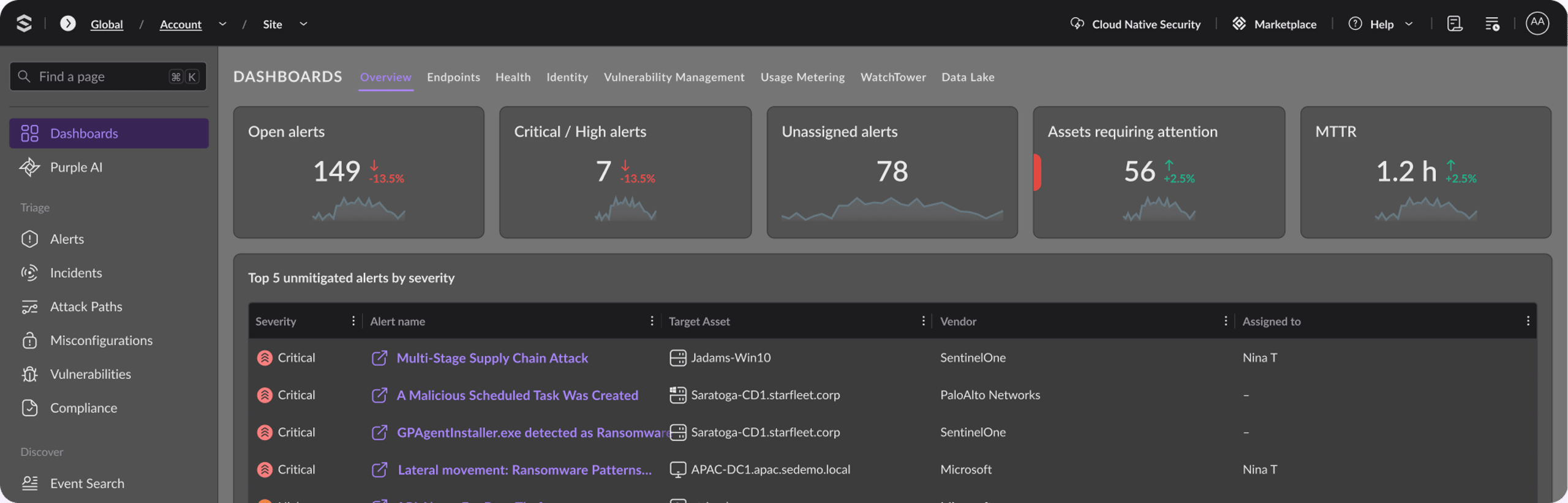
SentinelOne Singularity XDR unifies cyber threat detection and response across the network, endpoint, mobile, identity, and cloud. Request a demo today to see how we can help you manage threats across multiple security layers.
FAQs
You can replace NDR with XDR or use NDR as a support tool for XDR. NDR is important for a successful XDR deployment as it helps you navigate the complexities of endpoint security.
XDR refers to extended detection and response. NDR stands for network detection and response.
EDR monitors and detects cyber threats strictly at the endpoint but lacks XDR’s advanced analytic and centralized viewpoint capabilities. On the other hand, NDR monitors network traffic and resources. Both EDR and NDR are critical support tools for XDR, allowing XDR to protect endpoints and network environments.
Discover More About Endpoint Security


Endpoint Security that Stops Threats at Faster Speed and Greater Scale Than Humanly Possible.
One intelligent platform for superior visibility and enterprise-wide prevention, detection, and response across your attack surface, from endpoints and servers to mobile devices.