Data Breach Statistics
Check out the latest data breach statistics in 2026 to see what companies are up against. Find out how threat actors cause data breaches, who they are targeting, and more details.

Are you worried if your company is failing behind in cyber security or think your current security strategy needs an update? Knowing about the recent data breach statistics can help you keep an eye on what’s going on in the industry worldwide.
The underground cybercrime economy is evolving, which means data breaches and advanced security attacks are on the rise. We've included data procured from case studies, reports, trusted threat research, and public disclosures that can aid your security decision-making. Here's a detailed analysis and insights regarding recent data breach statistics in 2026.
.jpg?width=2560&quality=90&format=auto)
Global Data Breach Statistics
Curious about what’s going on in the world? Here are the latest global data breach statistics:
- Global cyber attacks are currently at an all-time high. On an average, there are 2,090 cyber attacks every week! That's a 17% increase in 2026.
- The average cost of a data breach is now USD 4.88 million. The reasons behind data breaches are ransomware, human error, and AI-powered phishing attacks.
- Global data breaches are on the rise by 3% month-over-month in January 2026. Some breaches can last longer than 91 days and cost companies up to over USD 18 million.
- AI-powered phishing is forecasted to cross 42% of all global intrusions near the end of 2026. 40% of companies will face cyber attacks and the average breach costs for them will hit USD 12.6 million, in healthcare. For the finance industry, the average data breach cost will be expected to be around USD 6.08 million or more.
- The mean time to detect and identify a data breach is now 181 days, and the additional time taken to contain it will be 60 days. 65% of data breaches are caused by internal actors, while 35% involve external agents.
Data Breaches by Industry Statistics
Let’s go over different industry statistics now for data breaches. Here’s an overview of recent data breaches by industry statistics:
- According to the HIPAA Journal, an average of 47 data breaches were reported each month, between the period of September 1, 2025 to January 31, 2026. The OCR published summaries of data breach reports on its "Wall of Shame," and as of January 31, 2026, over 7,419 large healthcare data breaches have been reported to it.
- One of the biggest challenges in healthcare cybersecurity is keeping supply chains secure. OCR has closed 11 investigations of hacking incidents and financial penalties were imposed under HIPAA risk analysis failures under their enforcement initiatives.
- The finance and insurance industry is heavily targeted by financial fraud and credential theft. It also focuses on identity-centric security to secure sensitive financial data.
- The manufacturing industry accounts for up to 3.6% of dark web data breaches. Main reasons behind these data breaches are supplier compromises, IP thefts, and easy unauthorized access to industrial partners.
- Governments are susceptible targets to ransomware attacks. Key 2026 data breach trends and influences for various industries include: data theft over ransom (where attackers prioritize stealing and selling data online, with 32% of incidents resulting in data leaks), staffing shortages, supply chain attacks, AI-powered phishing, and cloud vulnerabilities.
Data Breaches by Organization Size
Here’s a list of data breaches by organization sizes and their associated statistics:
- The Illinois and Minnesota Department of Human Services had a massive data breach stemming from a system failure recently. Around 1 million individuals were affected and names, addresses, emails, dates of birth, phone numbers, first 4 digits of SSNs, and Medicaid IDs were exposed.
- On Jan 13, 2026, Target employees reported that internal code and developer documentation that belonged to a retailer had been stolen. About 860 GB was done and several repos were involved, all of which were released on Gitea.
- BreachForums data breach is another popular incident that happened on Jan 9, 2026. Over 324,000 individuals tied to the popular hacker forum were affected.
- The U.S. Immigration and Customs Enforcement (ICE) experienced a data leak too. Its online databases were uploaded and exposed. More than 150 supervisors and 2,000 agents were leaked and it's considered one of the largest data breaches the breach of department staff information had seen.
- Monroe University experienced a data breach as well and it had sent mail notices to potentially affected members on Jan 2, 2026. It is estimated that over 320,000 individuals were hit and the records such as driver's licenses, passport numbers, medical and health insurance data, names, and birthdays were all impacted.
Data Breach Attack Vector Statistics
Here’s an overview of the latest data breach attack vector statistics:
- Recent breach data shows that credentials are the leading entry method for attackers (about 22%), followed by phishing (which accounted for about 16%), and supply chain/ third party compromise (about 13%) among the top entry methods in several of the investigations.
- Software and hardware vulnerabilities are being exploited to cause approximately 20% of all breaches, which is an increase of about one third from the previous year, as the attacker community focuses on the edge devices and VPN appliances.
- The supply chain/third-party compromise is the next tier of the most popular ways to gain an entry method into the systems of organizations, with about 15% of organizations identifying that they have been breached due to an attack against their partner(s) or service providers.
- While social engineering has always been a major threat, it continues to be so today: current breach data shows that social attacks account for about 28% of all confirmed breaches, and about 57% of all social attacks were phishing related, which was almost twice the percentage of pretexting.
- About 44% of all breaches contained ransomware, with many of these breaches beginning at exposed VPNs or edge devices and then pivoting to other areas within the network.
Data Breach Cost Statistics
Data breach costs are also being influenced by recent data breaches. These are recent data breach cost statistics:
- The global average cost for each breach was approximately $4.44 million, which represents a reduction of nearly 9% compared to the prior high due to faster incident detection and response that reduces the amount of time required to contain the breach.
- Incidents initiated internally have higher average costs than those initiated externally; in fact, recent studies report average costs associated with containing an incident that is initiated internally are approximately USD 4.99 million.
- Although customer and employee data remains a major contributor to the majority of the cost associated with breaches, the most expensive type of record exposed or stolen in many data sets has been stolen Intellectual Property (IP) records with an estimated value of approximately USD 178 per record.
- In extreme cases, data exposure/theft initiated by insiders may result in tens of millions of dollars per organization; the average financial loss from an insider initiated incident is approximately USD 13.9 million.
Data Breach Detection and Containment Statistics
Here are the latest data breach detection and containment statistics for 2026:
Many large-scale incidents indicate that the use of advanced automated detection and/or response capabilities can reduce identification and containment time by roughly 80 days. It also results in cost savings of nearly USD 1.9 million compared to non-automated/advanced detection environments.
Organizations whose breaches are resolved in less than 200 days experience costs that average about USD 3.87 million; however, when a breach extends past 200 days, the average cost to the affected organization increases to over USD 5.01 million.
Using managed detection and response (MDR) significantly reduces the length of time that an attacker may reside within a network (i.e., "dwell time"). Specifically, the median dwell time associated with business email compromise (BEC) attacks decreases from roughly 24 days when MDR is not in place to approximately 24 minutes when MDR is utilized.
The median detection time for MDR-enabled environments is approximately 39 minutes, whereas the median detection time for environments employing manual monitoring and/or ad-hoc alert handling is roughly 390 minutes.
Stolen Data Type Statistics
Here are stolen data type statistics for 2026, with regards to recent data breaches worldwide:
- Personal customer information is shown in about 53% of all incidents when a breach occurs. This includes customers’ tax identification number, e-mail address, telephone number, or home address.
- Approximately one-third of compromised records contain company intellectual property and can be the most expensive for companies to replace or restore at an average cost of USD 178.00 per IP record in recent cost studies.
- Data breaches caused by insiders usually reveal extremely private information. 89% of compromised data from insider-related error breaches are classified as personal information instead of being just metadata.
- The five most commonly experienced types of damage that victim organizations experience include; credential harvesting, data theft, reconnaissance, extortion and data leakage. Credential harvesting was responsible for approximately one-third of the damages experienced by victims during recent attacks.
Insider Threat and Human Error Statistics
Here are the recent insider threat and human error statistics for 2026. They all concern the latest data breaches:
- Human errors are estimated to be the cause of approximately 60% of all security breaches due to misuse of data, poor password selection, misconfiguration, and human susceptibility to social engineering tactics.
- Misdelivery plays an outsized role, with about 45% of such cases involving data sent to the wrong recipient and many employees citing distraction when they clicked phishing links
- 75% of insider breaches are non-malicious, with approximately 55% attributable to employees who were either careless or mistaken while accessing company resources and approximately 20% of employee users accessed as a result of exploitation from outside attackers.
- 48% of companies have reported an increase in insider attacks in 2026. The average annual cost of insider incidents has gone beyond USD 17 billion for many companies. 95% of all cybersecurity data breaches are due to human error, including social engineering and other mistakes.
- The average malicious insider data breach costs USD 4.9 billion per incident. 93% of security leaders have said that insider threats are harder to detect when compared to external attacks.
Regulatory and Compliance-Related Data Breach Statistics
Worried about regulatory issues and data compliance related issues. Take a look at the latest regulatory and compliance-related data breach statistics for 2026:
- Across all of Europe, data protection authorities assessed nearly 1.2 billion euro worth of GDPR fines in 2025 as regulatory bodies continue to assess significant fines and show that they are willing to penalize companies that do not adequately protect consumer data.
- GDPR reporting has revealed that the number of personal data breaches reported to European supervisory authorities rose by around 22% within the last year. As such, there is now a steady stream of reported data breaches at approximately 443 breaches daily on average.
- Violations tied to an insufficient legal basis for data processing have generated more than 1 billion euros in penalties last year, driven by a handful of very large cases against major online platforms.
- Non-compliance with payment card security requirements (PCI-DSS) also carries its own set of penalties; for example, monthly recurring fines for non-compliance with PCI-DSS can be between USD 5,000 and USD 100,000, and fines associated with breaches of payment card information can result in multi-million dollar fines.
Data Breach Recovery and Remediation Statistics
Let’s explore the latest data breach recovery and remediation statistics. These are the top ones you should be aware of:
- Data recovery costs for stolen data go up to USD 9,000 per minute. Companies that contain breaches within 200 days can save up to USD 1.12 million.
- AI security can help organizations contain and identify threats faster, thus containing breaches. For incidents that are contained within 31 days, companies save up to USD 10.6 million.
- 10% of IT users do daily backups while 15% are known to backup their data once or twice a week.
- 41% rarely or never do data backups. 50% of companies test their disaster recovery plans every year, while 7% never do annual disaster recovery planning testing.
Key Takeaways from Data Breach Statistics
Here are the key takeaways from 2026’s recent data breach statistics:
- The average cost of a data breach in the U.S. has hit an all-time high of USD 10.22 million in 2026. This is because of high containment costs and strict regulatory ecosystems. The global average cost per incident ranges from around USD 4.44 million to USD 4.88 million.
- 60% of small businesses (SMBs) go out of business within the first 6 months of a huge cyber attack. The average ransom demand for SMBs has gone up to USD 84,000, and total recovery costs now exceed USD 500,000.
- 66% of companies are expecting AI to transform cyber security. But only 37% have formal processes available to assess AI tool security before they deploy such solutions.
- 20% of companies are reporting back data breaches tied to shadow AI. Companies that use AI security automation can save up to an average of USD 1.9 million to USD 2.22 million in breach costs. They can also contain incidents nearly 100 days sooner.
- Third-parties are now involved in double the data breaches and account for 30% of all data breaches worldwide. Social engineering has crossed ransomware as a leading cyber threat concern for over 63% of security professionals.
Note: The figures in this data breach statistics overview draw from recent industry reports, public breach disclosures, and large‑scale threat research. Security, risk, and compliance teams can ground their planning for 2026 in current evidence as all these data breach statistics are curated from trusted sources.
How SentinelOne Can Help?
SentinelOne continues to fight against emerging data breaches with Singularity™ Complete Platform. It combines EPP and EDR for autonomous threat detection. Singularity™ Cloud Security can secure your containers, S3 buckets, and protect cloud workloads. You can use Singularity Identity to focus on detecting credential theft and prevent lateral movement.
Purple AI is a gen AI-powered security operations center (SOC) analyst integrated across the platform. It speeds up threat hunting by up to 63% and helps security teams identify hidden risks using natural language queries. SentinelOne's research arm, SentinelLABS, discloses up-to-date information about threat actors. SentinelOne's Cloud-Native Security (CNAPP) solution can scan for more than 750+ types of hardcoded secrets, identify and prevent misconfigurations across Azure, AWS, and Google Cloud, and prevent data leaks in code repos.
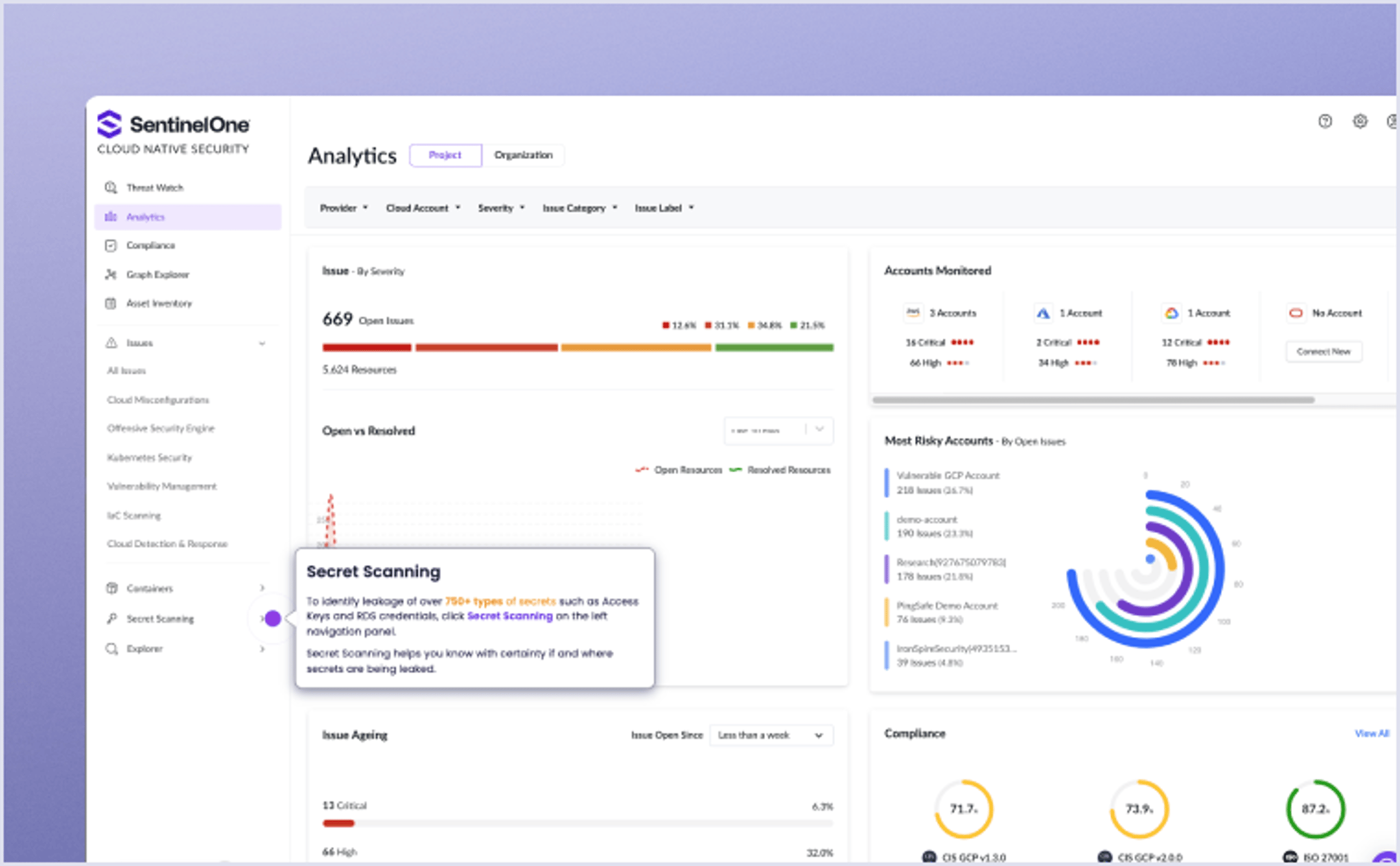
AI-powered cloud workload protection (CWPP) for servers, VMs, and containers, that detects and stops runtime threats in real time.
FAQs on Data Breach Statistics
They are a daily occurrence now. In the first month of 2026 alone, researchers tracked hundreds of publicly claimed ransomware victims and millions of stolen records on dark web markets. Global organizations are seeing thousands of attacks every week. If you are connected to the internet, you are a target. It is not a matter of if you will see an attempt, but when. You should operate like your organization is always in someone's crosshairs.
The average cost per breach now sits around $4.88 million globally. If you are in the US, that number more than doubles to over $10 million per incident. Healthcare organizations are hit the hardest, facing costs near $11 million because of the sensitivity of patient data. If you fail to contain a breach quickly, these costs will eat into your bottom line for years.
Most breaches still come down to the human element, driving nearly 70% of incidents. Attackers are not always using complex hacking tools. They are logging in with stolen credentials or abusing remote access tools like VPNs. They will target your people through phishing emails to get those passwords. You can have the best firewalls, but if an employee clicks a bad link, the attackers are in.
Customer PII is the number one target. We are talking about names, Social Security numbers, driver’s license details, and financial account info. Attackers want identity data they can use to commit fraud or sell to other criminals. In many cases, payroll records and internal HR files are also taken because they contain that same sensitive employee data. You need to lock down access to these files first.
Yes, the pressure is mounting. While the number of incidents fluctuates, the severity and sophistication are spiking. Ransomware attacks jumped 10% compared to last year, and data-only extortion cases are up eleven-fold. Attackers are also using AI to scale their operations, making it easier for them to find your weak spots. If you are using the same security strategy you used last year, you are already falling behind.
They can, but it is a fight for survival. The average cost for an SMB sits around a quarter of a million dollars, which can be an existential threat. Smaller businesses make up the majority of ransomware victims because they often lack the dedicated IT staff to harden their defenses . You need tested backups and a solid plan before an attack happens. Recovery depends on whether you can restore operations fast enough to stay afloat.
AI is the biggest game changer. Employees are feeding sensitive data into GenAI tools, creating new exposure risks. On the defense side, AI-powered security tools are helping companies save millions by stopping attacks faster. You also see attackers shifting tactics, stealing data and threatening to leak it rather than just locking systems. You must adopt zero-trust principles and verify every access request, no exceptions.
Discover More About Cybersecurity


Experience the Most Advanced Cybersecurity Platform
See how the world’s most intelligent, autonomous cybersecurity platform can protect your organization today and into the future.