Top 10 Cyber Security Benefits Every Business Should Know
This article explores the importance of cybersecurity for businesses and organizations, outlining the, benefits, types, cyber threats to small businesses, and how SentinelOne products can help.

The abrupt changes toward digitization have resulted in high dependency on digital platforms among businesses, which makes them vulnerable to rising threats. This is further reiterated through a report from the World Economic Forum, which states that global costs of cybercrime are estimated to rise past $10.5 trillion annually by 2025. This statistic alone calls for serious concerns over cybersecurity. Some of the cyber security benefits are listed below which will let you know how you can protect your businesses from such emerging threats.
In this article, we will discuss what are the benefits of cybersecurity, including different types of cybersecurity. On top of that, the article will discuss why small businesses are at the highest cyber threat and how SentinelOne can protect your organization against increasing cybercrimes.
By the end, you should be clear about the benefits of cyber security and how to render effective security measures for your business or organization.
 Why is Cybersecurity Important?
Cybersecurity is what businesses and organizations need to apply in order to protect their sensitive data, intellectual property, and financial assets from cyber threats. A cyberattack ends up costing an organization millions of dollars through financial loss, damage to its reputation, and possible legal action. The average cost of a data breach has gone up, per IBM’s 2024 Cost of a Data Breach Report, to $4.35 million, up 2.6%. What this means is that investing in cybersecurity allows potential risks to be mitigated and ensures business continues.
Exploring the Types of Cybersecurity
1. Network Security
Network security means ensuring the protection of the integrity and usability of your network and data. It includes precautions involving measures like firewalls, intrusion detection systems, and anti-malicious software to prevent unauthorized access and attacks. In this regard, network security has become very important for the sake of provision of confidence, integrity, and availability of data within a network of an organization. Thus, there is a need to have a strong implementation for network security against data breaches and to ensure continuity in business activities.
2. Endpoint Security
Endpoint security involves the protection of all the individual devices, computers, mobile phones, and tablets that connect to this network. Solutions would involve the installation of antivirus software, Endpoint Detection and Response (EDR), and patch management. Solutions for the protection of endpoints are very important, seeing that they happen to be the entry points within the networks that cybercriminals use to gain unauthorized access. In this regard, the actual security of endpoints ensures that either malware infection or unauthorized access to vulnerable information may be prevented.
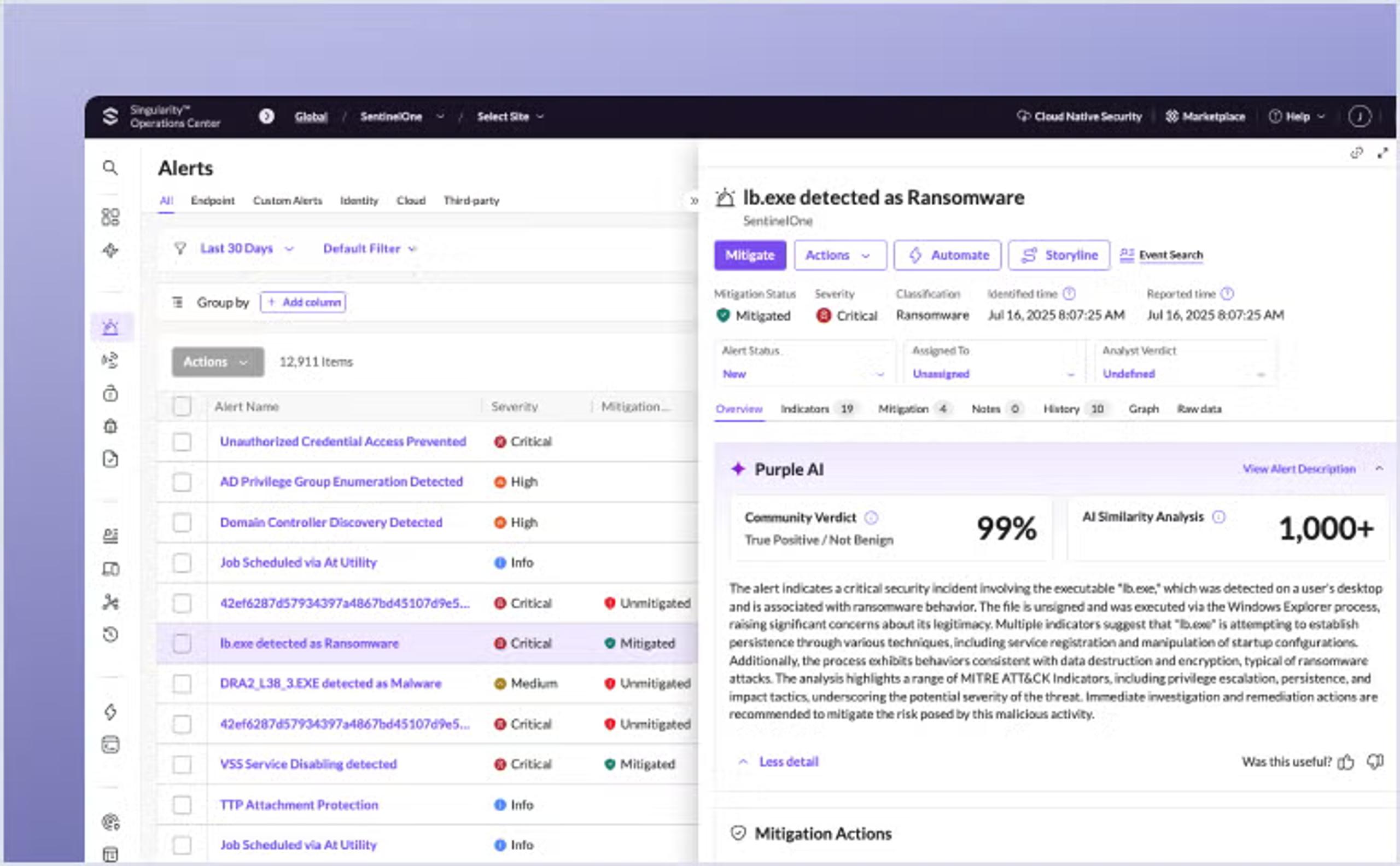
AI-powered endpoint detection and response.
3. Cloud Security
Cloud security is the set of policies, controls, and technologies that, in one capacity or another, protect data, applications, and infrastructure in cloud environments. These include security features for cloud storage, workloads, and applications. Cloud security, within the business domain, is now one of the central elements for any cybersecurity strategy due to the bump in cloud service use observed over recent years. This ensures that business data and applications are secured from all cyber threats, making their cloud resources secure and available within the business realm.
4. Application Security
Application security includes measures designed to protect software applications from various vulnerabilities and threats. These usually include secure coding, application firewalls, and periodic security reviews to enhance the security of an application. Another huge role that is played toward maintaining data integrity is when proper security measures are taken to ensure that the applications are safe from data breaches in an organization. This safeguards the software from being exploited by introducing tough measures of application security.
5. Identity and Access Management (IAM)
IAM systems ensure access to the necessary resources by authorized users only. Multi-factor authentication, single sign-on, and access control policies are components of the IAM subdomain. IAM is very critical to ensure that access is granted to the right person at the right level in order to avoid unauthorized access. Access management solutions allow organizations to manage user identity and access rights in an efficient manner. It also reduces the probability of insider threats and data leakage to a minimum.
6. Data Security
Data security is the protection of data from unauthorized access and corruption. Other controls within securing data include encryption, data masking, and DLP solutions. Data protection ensures that the privacy and integrity of sensitive information, such as personal data and financial records, remain safe. This, in turn, gives confidence to the organizations that their data will remain confidential and free from unauthorized changes.
7. Operational Security
Operational security encompasses policies and processes that deal with data assets. This policy also includes disaster recovery, incident response planning, and business continuity planning. All these activities place an organization in a much better position to react quickly and recover from cyber incidents. From an operational standpoint, businesses can begin rebuilding the damage from a cyber incident and guarantee that basic business operations can be carried out even while the incident is ongoing.
8. Mobile Security
This type of cybersecurity deals with the protection of mobile devices and the information they store. Solutions include MDM-mobility device management and MTD-mobile threat defense. With the growing use of mobile devices in business, mobile security is a critical measure in avoiding the risk of sensitive information and data that could be intentionally or unintentionally exposed. Implementation of mobile security makes sure the devices used by a company are free from worries and that the data stored within them is free from cyber threats.
Top 10 Benefits of Cybersecurity
#1. Protection against Cyber Threats
Cyber threats range from malware and ransomware to different forms of phishing attacks aimed at data breaches. However, these could all be prevented with solid security protocols. This protection helps in maintaining the integrity and availability of an organization’s digital entities. Cybersecurity measures help businesses stay one step ahead in the protection of critical assets from exploitation.
#2. Protects Sensitive Information
A few benefits of cybersecurity include the protection of sensitive information. This includes personal information, financial data, and intellectual property. Encryption, access controls, and data masking are some of the measures that help protect the data against unauthorized access and breaches. The protection of sensitive data ensures the privacy and trust of customers and stakeholders. Ensuring that data is well-protected reduces the chances for businesses to suffer data breaches and damage to their reputation and finances.
#3. Ensures Business Continuity
Cybersecurity helps ensure that business operations continue by protecting critical systems and information from cyber-attacks. In the event of a cyber incident, an effective cybersecurity strategy may minimize the downtime and ensure business operation continuity with minimal disruption. Operational business continuity is a key way to protect productivity and prevent loss in revenues. By deploying cybersecurity, the very business is in a position to respond and recover without much operational effect.
#4. Boosts Customer Confidence
The more a business invests in cybersecurity, the more rational customers will be about data security and trust in a business. Investments in cybersecurity can give businesses grounds to build and retain trust with customers; without this, it would be hard for businesses to achieve long-term success and gain customer loyalty. Trust is one of the key assets of an organization that can differentiate a business from its competitors. Through the ability to show care and take responsibility for cybersecurity, businesses can achieve a fair name and thereby engage and keep loyal customers.
#5. Conformity to Regulations
Most industries are heavily regulated, especially with regard to data and information protection or privacy. Cybersecurity measures make meeting most of these regulations easy for companies, otherwise leading to legal penalties. Such a compliance status ensures that an organization operates at best practice and within the set code of conduct and ethical boundaries in relation to its industry standards over information and data protection. This helps to maintain the reputation of an organization and sustain its legal standing within the eyes of the law. When cybersecurity measures are followed, a business is assured that most of the time, the regulatory requirements are met, staying away from the risks associated with legal penalties or fines.
#6. Protection of Intellectual Property
Trade secrets, patents, and proprietary information are some of the most valuable parts of any business. Cybersecurity is what protects this intellectual property from being stolen or accessed by unauthorized individuals, thus allowing a business to continue competing in the market. Intellectual property rights are very important in fostering innovation and ensuring that organizations have an edge over their competitors. With cybersecurity measures in place, a business will be guaranteed that its intellectual property is protected from cyber threats, and it can go about its innovation and growth.
#7. Financial Losses Reduced
The considerable financial impact of these attacks is due to breaches in data, system downtime, and liabilities in the legal aspect affecting cybersecurity. Strong cybersecurity measures can help organizations reduce their chances of such huge losses and protect their bottom line. This helps to secure the future of an organization in financial terms. It causes a business to implement certain cybersecurity measures to circumvent the financial consequences of a cyber incident and ensure the continuity of their business processes.
#8. Enhances Employee Productivity
This may involve cyber threat detection, endpoint protection, and access controls that assure the availability of the system and data, making employees more productive to work efficiently because of the low turnover time. Improvement in productivity of employees will enhance the delivery of business objectives to ensure competitiveness. Through this, companies can ensure that their employees will work effectively and efficiently without the risk of a cyber incident that may affect their operations.
#9. Identifies and Mitigates Risks
Cybersecurity measures help businesses identify and mitigate potential risks before they become major issues. Regular security testing, vulnerability scans, and threat intelligence can highlight potential threats and vulnerabilities that need to be kept in check. It is important for businesses to identify the risks and the mitigation measures to maintain a good security posture. Cybersecurity measures can be taken by businesses to ensure that any risky implementation, response, and mitigation must be reduced to lower the probability and impact of cyber incidents.
#10. Arms Reputation
A cyberattack may result in robust reputational damage to a company or organization. Building confidence with customers, partners, and stakeholders will likely be realized by a business investing in cybersecurity for its reputation. A strong posture toward cybersecurity represents dedication to sensitive data protection and business operation security. Through the effective implementation of cybersecurity, a business ensures its reputation is protected, and it can develop trust with customers and stakeholders.
Why are the Biggest Cyber Threats Targeted at Small Businesses?
Cybercriminals find small businesses easy to target, considering that the majority of them are limited in their resources and have fewer strict cybersecurity measures once adopted. There are several reasons why small companies have the most significant risk of being a victim of cybercrime, such as these:
1. Limited Resources
Complaints probably result from the fact that small businesses rarely invest in cybersecurity for lack of funds. In turn, this low budget allows little use of advanced security solutions and cybersecurity personnel. The lack of enough resources will thus offer incomplete protection and exposure to cyber-attacks. Investing in cybersecurity measures ensures that, while protecting themselves, small businesses avoid potential cyber threats and minimize the risks of financial and reputational damage.
2. Lack of Awareness
Many small business owners and employees may not be fully conscious of the potential cyber threats and the importance of practicing cybersecurity, for that matter. This ignorance is a likely cause of poor security practices and increased vulnerability to attacks. Informing and educating the employees about a better option to achieve security and reduce the risks are necessary for these businesses. Employee education means that small businesses are making available to their employees most of the information concerning past threats and pretty much assuring them that they are doing what they can to protect the environment.
3. Outdated Systems
Small businesses can rely on older systems and software, potentially putting them at a greater risk of cyberattack. Part of a proper defense against known vulnerabilities is keeping software updated and managing patches. This can heighten the possibility of a cyber incident and risk security compromise. Modern cybersecurity solutions allow small businesses to maintain the most recent versions of their software, protecting them against potential cyber threats.
4. Vulnerabilities by Third Parties
In small businesses, sometimes they will use third-party vendors and partners who open themselves up to more vulnerabilities. It’s key to ensure that a minimum standard of security is adhered to with third-party vendors and partners. Third-party risk management is all about maintaining a cyber security posture. Small businesses can help themselves in cybersecurity and, in so doing, guard against vulnerabilities that could come from their third-party vendors and partners.
Advice to Keep Small Businesses Safe from Cyber Threats
Small businesses must invest in the basic needs of cybersecurity concerning firewalls, anti-malware, and secure access controls, among others, to mitigate the existence of cyber threats. Educating employees on cybersecurity best practices can also help identify and address potential vulnerabilities. In addition, a strategic partnership can be made with trusted cybersecurity companies in services like SentinelOne for comprehensive protection and peace of mind. With the implementation of these measures, small businesses can rest assured that they are protecting themselves from most of the abrupt cyber threats and significantly reducing the potential for financial and reputational damage.
How SentinelOne Protects Your Organization Against Cybercrime
SentinelOne offers a range of products designed to provide robust cybersecurity for businesses and organizations. In this section, we will take a closer look at one of SentinelOne’s solutions and how it can protect your organization against cybercrime.
Singularity™ Cloud Security truly unifies agentless insights at speed with real-time protection at runtime. This includes solutions such as Cloud Security Posture Management (CSPM), Cloud Detection & Response (CDR), and AI Security Posture Management (AI-SPM). This platform offers well-rounded, real-time protection of public, private, on-prem, and hybrid cloud environments.

Singularity™ Platform
Elevate your security posture with real-time detection, machine-speed response, and total visibility of your entire digital environment.
How Does It Work?
Singularity™ Cloud Security provides real-time runtime protection, prioritizes risks by Verified Exploit Paths™, and does its cloud infrastructure assessments with the goal of correcting misconfigurations. The platform also delivers graph-based inventory management and the deployment of custom detection rules. Other than that, Singularity™ Cloud Security is in charge of cloud deployment, the running of checks on compliance risk issues, and roping in full forensic telemetry.
Key Features
- Kernel Dependency-Free: Singularity™ Cloud Security has no dependency on the kernel, hence efficiently assures compatibility and stability across different environments.
- Run-Time Threat Monitoring: The system provides run-time monitoring and protection of cloud workloads against the detected vulnerabilities.
- Verified Exploit Paths™: This helps an organization to prioritize risk concerning their exploitability while giving organizations the ability to stay focused on the most critical vulnerabilities.
- Graph-related inventory management: It provides a graphic representation of cloud resources to ease managing and securing complex cloud environments.
- Custom Detection Rules: This allows either an organization, an entity, or anyone else to come up with and put into practice custom detection rules to further security customized to specific needs.
Benefits
- Full Spectrum Protection: Singularity™ Cloud Security protects every aspect of cloud environments end-to-end from the inside out.
- Enhanced Visibility: The platform offers deep visibility of cloud assets, configurations, and activities to enable organizations to discover and remediate risks.
- Automated Compliances: With Singularity™ Cloud Security, an enterprise can achieve compliance with universal-fetching industry standards and regulations with drastically minimized legal penalty risks.
- Minimized Complexity: This platform reduces the complexity of cloud security management by integrating multiple security functions in a single solution, thus cutting out complex configurations.
- Scalability: It scales with the organization right up to the level of hyperscale cloud security protection.
Use Cases
- Securing Cloud Workloads: With Singularity™ Cloud Security, cloud workloads provide security from attacks such as malware, ransomware, and zero-day vulnerabilities.
- Compliance: The platform assures compliance with regulatory requirements and industry standards through automated compliance assessments and reporting for management.
- Incident Response: Singularity™ Cloud Security incident response facilitates early detection of a security incident and fast response toward the minimization of the impact that a cyber-attack could have on business operations.
- Threat Hunting: More advanced threat-hunting capabilities allow security teams to proactively find and respond to potential threats.
Conclusion
All in all, cybersecurity is an essential need for any business and organization to be protected from the perils of the ever-developing cyber threats. Effective measures for an organization to adopt include the types of cybersecurity and their benefits, which provide the ability to prevent the compromise of corporate information, systems, and reputation. Strong investment in cybersecurity not only prevents financial ruin and reputation damage but also serves as a guarantee assisting in business continuity and maintaining trust with stakeholders.
When organizations rigorously enforce all their cyber security standards, it accordingly shields them from the threats that might come by, hence guaranteeing that their efficacy in the running is potentially not compromised. Ensure that your cybersecurity investment is underpinned by the best protection in the world against the widest variety of attack techniques and strategies. Protect your organization and build a resilient security architecture with SentinelOne today.
FAQs
Here are 5 benefits of using cyber security:
- Threat Protection: Protects the organization from various cybersecurity threats, including malware, ransomware attacks, and phishing.
- Data Protection: It protects sensitive data from unauthorized access and breaches.
- Business Continuity: Eliminates, or at least minimizes, any form of downtime to ensure business operations continue without considerable interruption.
- Customer Trust: It builds trust of the customer in business and that a business genuinely cares about data protection.
- Regulatory Compliance: It supports compliance with industry regulations and prohibits the factors that might lead to extra charges and legal penalties.
The following are some major pros and cons of cybersecurity:
Pros:
- Guards from cybersecurity threats
- Safeguards sensitive data
- Ensures business continuation
- Makes the customers trust
- Presents itself as in-line
Cons:
- It can be expensive to implement
- Needs to be constantly updated and maintained
- It may require trained personnel
- Oh yes, it can grow to be quite complicated
- Potential for false positives
Yes, it is. According to a 2024 IBM report, the average cost of a data breach is expected to exceed USD 4.9 million. The cost of cyber-attacks or data breaches can be much higher than the investment in robust cybersecurity measures. Protecting your data, company reputation, and financial resources is essential for achieving better outcomes in the long term.
Discover More About Cybersecurity


Experience the Most Advanced Cybersecurity Platform
See how the world’s most intelligent, autonomous cybersecurity platform can protect your organization today and into the future.