6 Types of Cloud Security
Cloud security adopts a multi-faceted approach to threat detection and mitigation. From IaaS to SaaS, cloud security types include Network Security, Identity and Access Management, Data Encryption, and Compliance Monitoring, ensure your cloud assets are protected from cyber threats and compliance risks.

In today’s agile world, where companies rely on the cloud infrastructure to store and manage their data, ensuring the security of these cloud environments has become a crucial concern. Cloud security entails a broad range of strategies and measures aimed at protecting user data, cloud-based applications, and cloud-based infrastructure. From dealing with threats to ensuring compliance with regulations, having strong cloud security is essential in safeguarding valuable information and maintaining smooth operations for organizations.
Within this comprehensive guide, we delve into various types of cloud security that organizations can utilize to defend their resources in the cloud. By gaining an understanding of these different Types of Cloud Security, organizations can develop better defensive strategies and protect their digital assets from potential threats.
What is Cloud Security?
Cloud security encompasses policies, controls, procedures, and technologies that work together to ensure the protection of systems, data, and infrastructure in the cloud. These security measures are implemented to safeguard against breaches while supporting regulatory compliance. Additionally, they establish authentication rules for individual users and devices as well as uphold customer privacy.
Cloud security spans a wide range of activities, from securing data transfers to rigorously managing user access privileges. It includes solutions to address data breaches, system vulnerabilities, hacking incidents, and vendor risk management.
Implementing robust cloud security involves incorporating suitable tools and formulating a strategy that accounts for risks in light of the constantly evolving threat landscape inherent in cloud computing. In subsequent sections, we will explore diverse Types of Cloud Security along with their distinct features, cementing your knowledge regarding their functions and benefits within a cloud environment.
Critical Components of Cloud Security
Cloud security encompasses various important elements that function harmoniously to establish a safe and protected environment. The following components play a significant role:
#1 Safeguarding Data Privacy and Compliance
This aspect involves implementing measures to safeguard highly sensitive information from unauthorized access and potential data breaches. It includes employing data encryption, tokenization, and effective key management practices. Moreover, compliance necessitates adhering to regulatory standards established by organizations like the GDPR and HIPAA in order to ensure comprehensive data protection.
#2 Ensuring Identity Verification and Controlled Access
Identity verification and controlled access aim to ascertain that only authorized individuals can gain entry to specific resources within the system. Various methods are employed for authentication purposes, ranging from passwords to more sophisticated techniques like two-factor authentication (2FA) or biometrics. Additionally, managing user identities, determining their access permissions, as well as continuously monitoring their activities fall under this component.
#3 Detecting Threats and Implementing Responses
This part involves identifying potential threats or malicious activities within the cloud framework through tools such as Intrusion Detection Systems (IDS) and Intrusion Prevention Systems (IPS). Once detected, appropriate actions need to be taken, including isolating affected systems, deploying countermeasures against attacks, and recovering from breaches or network intrusions.
#4 Preserving Network Security
In cloud environments, network security concentrates on defending the integrity of the overall network infrastructure and its usability by authorized entities. This involves securing connections across private clouds, public clouds, and hybrid setups, to mitigate risks associated with network-based attacks. Additionally, the underlying network infrastructure requires proper protection against any potential vulnerabilities.
#5 Devising Robust Security Configurations
Implementing secure configurations pertains to arranging various aspects of cloud platforms, such as software, hardware, virtual machines, and APIs, in a manner that effectively reduces vulnerabilities while also minimizing the attack surface. This includes hardening virtual machines, securing APIs, and setting up robust firewalls.

CNAPP Market Guide
Get key insights on the state of the CNAPP market in this Gartner Market Guide for Cloud-Native Application Protection Platforms.
6 Types of Cloud Security
Following are the 6 Types of Cloud Security –
- Infrastructure as a Service (IaaS) Security
- Platform as a Service (PaaS) Security
- Software as a Service (SaaS) Security
- Firewall Security
- Hybrid Cloud Security
#1 Infrastructure as a Service (IaaS) Security
Infrastructure as a Service, or IaaS, is a familiar term in cloud computing. In this model, businesses lease essential equipment like storage, hardware, servers, and networking components that power their operations.
In the IaaS landscape, security isn’t the sole responsibility of one party. Rather, it’s a shared endeavor. The service provider takes up the mantle of securing the basic infrastructure. This includes the physical security aspects, the server hardware, and the virtualization layer. Meanwhile, the client organization holds the fort on its end by securing the operating systems, applications, data, and network traffic on its portion of the IaaS platform.
The security toolbox for IaaS might comprise elements like access controls, network firewalls, encryption, and systems designed to sniff out intrusions.
#2 Platform as a Service (PaaS) Security
Platform as a Service, which goes by the acronym PaaS, is another model in the cloud computing space. This model provides users a platform and environment that supports application development, management, and delivery. Notable examples include Google App Engine, AWS Elastic Beanstalk, and Microsoft Azure.
Like its IaaS cousin, PaaS security also hinges on a shared responsibility model. While the cloud service provider is tasked with securing the platform, the underlying infrastructure, operating system, and backend services, the customer steps in to secure the applications they develop and deploy on the PaaS platform, along with the data that these applications process or store.
For PaaS, security measures may encompass secure coding practices, application security testing, and access controls at the application level.
#3 Software as a Service (SaaS) Security
Software as a Service, colloquially known as SaaS, represents a cloud computing model where a service provider hosts applications and delivers them to customers via the Internet. Familiar faces in this sphere include Google Workspace, Salesforce, and Microsoft 365.
With SaaS, the service provider shoulders much of the burden when it comes to security. Their job is to secure the infrastructure, platform, and software applications, often going further to incorporate built-in security features like data encryption and user authentication. As for the customers’ part in this security dance involves managing their data and ensuring the right user access controls are in place.
#4 Firewall Security
Essentially, firewall security operates as a surveillance system for network traffic, monitoring and managing both inbound and outbound activity according to pre-set safety regulations. These firewalls form a protective layer between secure internal systems and potentially harmful external networks, including the likes of the Internet.
In cloud platforms, security can be enhanced through specialized cloud-based firewalls provided by the cloud service or third-party solutions engineered for such deployments. These firewalls often come with additional capabilities such as access regulation, intrusion spotting, and backing for Virtual Private Networks (VPNs).
#5 Hybrid Cloud Security
Hybrid cloud security involves using both hybrid and multi-cloud strategies. It lets organizations use a mix of private and public cloud resources. Hybrid cloud reduces vendor lock-ins, optimizes for specific needs. and maintains control and security for sensitive data and workloads. You can scale up or down and use public cloud resources as needed.
If a project running on a private cloud needs more resources, it can use the public cloud’s resources, and maintain operational flows without accumulating extra charges. And yes, hybrid cloud security is multi-cloud security.
Choosing the Right Cloud Security Type for Your Business
Choosing the proper form of cloud security for your business holds great importance and relies on various factors. Here are key considerations to assist you in making an informed decision:
1. Understand Your Business Requirements
Each business possesses distinct needs and requirements. Comprehend the data that requires protection, the specific cloud services utilized (IaaS, PaaS, SaaS), as well as any mandatory regulations or compliance obligations. These requirements will shape your approach toward security.
2. Evaluate Your Cloud Environment
Different cloud environments necessitate different security strategies. For example, utilizing a hybrid cloud will require security measures that seamlessly integrate with public and private cloud components. Securing data and managing access across diverse environments becomes crucial if you employ multiple clouds.
3. Consider the Type of Data You Manage
The data’s sensitivity and nature should guide your security plan. For instance, a strong strategy for preventing data loss may be necessary if sensitive customer information is handled. Similarly, operating within heavily regulated industries such as healthcare or finance may warrant advanced tools for compliance management.
4. Assess Your Team’s Capabilities
Take into account your team’s technical expertise when selecting cloud security options. Some solutions may demand specialized skills for implementation and management purposes. If these skills are lacking internally, considering managed security services or opting for solutions that provide expert support will need to be contemplated.
5.Vendor Evaluation
While selecting cloud security solutions, give thought to the reputation, dependability, and track record of potential vendors under consideration.” Look for vendors who offer robust security features while exemplifying in% a deeply-rooted commitment to safeguarding their systems”. Furthermore, knowing their track record in Information Security is another significant factor to consider.
CNAPP Buyer’s Guide
Learn everything you need to know about finding the right Cloud-Native Application Protection Platform for your organization.
How SentinelOne Enhances Cloud Security?
SentinelOne is an advanced autonomous AI-driven cyber security platform designed specifically for hybrid and multi-cloud environments. This comprehensive solution offers various features that enhance your cloud security:
- Thorough Detection of Cloud Misconfigurations
SentinelOne can identify and notify you about any vulnerabilities or weaknesses in your cloud resources and assets. It runs over 2,100 built-in configuration checks and can detect configuration drifts to effectively mitigate them.
By sourcing information from multiple databases, it provides extensive coverage. Additionally, SentinelOne’s Compliance dashboard keeps you updated on compliance statuses and other related issues within your environment, enabling you to prevent potential security breaches.
- Strong Vulnerability Management
With SentinelOne Singularity Cloud Security, managing vulnerabilities becomes easier as it identifies resources with known Common Vulnerabilities and Exposures (CVEs). It also performs assessments for zero-day vulnerabilities and conducts agentless scans of Virtual Machines (VMs) to minimize the risk of data breaches and strengthen cloud security. SentinelOne offers advanced threat protection for NetApp and can secure Amazon S3 storage buckets as well.
- Offensive Security Engine
Powered by its Offensive Security Engine feature, SentinelOne enables simulated attacks that comprehensively test your system’s security defenses. By doing so, this tool equips your security team with valuable knowledge about potential attack vectors and allows them to take preemptive measures. Moreover, it offers visualizations of misconfigurations across resources, showcasing possible lateral movement paths and the extent of their impact. SentinelOne provides verified exploit pathways to run attack simulations on and uncovers hidden weaknesses.
- Efficient Protection against Cloud Credential Leakage
SentinelOne provides real-time detection of leaked cloud credentials such as IAM keys, Cloud SQL details, and Service accounts found in public repositories. It can validate secrets before reporting them as potential leaks to avoid false positives. Furthermore, it seamlessly integrates with popular code repositories like GitHub, GitLab, and Bitbucket Cloud—enabling you to define policies that block commits and pull requests containing sensitive information.
- Active Directory (AD) Protection
Integrate data and SOAR actions with existing data governance solutions. SentinelOne’s intelligent technology blocks Active Directory attacks, fileless attacks, ransomware, malware, and protects organizations from cases of phishing and account hijacking. It eliminates insider threats and SentinelOne Singularity Cloud secures all endpoints, identities, and private cloud platforms so to speak.
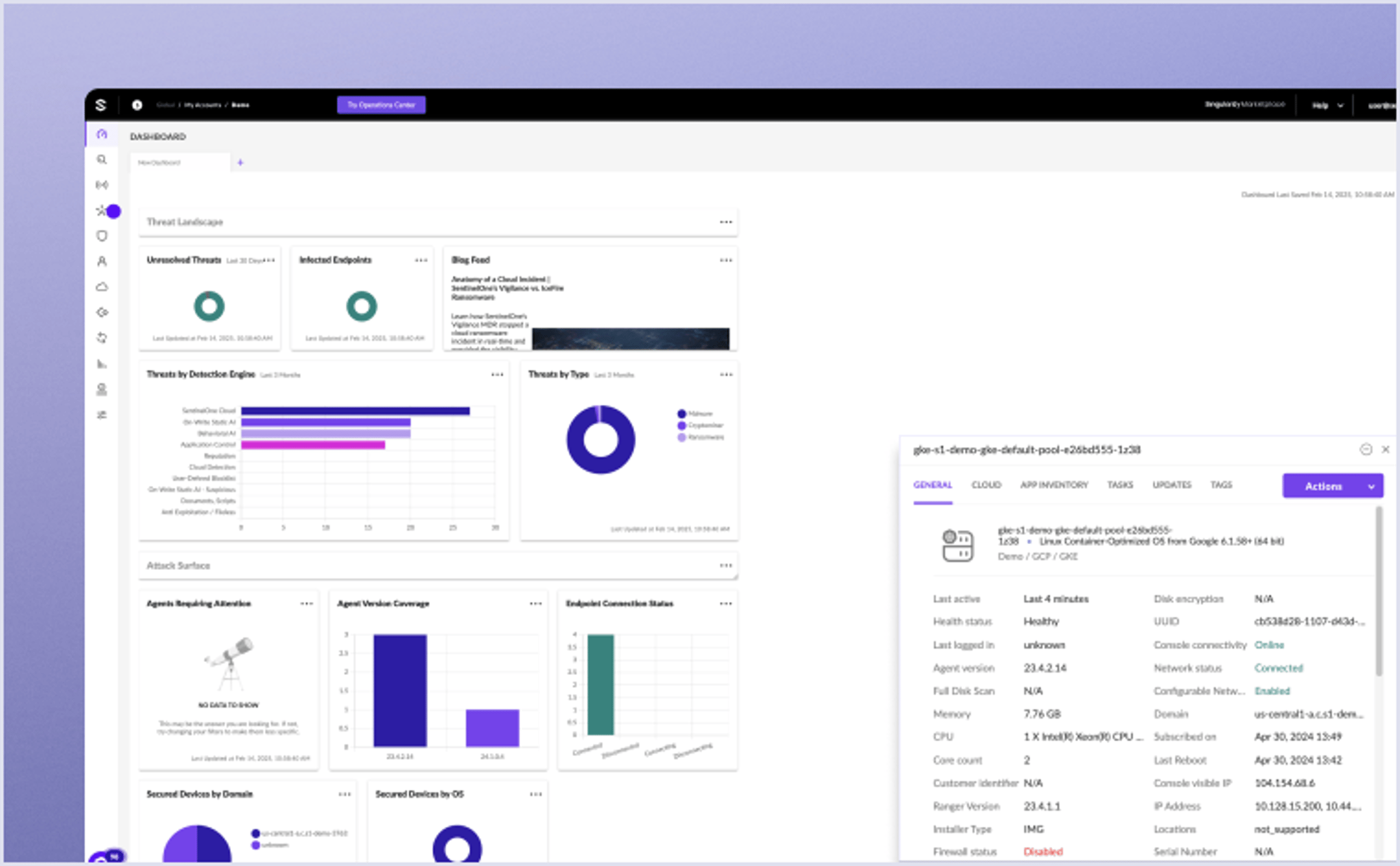
AI-powered cloud workload protection (CWPP) for servers, VMs, and containers, that detects and stops runtime threats in real time.
Conclusion
As industries increasingly transition to the cloud, it is crucial to have a solid understanding of various Types of Cloud Security in order to safeguard data, applications, and infrastructure against potential threats. Each kind of cloud security, from network security to data loss prevention, has an important role within a comprehensive cloud security strategy.
Selecting the appropriate type of cloud security for your business can be complex. It requires a thorough comprehension of your business needs, your specific cloud environment, the sensitivity of your data, your technical capabilities, and the range of security measures provided by different vendors.
SentinelOne offers an exhaustive platform for cloud security that effectively caters to diverse requirements in various cloud settings. With robust functionalities designed for detecting misconfigurations, managing vulnerabilities, addressing offensive security risks, preventing credential leakage, and rapidly responding to cloud incidents – SentinelOne possesses outstanding capability for significantly bolstering your organization’s effectiveness in securing its cloud resources.
Cloud Security Demo
Discover how AI-powered cloud security can protect your organization in a one-on-one demo with a SentinelOne product expert.
Types of Cloud Security FAQs
Cloud security spans six main areas. Identity and Access Management (IAM) controls who can log in and what they do. Network and Device Security uses firewalls, VPNs, and encryption to protect data in transit and on endpoints. Security Monitoring and Alerting (e.g., SIEM, CSPM) watches for suspicious activity.
Governance enforces policies and standards across teams. Disaster Recovery and Business Continuity ensures backups and failover work when needed. Legal and Regulatory Compliance covers rules like GDPR, HIPAA, and PCI DSS to avoid fines.
Cloud Security Posture Management continuously scans IaaS, PaaS, and SaaS settings to spot misconfigurations against best-practice benchmarks. It tracks when drift occurs—say an S3 bucket made public or a port opened—and flags it in real time.
CSPM tools also map controls to standards like PCI or GDPR and generate compliance reports, so you see gaps and remediate before auditors arrive.
A Cloud Workload Protection Platform runs agents or APIs on VMs, containers, and serverless functions to monitor runtime behavior. It enforces vulnerability scanning, runtime exploit prevention, and configuration checks across both on-premises and cloud workloads.
CWPPs watch for unusual process injections or privilege escalations and can auto‐contain threats wherever those workloads run.
Cloud Detection and Response tools ingest audit logs from services such as AWS CloudTrail and GCP Audit Logs to build an event history of API calls and configuration changes. They apply analytics and threat‐hunting rules to spot malicious patterns—like a sudden IAM policy change or unusual console login—and trigger alerts or automated playbooks to isolate compromised resources.
Cloud Infrastructure Entitlement Management continuously discovers every identity—human or machine—and their permissions across your cloud accounts. CIEM assesses over-privileged roles, recommends entitlement adjustments, and can auto-remove excessive rights.
By enforcing just-enough access and alerting on drift, CIEM stops identity sprawl and insider-risk exploits.
IAM (Identity and Access Management) provides user authentication (passwords, MFA) and authorizes access to cloud resources, enforcing who can read, write, or configure services.
PAM (Privileged Access Management) sits atop IAM, controlling and auditing elevated accounts—like root or service-principal logins—through session brokering, time-limited credentials, and credential vaulting to prevent misuse.
Agentless scanning uses APIs rather than installed software, so you can assess new resources instantly without deploying or updating agents. It offers broad coverage—scanning storage, databases, and network rules across multiple clouds—while avoiding agent-related performance hits and deployment delays. You get faster, scalable visibility into drift and security gaps.
Secret scanning tools watch code repositories and pipeline logs for patterns matching API keys, tokens, certificates, and passwords. When a credential slips into source control or build logs, they alert you immediately or block the commit.
This prevents attackers from discovering hard-coded secrets before those builds deploy to production.
IaaS (VMs, networking) demands host hardening, patch management, and network micro-segmentation. PaaS (containers, app platforms) needs runtime protection, image-scanning, and configuration validation. SaaS relies on strong IAM, data encryption, and vendor-provided controls.
Public clouds focus on multi-tenant isolation; private clouds emphasize physical security and network perimeter controls; hybrid environments must unify policies across both sides.
Discover More About Cloud Security



Your Cloud Security—Fully Assessed in 30 Minutes.
Meet with a SentinelOne expert to evaluate your cloud security posture across multi-cloud environments, uncover cloud assets, misconfigurations, secret scanning, and prioritize risks with Verified Exploit Paths™.