What is Cloud Detection and Response (CDR)?
Stay ahead of threats with Cloud Detection and Response! These cutting-edge solutions identify and neutralize cloud-based attacks in real-time, providing unparalleled visibility, threat hunting, and incident response to safeguard your digital assets.
Organizations are migrating workloads to the cloud at unprecedented rates. Cloud vendors are known for not providing the best security, and malicious actors can take advantage of compromises. Cloud Detection and Response (CDR) considers the various threats in these environments. It identifies, detects, investigates, and remediates threats so enterprises don’t suffer from data breaches.
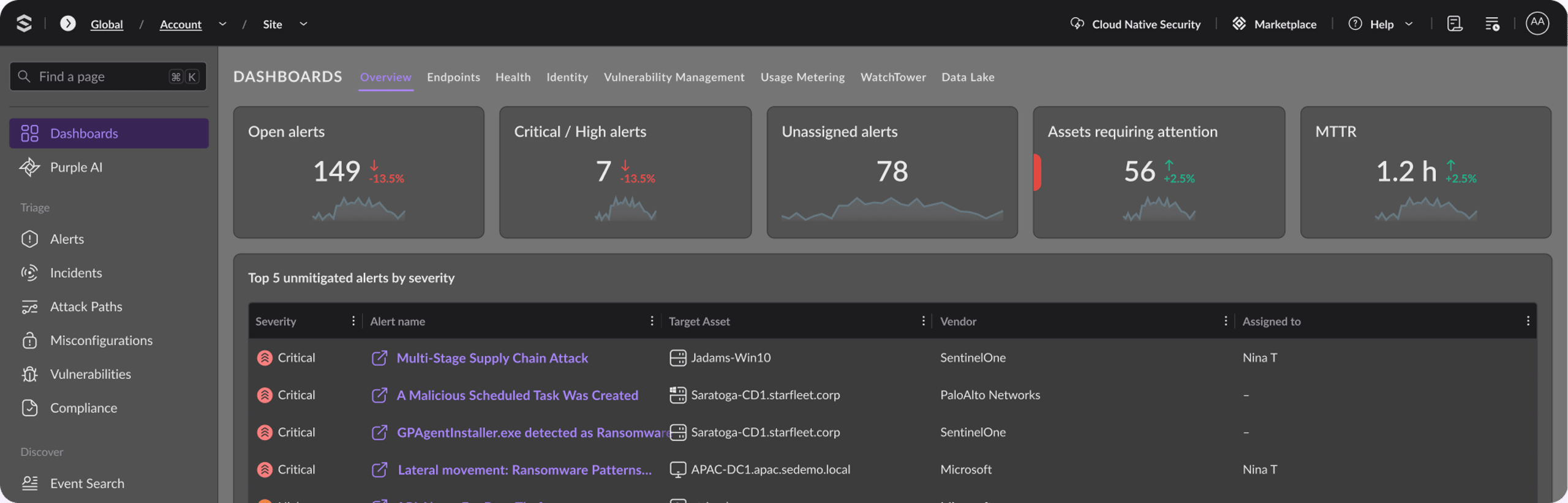
Cloud Detection and Response (CDR) constantly monitors and analyzes large volumes of sensitive data for accounts, configurations, privileges, SaaS solutions, and cloud services. They provide enhanced visibility into the cloud infrastructure and generate alerts about risks. With CDR technology solutions, organizations can prioritize risks, discover critical vulnerabilities, and immediately address them.
Let’s dive deep into how Cloud Detection and Response works and why it’s essential.
What is Cloud Detection and Response (CDR)?
Modern cloud environments are known to be susceptible to account takeovers, malware, misconfigurations, and a variety of insider threats. Cloud Detection and Response (CDR) continuously collects, analyzes, and delivers insights about an organization’s cloud security posture. It makes practical security recommendations after evaluating activities across SaaS, IaaS, and PaaS cloud services. In summary,
CDR provides security operations center (SOC) teams with a consolidated view of an enterprise’s cloud security. It prevents attackers from gaining unauthorized access to resources and assets and mitigates social engineering attacks. In some cases, hackers attempt to conduct spear phishing or launch brute-force password-guessing attacks. CDR prevents cloud credentials leakages and ensures the safety of users by preventing account takers and eliminating the chances of cloud services getting hijacked.
Security teams can view which users can access what applications and enforce consistent visibility and protection, all in one place.
Why is Cloud Detection and Response Important?
Organizations are growing accelerated, and cloud environments have become increasingly complex with the increasing adoption of cloud services. Multi-cloud environments are primarily known to experience critical vulnerabilities due to interconnected applications, APIs, containers, integrations, and gateways. Organizations also use cloud networking storage, Kubernetes clusters, and serverless functions, introducing additional attack surfaces.
Cloud Detection and Response is vital because it provides deep visibility into complex cloud and multi-cloud environments via threat detection and analysis. Monitoring and changing user permissions and remediating critical cloud security issues or potential exploits are necessary. If vulnerabilities go unnoticed or attackers take advantage of hidden misconfigurations, it could cause a data breach.
Leading CDR solutions are designed to be scalable and can monitor deployment parameters in real time. They are dynamic, versatile, and can adapt to changing security configurations; CDR can even reduce the number of false alerts that traditional security solutions can’t detect.
How Cloud Detection and Response (CDR) Work?
Cloud Detection and Response takes a proactive and multi-layered approach to cloud security and gives organizations a strong understanding of their current cloud security posture. It uses various security tools and techniques to protect cloud systems and assets. There are several components included with modern CDR solutions, such as threat detection, incident response and prevention, and real-time alerting and reporting tools.
Threat prevention refers to preventing cyber-attacks and any significant incidents on the cloud. It also implements proper access control policies, firewalling, and encryption and covers intrusion detection. CDR threat detection uses machine learning algorithms, Artificial Intelligence, and Big Data analytics to deliver comprehensive insights and analyze network attack patterns. CDR threat response issues real-time alerts and email notifications and recommends that users prevent further damage and take remediation actions.
What are the Capabilities of Cloud Detection and Response?
- CDR can detect lateral movement paths in cloud networks and identify complex exposure chains that are known to cause data breaches
- It gathers threat intelligence across multi-cloud and hybrid environments, enables accurate detection and identification of cross-account malicious activities, and remediates cross-cloud threats.
- CDR can continuously update cloud environment databases and provide deeper levels of risk validation
- It uses an evidence-based incident response and investigation approach, even providing status code support and granular attack-vector identification.
- CDR solutions are capable of providing continuous workload protection across cloud VMs, containers, and serverless functions
- CDR can secure cloud APIs, identity access, and management controls and delivers end-to-end cloud security at scale for all cloud ecosystems

CNAPP Market Guide
Get key insights on the state of the CNAPP market in this Gartner Market Guide for Cloud-Native Application Protection Platforms.
5 Steps to Cloud Detection and Response
Here are five steps to effective cloud detection and response for organizations:
- Acquire Complete Cloud Asset Coverage
Choosing a reliable cloud detection and response solution that provides complete cloud asset coverage is essential. Agentless capabilities and being able to run resource checks even when system functions are running in the background are also crucial.
- Gain Deep Visibility Into Multi-Cloud Environments
Organizations must achieve deep visibility into multi-cloud environments and know the risks and threats. Visibility into cloud assets, infrastructures, and operating systems is also needed. You must also achieve visibility into data inventory, existing APIs, and all accounts’ identity and access management permissions.
- Collect Comprehensive Cloud Telemetry
A good Cloud Detection and Response solution must be capable of collecting comprehensive cloud telemetry information. Cloud-service Providers (CSPs) offer built-in cloud threat detection features, can analyze network flow logs, and leverage insights from cutting-edge threat intelligence to enhance cloud security and provide context-based risk analysis.
- Implement Contextual Intelligence
An effective Cloud Detection and Response platform can build centralized data models and collect and correlate data across each asset, including details about workloads, configurations, and potential risks associated with internal and external communications. Security teams must focus on generating severity scores and swiftly fix the most critical issues in order of priority.
- Develop Workflow Integrations
Cloud Detection and Response (CDR) solutions should be able to analyze and resolve issues in workflows quickly. They are expected to provide effective remediation orchestration, real-time alerts, SOARs, SIEMs, ticketing, and seamless technology integrations. CDR enables security teams to be highly productive, organize, and consolidate cloud security workflows into ongoing business operations.
Cloud Detection and Response Features to Consider
- Automated Incident Response and Prevention – CDR must allow organizations to isolate affected systems quickly, create incident response plans, and take effective action against potential threats.
- Analytics and reporting – Good CDR solutions should provide real-time analytics and excellent reporting capabilities. The ability to continuously monitor an organization’s security posture and identify areas of improvement is critical.
- Real-Time Threat Detection – Organizations must rapidly identify and detect threats. It’s crucial to discover potential attack surface vectors across cloud ecosystems, scope them, and provide adequate security recommendations for further mitigation. CDR should be able to identify vulnerabilities from the roots and address them. It should be able to detect risks in cloud workloads and configurations and find out which events are potentially dangerous and require immediate action.
- Scalability – Modern CDR is expected to scale up with growing multi-cloud environments. CDR should be capable of analyzing high volumes of data without compromising effectiveness, regulating web traffic, and optimizing cloud performance.
- Multi-Cloud Support – Most CDR solutions should be capable of offering multi-cloud and multi-tenancy support across public, hybrid, and private cloud infrastructures. Adopting CDR tools that simplify security management and enhance visibility into entire cloud ecosystems is essential.
- Ongoing Support and Maintenance – Even the best CDR tools can sometimes be prone to technical issues. Therefore, it’s essential to select a CDR solution that comes from a reliable and reputed vendor. The CDR vendor should provide ongoing support, push regular updates, and offer maintenance services. Organizations will then be able to prevent platform downtimes and ensure business continuity.
Why SentinelOne for Cloud Detection and Response (CDR)?
SentinelOne can improve Cloud Detection and Response (CDR) for enterprises via its Singularity™ Cloud Security Platform.
You get full forensic telemetry, and response, containment, and remediation features. SentinelOne’s agentless CNAPP comes with a pre-built and customizable detection library. You get the latest insights and incident response from experts. Easily assess compliance, eliminate misconfigurations, and enjoy agentless deployment in minutes. We enhance Cloud Security Posture Management (CSPM) and also assist with AI Security Posture Management (AI-SPM). You can discover AI pipelines, models, and configure checks on AI services.
SentinelOne can manage your cloud entitlements, prevent secrets leakage, and tighten permissions. SentinelOne’s Graph Explorer can do graph-based asset inventory management. You can visually map cloud, endpoint, and identity assets. Track and correlate alerts from different sources. You can determine the blast radius and impact of threats. SentinelOne’s comprehensive CNAPP can integrate with CI/CD pipelines and incorporate the best DevSecOps practices.
You can scan public and private repos, container registries, images, and IaC templates. Get the benefits of agentless vulnerability scanning and 1000+ out-of-the-box and custom rules with it. The platform also provides container and Kubernetes security posture management. It does misconfiguration checks and compliance standard alignment. The CNAPP also provides real-time AI-powered protection and can monitor, detect, and protect any workload, whether they are located in public, private, hybrid, or on-prem environments.
Book a free live demo today.
See SentinelOne in Action
Discover how AI-powered cloud security can protect your organization in a one-on-one demo with a SentinelOne product expert.
Conclusion
Cloud Detection and Response (CDR) can provide fast threat remediation and investigation and integrate with the latest SIEM solutions. All organizations need robust visibility into existing cloud infrastructures and enforce shift-left security. Native CDR can consolidate native and third-party runtime threats, analyze cloud intelligence, send alerts, and create threat intelligence feeds to provide frictionless workflow integrations and accelerate responses.
FAQs
CDR is critical in CNAPP by providing advanced cloud threat detection, incident response, and continuous threat monitoring capabilities for multi-cloud and hybrid ecosystems. CDR helps SOC teams defend against insider threats, access misuse, and account compromises and protects cloud infrastructures and applications.
Cloud detection and response is a cutting-edge and innovative approach to cloud security that enables SOC teams to improve their organization’s security posture. It considers emerging threat trends and implements effective measures for addressing them.
XDR pulls data from multiple sources, while CDR is limited to the cloud. Extended Detection and Response (XDR) extends CDR solutions and provides a unified view across various platforms. While CDR is specific to cloud-based threats and incidents and limited to threat detection, visibility, and analytics, XDR covers networks, applications, and cloud environments.
Discover More About Cloud Security




Your Cloud Security—Fully Assessed in 30 Minutes.
Meet with a SentinelOne expert to evaluate your cloud security posture across multi-cloud environments, uncover cloud assets, misconfigurations, secret scanning, and prioritize risks with Verified Exploit Paths™.