Authentication Tokens: Types, Uses & Best Practices
Authentication tokens verify identity, but stolen tokens bypass security. Learn about JWT, OAuth 2.0, SAML, and hardware tokens, common mistakes, and defense strategies. See how SentinelOne detects identity-based attacks in Active Directory and Entra ID.

What is an Authentication Token?
Imagine this: You log in to your enterprise application at 9 a.m. in New York. Thirty minutes later, someone accesses your account from Tokyo. Your password never changed. Your multi-factor authentication (MFA) token stayed on your desk. But an attacker just walked through your front door using a stolen authentication token.
Authentication tokens are the digital badges that verify your identity across enterprise systems. They are cryptographic credentials, so your password never travels with the request. According to NIST Special Publication 800-63B-4, these tokens establish the foundation of digital identity assurance in modern cybersecurity architectures.
The scenario above is not hypothetical. In 2023, a threat actor pulled session tokens out of support files uploaded to Okta's customer support system and used them to hijack the live sessions of five customers. No password was cracked. No MFA prompt was answered. A valid token was presented, and the system did exactly what it was designed to do.
Understanding how tokens work, where they fail, and how to protect them is what separates authentication infrastructure that holds from infrastructure that hands an attacker the keys. This page walks through all three.
Why Authentication Tokens Are Security Targets
Tokens sit at the intersection of your identity security and access control architecture. When you authenticate to any system, you don't carry your actual credentials around for every request. Instead, you receive a token that says "this person already proved who they are."
Steal a token and an attacker bypasses authentication entirely. Forge one and they impersonate a legitimate user. Manipulate how a token is validated and they escalate privilege without ever holding an authorized account.
The cost of getting this wrong is well documented. IBM's 2026 Cost of a Data Breach Report puts the global average breach at $4.99 million, a record high. Verizon's 2026 Data Breach Investigations Report (DBIR) found that vulnerability exploitation surpassed stolen credentials as the top breach entry point for the first time in the report's 19-year history. Credentials held that spot until this year, and a stolen token is a credential that has already cleared the front door.
To understand these risks, security teams must first recognize the different token types organizations deploy and how each presents unique security considerations.
Types of Authentication Tokens
Organizations deploy different token types based on their security requirements and use cases.
- JSON Web Tokens (JWTs): Self-contained tokens carrying encoded claims in a header-payload-signature structure. JWTs enable stateless verification where servers validate tokens without database lookups, making them ideal for distributed microservices architectures.
- OAuth 2.0 Tokens: The OAuth framework uses two token types working together. Access tokens provide short-lived credentials for API calls, while refresh tokens obtain new access tokens without re-authentication. This separation limits damage from token theft.
- SAML (Security Assertion Markup Language) Assertions: XML-based tokens exchanged between identity providers and service providers for enterprise single sign-on. SAML remains dominant in legacy enterprise environments and B2B federation scenarios.
- Session Tokens: Server-generated identifiers linking browsers to server-side session state. Unlike stateless JWTs, session tokens require server storage but offer immediate revocation capabilities.
- FIDO2/Hardware Tokens: Physical authenticators using public key cryptography through WebAuthn APIs. These tokens provide phishing resistance through cryptographic origin binding, ensuring credentials work only on legitimate sites.
While each token type serves different purposes, they share common architectural elements that determine their security posture. Those components are where hardening starts.
Core Components of Authentication Tokens
Authentication tokens contain specific elements that determine their security posture and functional capabilities.
- Token Structure: JWTs consist of three sections: header (specifies signing algorithm like RS256 or ES256), payload (contains claims), and signature (ensures cryptographic integrity). SAML assertions use XML-formatted statements per OASIS SAML V2.0 specifications.
- Token Metadata: Tokens carry metadata within their payload. Expiration timestamps (exp claim) define validity windows, issued-at claims (iat) establish token age, JWT ID (jti) provides unique identifiers for revocation tracking, and audience restrictions (aud claim) prevent token reuse across services.
- Session Entropy: Web application session tokens require minimum entropy generated through cryptographically secure pseudorandom number generators (CSPRNGs).
- Hardware Token Cryptography: FIDO2 tokens combine WebAuthn browser APIs with Client to Authenticator Protocol (CTAP). Private keys never leave the secure element, and cryptographic origin binding ensures credentials work only on legitimate websites.
These components combine into workflows, and the workflow is where token security is won or lost. The sections below trace each flow, including how tokens interact with multi-factor authentication.
How Authentication Tokens Work
Authentication tokens follow distinct workflows depending on type and deployment context.
- JWT Authentication Flow: You submit credentials to the authentication server. The server validates credentials, generates and cryptographically signs a JWT with expiration, audience, and issuer claims, and returns it to your client. For subsequent requests, you include the JWT in the Authorization header. The resource server validates the signature and verifies claims before granting access.
- OAuth 2.0 Authorization Code Flow: You request access to a protected resource. After authentication and consent, the server issues an authorization code that your application exchanges for access and refresh tokens. You use short-lived access tokens for API calls and exchange refresh tokens for new access tokens when needed.
- SAML Web Browser SSO: You attempt to access a service provider application, which redirects you to the identity provider. After authenticating, the IdP generates a signed SAML assertion and posts it to the service provider, establishing your authenticated session and enabling single sign-on across multiple applications.
- Token Refresh and Rotation: Short-lived access tokens expire frequently, requiring refresh mechanisms. Token rotation generates a new refresh token each time you use one, preventing replay attacks. If someone reuses a refresh token, the system detects potential compromise and can revoke the entire token family.
- Hardware Token Authentication: You register your FIDO2 authenticator by generating a key pair in the device's secure element. During authentication, the service sends a cryptographic challenge that your authenticator signs with the private key. The service verifies the signature using the registered public key.
Implemented correctly, these workflows earn their complexity. Here is where that pays off.

Reduce Identity Risk Across Your Organization
Detect and respond to attacks in real-time with holistic solutions for Active Directory and Entra ID.
Authentication Token Use Cases
Authentication tokens address specific security and operational requirements across enterprise environments.
- Enterprise Single Sign-On: SAML assertions enable employees to authenticate once and access dozens of applications without repeated logins. Identity providers like Okta, Azure AD, and Ping Federation issue tokens that service providers trust, reducing password fatigue and centralizing access governance.
- API and Microservices Security: OAuth 2.0 access tokens secure service-to-service communication in distributed architectures. Each microservice validates incoming tokens independently, enabling stateless scalability without shared session stores.
- Third-Party Authorization: OAuth 2.0 enables "Login with Google" scenarios where users authorize applications to access their data without sharing passwords. The authorization server issues scoped tokens limiting what applications can access.
- Mobile Application Sessions: JWTs provide persistent authentication for mobile apps. Tokens stored in iOS Keychain or Android KeyStore survive app restarts, providing seamless user experiences while maintaining security through platform-specific secure storage.
- Machine-to-Machine Authentication: Automated systems and IoT devices use client credentials grants to obtain tokens for API access. These tokens authenticate scheduled jobs, monitoring systems, and device communications without human interaction.
The pattern holds across all of them. Tokens replace repeated credential transmission with a claim the receiving system can verify on its own.
Key Benefits of Authentication Tokens
Token-based authentication beats traditional session management on four counts:
- Stateless Scalability: Token-based systems eliminate server-side session storage requirements, enabling microservices architectures where individual services independently verify credentials without shared state.
- Cross-Domain Single Sign-On: SAML 2.0 assertions and OpenID Connect enable single sign-on. Users authenticate once and access multiple applications without repeated logins, centralizing authentication governance.
- API Security and Zero Trust: Service-to-service authentication using OAuth 2.0 client credentials and signed JWTs prevents rogue services from impersonating trusted ones, essential for zero-trust architectures.
- Reduced Attack Surface: Standards-based implementation protects against specific attacks. HttpOnly cookies prevent JavaScript access. SameSite attributes stop Cross-Site Request Forgery (CSRF) attacks. FIDO2 tokens achieve phishing resistance through cryptographic origin binding.
However, these benefits come with trade-offs. The same architectural decisions that enable scalability and flexibility also introduce challenges that security teams must address.
Challenges and Limitations of Authentication Tokens
Token-based authentication introduces specific operational and security challenges that require careful architectural planning.
- Token Revocation Complexity: The stateless nature providing scalability benefits creates challenges for immediate access termination. Stateless tokens remain valid until expiration, requiring either short lifetimes that increase refresh overhead, token blacklisting infrastructure that negates stateless benefits, or acceptance of revocation latency windows.
- Token Lifetime Management Trade-offs: Short access token lifetimes limit potential damage on compromise but require constant refresh token exchanges. Long lifetimes improve user experience but create larger exposure windows if tokens are stolen.
- Secure Token Storage Across Platforms: Any script running in the page can read localStorage and sessionStorage, so a single Cross-Site Scripting (XSS) flaw turns either one into a list of valid tokens. The widely adopted hybrid approach stores refresh tokens in HttpOnly cookies, keeps access tokens in memory, and applies CSRF checks on the refresh endpoint. An access token in memory is still exposed to memory dumping on a compromised host, which is what endpoint security is for. Mobile applications need platform-specific storage: the iOS Keychain holds tokens directly, while Android encrypts them under a key held in the Android Keystore. Server-to-server communication belongs in a secret management system such as HashiCorp Vault or AWS Secrets Manager.
- Key Rotation and Cryptographic Management: Key rotation in production environments introduces coordination complexity. Organizations must maintain multiple valid signing keys during rotation windows, coordinate rotation across distributed services, and handle key identifier (kid) validation properly.
These implementation challenges create specific vulnerabilities that attackers actively exploit in enterprise environments.
Common Authentication Token Implementation Mistakes
Most authentication token breaches stem from implementation mistakes rather than cryptographic flaws. Understanding these common errors helps security teams prioritize their hardening efforts.
- Insecure Client-Side Storage: Storing authentication tokens in browser localStorage or sessionStorage represents one of the most prevalent implementation mistakes. Any JavaScript code executing within the page context can directly access and exfiltrate authentication tokens, making them immediately vulnerable to XSS attacks.
- Signature Validation Failures: Failing to properly validate JWT signatures creates exploitable authentication bypass vulnerabilities. Algorithm confusion attacks manipulate the algorithm header from RS256 (asymmetric) to HS256 (symmetric), then sign tokens using the public key as an HMAC secret. Vulnerable systems accept these modified tokens, allowing privilege escalation. This vulnerability was documented in CVE-2024-54150 with a CVSS 9.1 CRITICAL severity rating. Some implementations accept tokens specifying "alg: none," effectively processing unsigned tokens as valid.
- Excessive Token Lifetimes: Setting token lifetimes too long creates persistent security risks. Long-lived tokens provide attackers with extended windows of opportunity. Once compromised through XSS or man-in-the-middle attacks, tokens with excessive lifetimes enable unauthorized access for days or weeks rather than minutes.
- Missing Token Revocation Mechanisms: The absence of token revocation capabilities represents a significant architectural gap. Compromise of Primary Refresh Tokens (PRTs) used in SSO implementations like Azure AD proves particularly problematic. Without revocation mechanisms, organizations cannot terminate compromised sessions in real-time, forcing reliance on natural token expiration.
- Insecure Key Management: Key management failures create systemic vulnerabilities. SQL injection vulnerabilities in key retrieval mechanisms can expose signing keys when applications use vulnerable SQL queries to retrieve JWT keys via the kid parameter. Storing sensitive information in JWT payloads creates unnecessary data exposure because JWT claims are only base64-encoded (not encrypted), making them trivially readable by anyone with token access.
These failures have names and dates. In April 2022, an attacker used OAuth tokens stolen from Heroku and Travis CI to download private repositories from dozens of organizations, including npm. The Okta session-token theft described at the top of this page worked the same way: valid tokens, presented by the wrong party, accepted without question.
Every one of these failures is preventable, and the controls are already documented. Defense in depth built on established standards closes the gaps attackers count on.
Authentication Token Best Practices
Protecting authentication tokens requires implementing defense-in-depth strategies based on authoritative security standards such as NIST SP 800-63B-4, OWASP, and IETF specifications.
- Deploy HttpOnly and Secure Cookies: Combine refresh tokens stored in HttpOnly cookies with access tokens kept in memory. Set the HttpOnly flag preventing JavaScript access to cookie contents. Configure the Secure flag ensuring transmission only over HTTPS connections. Implement the SameSite attribute for CSRF protection.
- Implement Short-Lived Access Tokens with Rotation: Configure access token lifetimes based on risk tolerance. Token rotation generates a new refresh token each time you use one, preventing replay attacks. Track all issued refresh tokens using their jti claims and invalidate previous tokens immediately after successful rotation.
- Enforce Strict Signature Validation: Explicitly reject tokens with "alg: none" specified in the header. Validate that signing algorithms match expected types, preventing RSA/HMAC confusion attacks. Use parameterized queries for key retrieval to prevent SQL injection.
- Deploy Token Binding: Configure Conditional Access policies to enforce token binding, ensuring tokens cannot work outside their originally issued devices through Trusted Platform Module (TPM) or Secure Enclave integration.
- Implement Revocation Infrastructure: Build database-backed token family tracking using jti claims. Create administrative interfaces for session revocation and deploy "logout everywhere" functionality allowing users to revoke all sessions when they suspect compromise.
Even with these best practices in place, sophisticated attackers continue to find ways to compromise tokens. When prevention does not hold, what matters is how quickly you see the misuse and how quickly you can act on it.
How SentinelOne Detects Identity-Based Attacks
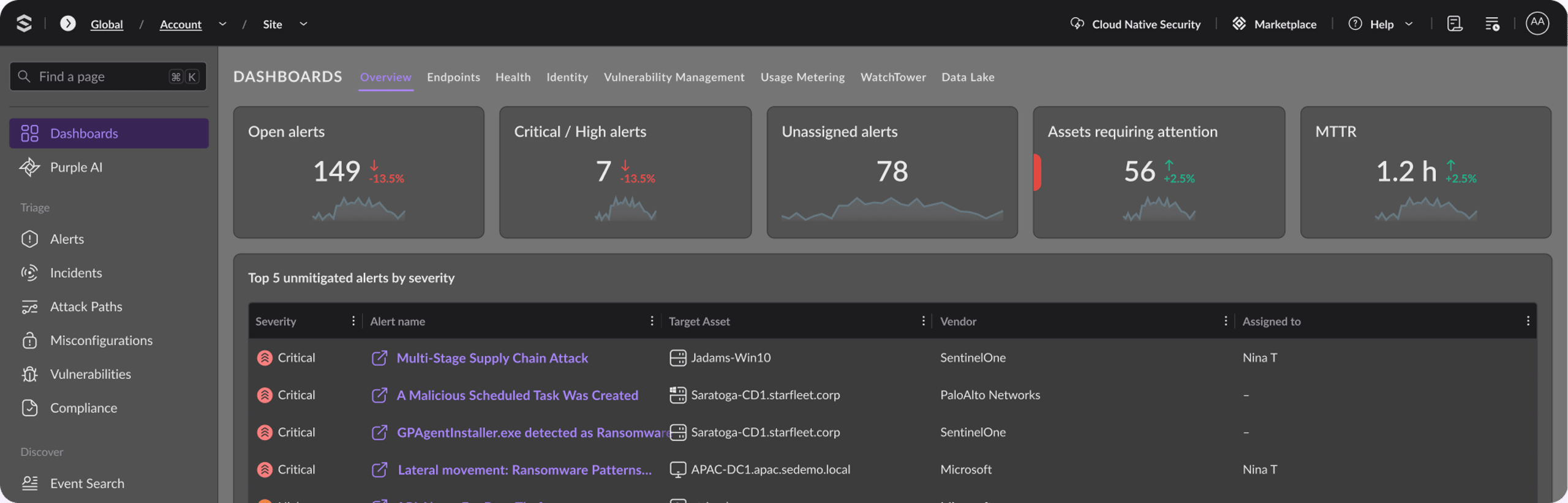
Singularity™ Platform delivers autonomous detection and response across your endpoints, cloud workloads, and identity infrastructure. In the 2024 MITRE ATT&CK Evaluations: Enterprise, SentinelOne recorded 100% detection with 88% fewer alerts than the median across all vendors evaluated, which is the difference between an alert queue your analysts can work and one they abandon. Purple AI™ accelerates the investigation itself. Analysts ask in plain language and get contextual alert summaries back, with up to 80% faster threat hunting.
Singularity Identity defends Active Directory and Entra ID against identity threats. Its detections fire on the credential attacks that target those environments directly, including the use of stolen and forged Kerberos tickets for lateral movement and privilege escalation. Storyline™ technology reconstructs the attack as it unfolds and correlates authentication events with endpoint behavior. You see the full chain, not a single alert. When a detection fires, autonomous response contains the threat, isolates the host, and reverses the damage with 1-Click rollback before ransomware completes encryption.
Request a demo from SentinelOne to see identity-based detection running in your own environment.
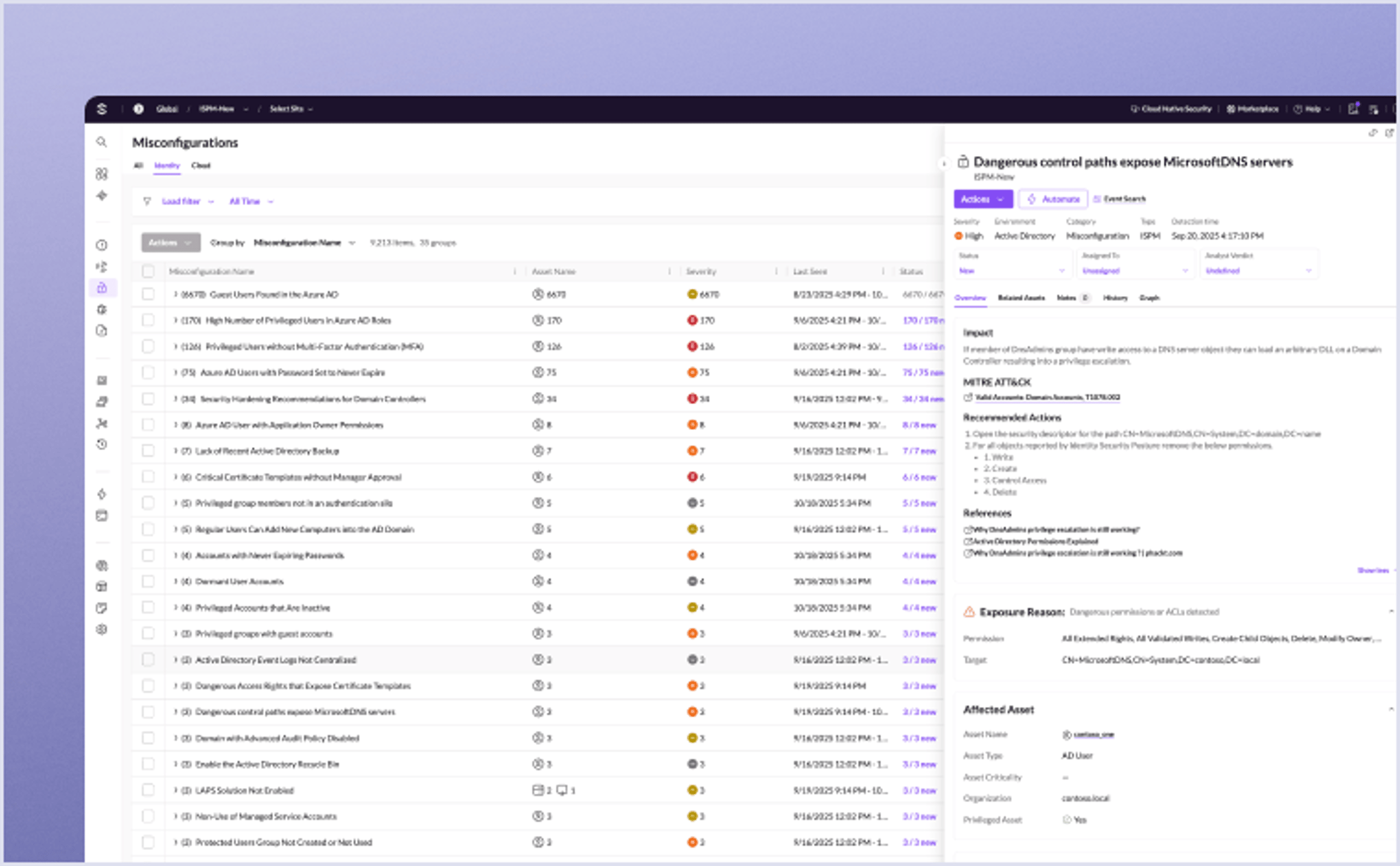
Get real-time identity protection and end-to-end visibility across hybrid environments to detect exposures, stop credential abuse, and reduce identity risk.
Key Takeaways
That Tokyo attack scenario from the opening? It happens when a stolen token bypasses authentication without ever touching a password or an MFA prompt. Misconfigured tokens create real exposure, and tokens remain essential anyway. Each type has a job: JWTs for stateless microservices, OAuth 2.0 for API authorization, SAML for enterprise SSO, and FIDO2 for phishing-resistant authentication. Every one of them becomes an attack vector when it is implemented carelessly.
The fix list is short. Store refresh tokens in HttpOnly cookies, keep access tokens in memory, validate signatures strictly, and rotate on every refresh. Most of the failures on this page are one of those left undone, plus two that are easier to defer than to build: revocation infrastructure and key management.
Add XDR and identity threat detection and response (ITDR) so a token in the wrong hands surfaces as a detection rather than an audit finding six months later. CVE-2024-54150 and the eight nation-state groups tracked in MITRE ATT&CK's October 2024 update show that token exploitation is active and current. The controls that stop it already exist, and they are yours to deploy.
FAQs
An authentication token is a cryptographic credential that verifies your identity to enterprise systems without requiring repeated transmission of your username and password. When you log into an application, the server issues a token as proof of successful authentication.
Your device presents this token with each subsequent request, allowing servers to verify your identity without a second login. Common formats include JSON Web Tokens (JWTs), OAuth 2.0 tokens, SAML assertions, and FIDO2 tokens.
Access tokens provide short-lived credentials for accessing protected resources, typically expiring within minutes per NIST recommendations. Refresh tokens enable obtaining new access tokens when current tokens expire without requiring repeated authentication, typically lasting days to weeks.
This dual-token approach balances security through short access token lifetimes with user experience. Token rotation generates a new refresh token with each use, invalidating the previous one to prevent replay attacks.
Attackers steal tokens through XSS attacks extracting tokens from localStorage, man-in-the-middle attacks intercepting transmission, memory dumping on compromised endpoints, CI/CD pipeline exploitation, and CSRF session hijacking.
Eight nation-state groups including APT28, APT29, APT41, Kimsuky, MuddyWater, OilRig, Sandworm Team, and Turla updated token attack capabilities in 2024. Protection requires HttpOnly cookies, secure transmission over HTTPS, token binding to devices, and behavioral monitoring that detects anomalous usage patterns.
Store refresh tokens in HttpOnly, Secure, SameSite cookies preventing JavaScript access and CSRF attacks. Keep short-lived access tokens in memory rather than localStorage or sessionStorage, avoiding XSS-based theft.
For mobile apps, use iOS Keychain or Android KeyStore. For server communication, use secret management systems like HashiCorp Vault or AWS Secrets Manager rather than environment variables or configuration files.
JWTs contain base64-encoded claims that anyone with token access can read. For sensitive data, use JWE (JSON Web Encryption) providing payload encryption through standards like RSA-OAEP-256 or AES-GCM.
However, better practice involves never including sensitive data in token payloads. Store only non-sensitive identifiers like user IDs and roles. Keep sensitive attributes in backend databases, retrieving them server-side using token identifiers.
Token binding cryptographically links authentication tokens to the specific device where they were issued, preventing attackers from reusing stolen tokens on different systems. The token becomes bound to the device's Trusted Platform Module (TPM) or Secure Enclave through cryptographic proofs.
When the token is presented, the server verifies both the token signature and the device binding. Microsoft Conditional Access and similar enterprise identity management solutions support token binding for high-security environments.
Discover More About Identity Security




Ready to Revolutionize Your Security Operations?
Discover how SentinelOne AI SIEM can transform your SOC into an autonomous powerhouse. Contact us today for a personalized demo and see the future of security in action.