DSPM vs. DLP: Key Data Security Differences
In this post, we'll explore what DSPM and DLP are, how they differ, and whether these two powerful tools can work together to strengthen your data security strategy.

Data protection is one of the most critical challenges modern businesses face. In an era where data breaches are increasing in frequency and sophistication, the need for robust data security solutions has never been more pressing. Two such solutions are Data Security Posture Management (DSPM) and Data Loss Prevention (DLP). While both DSPM and DLP aim to secure data, they have distinct methods and use cases.
In this post, we’ll explore what DSPM and DLP are, how they differ, and whether these two powerful tools can work together to strengthen your data security strategy.
 What is DSPM?
Data Security Posture Management (DSPM) is a relatively new approach to securing data in cloud environments. It provides real-time visibility and control over the data security risks in cloud infrastructures. At its core, DSPM identifies where sensitive data resides, who has access to it, and how it’s being used. This proactive approach helps organizations assess their security posture and mitigate risks before they escalate into full-fledged data breaches.
 Key Features of DSPM
- Data Discovery: DSPM helps organizations discover where their sensitive data resides, even in multi-cloud environments. This feature is crucial in today’s complex, cloud-driven infrastructures where data can be dispersed across different locations.
- Access Control: DSPM provides insights into who has access to sensitive data, identifying potential internal threats. By understanding access patterns, organizations can enforce stricter controls and policies.
- Risk Assessment: DSPM tools often come with automated risk assessment features. These tools constantly analyze cloud data repositories for vulnerabilities and flag any suspicious activity.
- Automated Remediation: One of the advantages of DSPM is that it can automate responses to potential risks. If a security threat is detected, DSPM tools can initiate predefined remediation protocols to neutralize the threat.
Common Use Cases for DSPM
- Cloud Security: DSPM is widely used to secure sensitive data in cloud environments. It helps organizations keep track of their data security posture, especially as they scale operations across multiple cloud service providers.
- Compliance Monitoring: With regulations like GDPR and HIPAA placing stringent data protection rules on organizations, DSPM is an invaluable tool for maintaining compliance. It provides the necessary audits and reports to show compliance officers that an organization’s data is secure.
- Real-Time Threat Detection: By continuously monitoring data and access patterns, DSPM can detect and respond to threats in real-time. It’s a proactive approach to identifying potential breaches before they cause harm.
Advantages of DSPM
- Increased Visibility: DSPM gives organizations a clear picture of their data and security posture. This enhanced visibility reduces blind spots and makes it easier to secure sensitive data.
- Proactive Security: DSPM continuously assesses and mitigates risks, allowing businesses to address vulnerabilities before they are exploited.
- Scalability: Since DSPM is designed to handle cloud environments, it can scale with your organization as your cloud usage grows.
What is DLP?
Data Loss Prevention (DLP) is a security solution designed to prevent the unauthorized transmission or exposure of sensitive data. Unlike DSPM, which focuses on identifying and managing security posture, DLP actively blocks and monitors data movement, ensuring it doesn’t end up in the wrong hands.
DLP policies typically govern how data moves through an organization and where it can be transmitted. For example, a DLP solution might prevent an employee from sending an email containing credit card numbers outside the company network.
Key Features of DLP
- Content Monitoring: DLP systems monitor both structured and unstructured data as it moves through various channels—such as email, cloud storage, or USB devices. The system checks whether the data matches predefined policies and takes action when necessary.
- Data Classification: DLP tools often classify data into different categories (like sensitive, confidential, or public) to apply appropriate levels of security controls.
- Encryption and Blocking: In cases where data transmission doesn’t align with an organization’s security policies, DLP solutions can either block or encrypt the data transmission to ensure that only authorized individuals can access it.
- Reporting and Auditing: DLP systems maintain logs of blocked attempts to transmit sensitive data. These logs are critical for auditing and compliance purposes, providing a detailed record of security incidents.
Common Use Cases for DLP
- Preventing Insider Threats: DLP is commonly used to prevent employees or contractors from leaking sensitive data, either accidentally or maliciously.
- Compliance Enforcement: For industries subject to regulations like PCI-DSS or HIPAA, DLP ensures that sensitive data such as credit card numbers or patient information is not shared improperly.
- Data Breach Mitigation: DLP tools are highly effective in preventing hackers’ exfiltration of sensitive data, whether through malware or phishing attacks.
Advantages of DLP
- Data Leakage Prevention: The primary advantage of DLP is its ability to prevent data leakage, ensuring that sensitive information doesn’t end up outside of secure environments.
- Granular Control: DLP provides granular control over how data is shared and transmitted within and outside the organization, allowing for tailored security policies.
- Compliance Support: DLP helps organizations remain compliant by preventing unauthorized data sharing, which is a key requirement in many regulatory frameworks.

CNAPP Market Guide
Get key insights on the state of the CNAPP market in this Gartner Market Guide for Cloud-Native Application Protection Platforms.
DSPM vs DLP: 10 Critical Differences
| Feature | DSPM | DLP |
|---|---|---|
| Focus | Data security posture management | Data loss prevention |
| Primary Environment | Cloud-native environments | Network, endpoints, and cloud |
| Threat Type | Proactive risk identification | Reactive data leakage prevention |
| Access Control | Monitors who can access data | Restricts where data can be shared |
| Automation | Automated threat detection and remediation | Automatic blocking or encryption |
| Compliance | Compliance monitoring and reporting | Compliance enforcement via policies |
| Use Case | Cloud security posture | Preventing unauthorized data sharing |
| Risk Visibility | Broad cloud data visibility | Focused on data transmission and sharing |
| Scalability | Designed for multi-cloud environments | Typically scales to on-prem and cloud |
| Response Mechanism | Flags risks and automates responses | Blocks, encrypts, or logs transmission |
Differences Between DSPM vs DLP
Now, there’s a lot more that separates these two approaches. Let’s explore the technological, functional, and implementation differences between DSPM and DLP.
Technological Differences
At a fundamental level, DSPM and DLP are built for different technological ecosystems. DSPM is primarily designed for cloud-native environments, where it continuously monitors the data security posture. It uses automated tools to analyze cloud repositories, offering insights into access control, risk exposure, and compliance. On the other hand, DLP is often deployed across networks, endpoints, and cloud systems to prevent unauthorized sharing or leakage of sensitive information.
 Functional Differences
The core functionality of DSPM lies in its ability to provide visibility into data security risks and posture. DSPM tools focus on understanding where data is stored and who has access, which is essential for managing risks in dynamic cloud environments. Meanwhile, DLP’s focus is on preventing unauthorized data transmission. Its policies dictate how data can move within and outside an organization, ensuring sensitive information stays within defined boundaries.
Implementation Differences
Implementing DSPM solutions typically requires integration with cloud platforms such as AWS, Azure, or Google Cloud. The implementation process revolves around analyzing cloud storage and configurations. DLP, in contrast, requires integration with various data channels—email servers, endpoint devices, cloud storage systems, and more. DLP solutions operate by setting rules that restrict or monitor the flow of sensitive data.
Comparative Analysis
#1. DSPM vs DLP: Security Aspects
Both DSPM and DLP offer critical security features but in different ways. DSPM provides a bird’s-eye view of the data landscape and helps organizations address risks in their cloud infrastructure. DLP is more granular, focusing on blocking specific actions that could lead to data leakage. A combination of both offers a comprehensive security framework.
#2. DSPM vs DLP: Cost Implications
DLP tools are often more expensive due to the infrastructure required for implementation, especially in large enterprises with diverse data channels. DSPM solutions may offer more cost-effective options, particularly for cloud-centric businesses, but can also become pricey as you scale.
#3. DSPM vs DLP: Ease of Use
Moreover, DSPM tools, especially those that automate much of the risk identification and remediation process, tend to be more user-friendly for cloud-native environments. DLP systems often require more configuration, especially as the rules for data transmission need to be manually set up and regularly updated.
#4. DSPM vs DLP: Scalability
DSPM solutions excel in multi-cloud environments, offering scalability for businesses with complex cloud infrastructures. DLP solutions, while scalable, are often more suited to environments where network endpoints and cloud services are equally important.
Choosing the Right Solution
Factors to Consider
- Business Type: If your business operates primarily in cloud environments, DSPM may be the better choice. DLP is likely a better fit if you need to protect data at the network and endpoint level.
- Compliance Needs: Businesses in highly regulated industries may benefit from the enforcement features of DLP.
- Cost: DLP solutions can be costly, especially for enterprises with complex data infrastructures.
Use Case Scenarios
- Cloud-Native Businesses: A DSPM solution will likely meet your visibility, control, and proactive risk management needs.
- Hybrid Environments: If your data is spread across cloud, network, and endpoints, DLP offers more comprehensive control over how data is transmitted.
 Industry Recommendations
Experts often recommend combining DSPM and DLP to create a well-rounded security framework. By pairing these tools, businesses can achieve real-time visibility into risks and enforce strict data transmission policies.
Case Study: Implementing SentinelOne for FinSecure
Let’s consider a case study with a fictional company called FinSecure. This mid-sized financial services firm faced increasing cyber threats as it expanded. Their outdated endpoint protection struggled with advanced malware and ransomware, leading to manual, time-consuming remediation efforts.
After evaluating several solutions, they implemented SentinelOne for its AI-driven, real-time threat detection and automated response capabilities.
Key Benefits:
- AI-Driven Detection: SentinelOne’s machine learning engine detected advanced threats, such as zero-day attacks, significantly reducing false positives and improving threat identification.
- Automated Remediation: The platform’s autonomous remediation and rollback features reduced manual intervention. After detecting a phishing attack, SentinelOne isolated the infected endpoint, neutralized the threat, and restored the system automatically.
- Scalability: SentinelOne’s cloud-native architecture is easily scaled across FinSecure’s hybrid environment, providing unified protection for on-premise and remote endpoints.
- Compliance: The solution’s detailed reporting and audit logs helped FinSecure meet strict industry compliance standards.
Overall, SentinelOne streamlined FinSecure’s security operations, reduced response times, and provided robust protection against evolving cyber threats. The platform’s automation and scalability made it a perfect fit for the growing company’s needs.
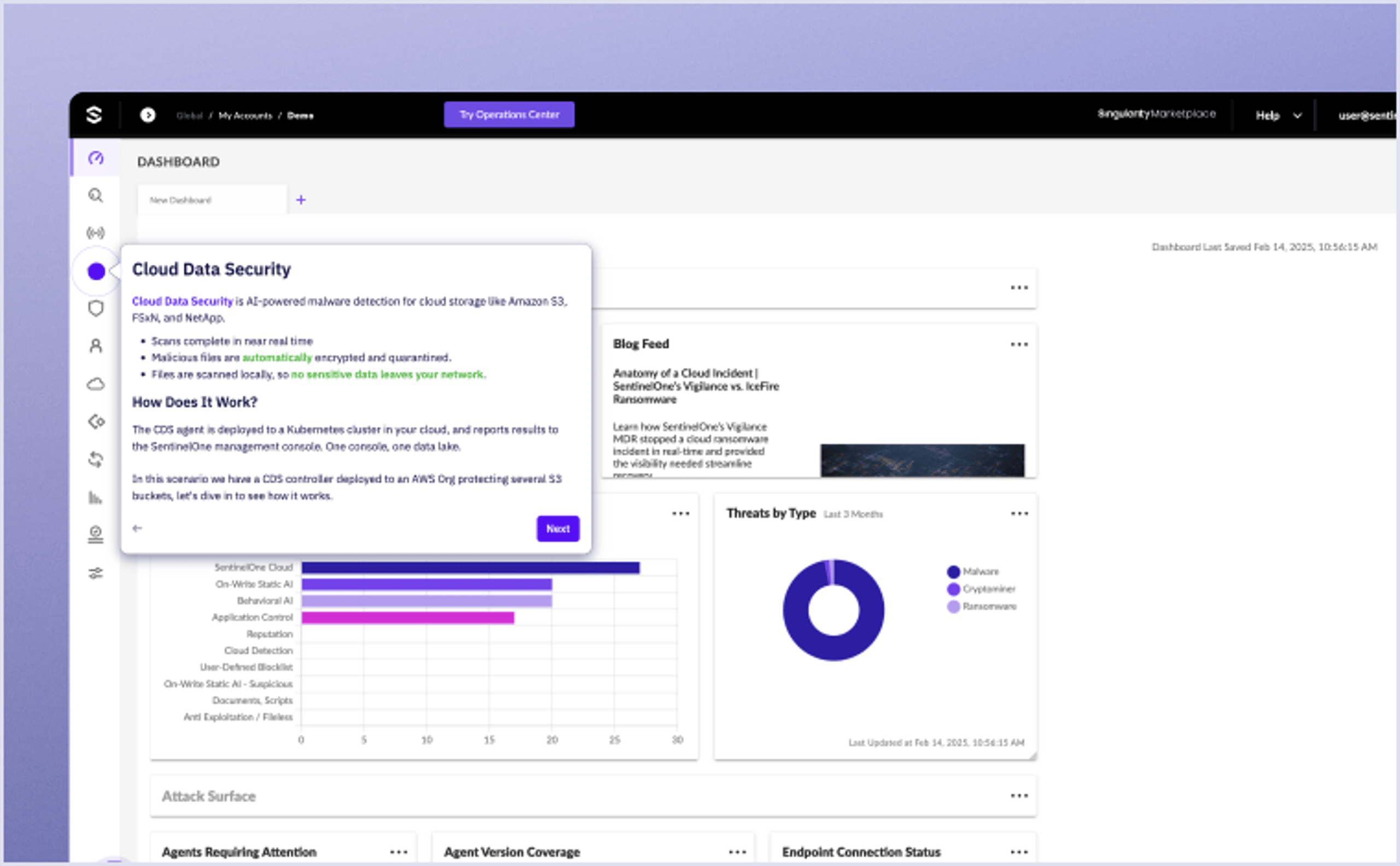
AI-powered threat detection for hybrid cloud object storage like Amazon S3 and NetApp.
In Summary
DSPM and DLP each offer unique advantages when it comes to securing sensitive data. While DSPM excels at providing visibility and proactive risk management, DLP offers robust control over data transmission. In today’s complex IT environments, leveraging both can offer a comprehensive, layered defense against data breaches. Carefully consider your business needs, compliance requirements, and infrastructure when deciding between DSPM, DLP, or both.
FAQs
DSPM focuses on assessing and managing your data security posture, particularly in cloud environments. DLP, on the other hand, prevents unauthorized data transmission and sharing.
Yes, combining DSPM and DLP can offer comprehensive data security by managing risks and preventing data leakage across cloud and network environments.
While DSPM is primarily designed for cloud-native infrastructures, some solutions can be adapted for hybrid environments that combine on-premise and cloud services.
DSPM automates compliance monitoring by continuously scanning cloud environments for regulatory requirements like GDPR and HIPAA, ensuring that sensitive data is properly protected.
Implementing DLP can be complex, especially for larger organizations with multiple data channels. However, once set up, it offers strong protection against data breaches and unauthorized data sharing.
Discover More About Cloud Security



Your Cloud Security—Fully Assessed in 30 Minutes.
Meet with a SentinelOne expert to evaluate your cloud security posture across multi-cloud environments, uncover cloud assets, misconfigurations, secret scanning, and prioritize risks with Verified Exploit Paths™.