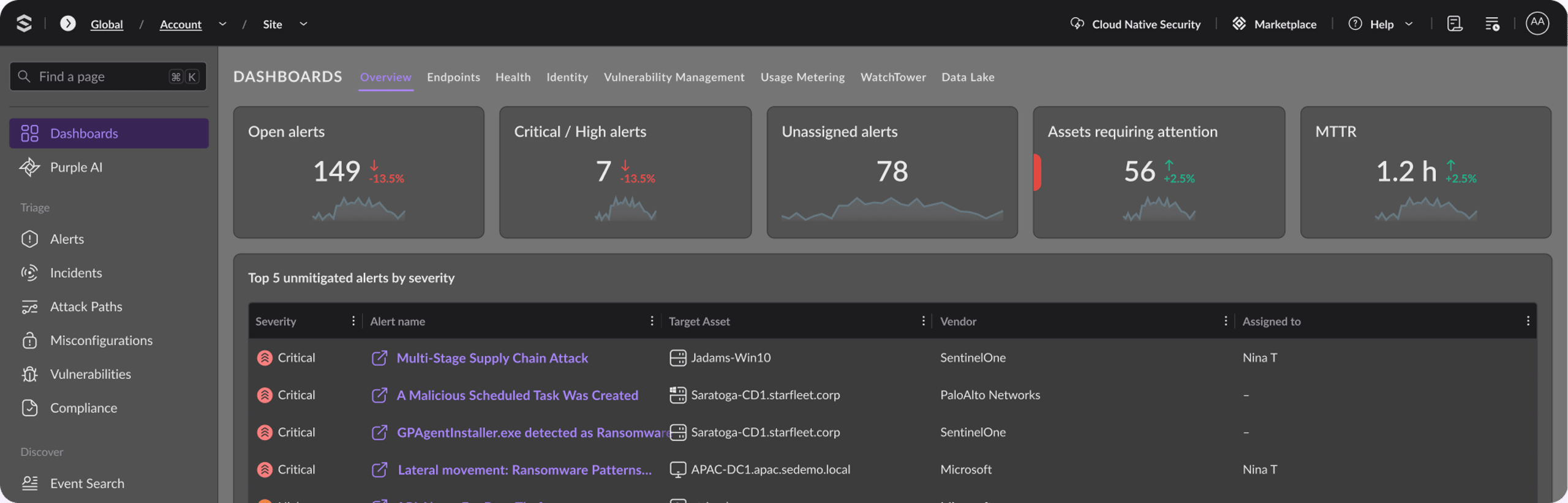
DSPM vs. CSPM: Which One to Choose?
This article explores the key differences between DSPM vs CSPM, need for Data Security Posture Management and Cloud Security Posture Management, and how to choose the right one for your organization.

In the face of growingly sophisticated threats, it is very important for businesses and organizations to enhance security postures, with the ultimate aim of protecting sensitive data and preserving operational integrity. Although there are many strategies through which a business or organization can approach this vital issue, there are two key approaches to this matter: Data Security Posture Management (DSPM) and Cloud Security Posture Management (CSPM).
Comparing DSPM vs CSPM is important, with respect to the different approaches and functionalities, and shall be put into consideration differently toward the management of security. The information in the article below will outline all the necessary nuances for the business to gain all meaningful insights needed to make important decisions on implementing either DSPM or CSPM, considering individual security needs.
The following comprehensive article defines what DSPM and CSPM are, compares CSPM vs DSPM as well as states their importance and functionality while highlighting critical differences between both solutions. We will look at when to choose which field popular use cases and go over some of the benefits of their integration towards a robust security posture.
 What is Data Security Posture Management (DSPM)?
DSPM is an automated data security posture management process for continuously monitoring and assessing the security status of an organization’s data. Then, in 2023, there were statistics indicating that businesses implementing DSPM had a 30% reduction in data breach incidents.
DSPM helps organizations identify vulnerabilities, misconfigurations, and compliance issues, ensuring that data remains secure across all environments. With DSPM, the data security landscape comes into broad view, enabling organizations to take a proactive stance against potential threats and maintain a strong and healthy security posture.
Importance of DSPM
DSPM cannot be overemphasized in importance. In the corporate sector, where data flows continuously, organizations have to ensure robust protection. DSPM helps organizations maintain the integrity, confidentiality, and availability of the data by detecting possible security breaches and mitigating them.
Hence, DSPM secures sensitive information from unauthorized access and possible breaches with a further guarantee of avoiding economic losses by protecting the reputation of the organization. Also, DSPM enables compliance with different data protection regulations, which are very important to organizations regarding avoidance of legal penalties and maintaining customer trust.
Need of DSPM
Data complexity gives birth to the need for DSPM. Cloud services, mobile devices, and remote employment are developing at an unprecedented rate, leading to data dispersal in a way that has never been seen before. Where there is dispersal, there are also many entry points for any potential threat, and this complicates the ability to maintain consistency in the security posture of an organization.
DSPM has been able to give a standardized approach to data management and security across different platforms, as well as consistency in applying security measures. By closely watching and assessing, DSPM empowers organizations to outsmart moving targets of threats and to ensure that their data security is fundamentally strong.
How does DSPM work?
It operates step by step automatically in the identification, assessment, and mitigation of the risks involved in maintaining data security. The sensitive data in the organization for security purposes is identified and classified so that security operational efforts are adequately distributed for the protection of the most critical assets. DSPM analyzes the security posture by scanning vulnerabilities and misconfigurations commonly targeted by cyber threats.
Upon the identification of potential risks, DSPM then proceeds to prioritize the severity and potential impact so that organizations remediate the most critical issues first. Finally, DSPM comes up with actionable recommendations for remediation of identified issues, hence assuring data security.
What is Cloud Security Posture Management (CSPM)?
Cloud Security Posture Management (CSPM) is the process of managing and securing an organization’s cloud environment. In 2023, organizations had 40% fewer cloud security incidents with CSPM solutions.
CSPM continues to ensure the constant check that the cloud infrastructure complies with security policies, detects any instance of misconfiguration, and sees to it that cloud resources are protected against threats. With CSPM, AWS cloud visibility allows organizations to take a proactive approach to addressing potential security risks while maintaining a strong cloud security posture.
Why is CSPM important?
CSPM becomes a critical necessity for any organization using cloud services. Cloud systems are more dynamic in nature; they are prone to misconfigurations and vulnerabilities, which can be exploited to breed security incidents and data breaches. CSPM ensures that cloud resources are continually monitored and secured to reduce the incidence of security events and non-compliance.
CSPM allows an organization to protect its cloud environments and maintain operational integrity through the continued visibility of its cloud configurations and the enforcement of security policies.
Need for CSPM
The need for CSPM is driven by increasing cloud service adoptions. In this effort towards the use of cloud services, an organization should ensure security in its cloud environment, particularly sensitive data, and that observed security standards are enforced.
CSPM ensures clear visibility and control over what will be needed to provide security for the cloud and to identify any potential risk, with consistent security policy enforcement over all resources in the cloud.
CSPM helps an organization maintain a robust cloud security posture by addressing the particular security challenges that come with clouds.
How does CSPM Work?
A CSPM solution scans cloud configurations for any security and compliance issues. It does a vulnerability assessment by scanning cloud configurations, and thereafter, it identifies misconfigurations that can potentially expose these organizations to cyber threats and vulnerabilities within the configurations. CSPM assesses the compliance of the security policies and standards with cloud resources to meet the stipulated requirements in security, operational, and compliance.
It points out detailed reports and recommendations for remediation to keep the cloud environment secure. With perpetual monitoring and assessment, CSPM allows an organization to always stay ahead of the changing threats and remain in a good cloud security posture.

CNAPP Market Guide
Get key insights on the state of the CNAPP market in this Gartner Market Guide for Cloud-Native Application Protection Platforms.
5 Key Differences Between DSPM vs CSPM
Although DSPM vs CSPM share many similarities, several aspects differ, such as assurances, scopes, and functional availability. All of these differences are important to point out because an organization can make educated decisions on which one is better for them and their security needs. The following are five critical differences between DSPM and CSPM:
- Scope: While DSPM looks at data security in scopes on environments, on-premises, and cloud, CSPM focuses on cloud infrastructure. This distinction is key for those organizations with varied data environments that must be comprehensively covered regarding security.
- Functionality: DSPM discovers and classifies sensitive data, performs vulnerability scanning, and provides steps for remediation to secure data. CSPM performs cloud configuration monitoring, identifies misconfigurations, and checks for compliance with security policies. This is the reason for the specialized capabilities that these approaches have when detecting certain security problems.
- Implementation: DSPM can be implemented on various platforms, providing a unique method of addressing the security of data. Also designed for cloud environments, CSPM is an approach that addresses the risks of security compared to most cloud infrastructures. Each traditional setup organization must consider its setup while choosing an approach.
- Risks Addressed: It addresses the risks to data security including, unauthorized access, data breaches, and compliance violations. CSPM manages cloud-specific risks, including misconfigurations, compliance violations, and security incidents within the cloud. All these risks bring a good understanding to organizations so that decisions on security priorities can be made.
- Compliance: DSPM helps organizations comply with data protection regulations, say GDPR and CCPA, for properly securing sensitive data. CSPM ensures compliance with the standards and regulations regarding cloud security, including visibility into keeping the cloud environment secure.
Key Differences: DSPM vs CSPM
| Parameter | DSPM | CSPM |
|---|---|---|
| Scope | All environments | Cloud environments |
| Functionality | Data classification, vulnerability assessment | Cloud configuration monitoring, compliance |
| Implementation | On-premises, cloud | Cloud-specific |
| Risks Addressed | Data breaches, unauthorized access | Misconfigurations, compliance violations |
| Compliance | Data protection regulations | Cloud security standards |
| Monitoring | Continuous data security monitoring | Continuous cloud security monitoring |
| Remediation | Data security recommendations | Cloud security recommendations |
| Integration | Can integrate with other security tools | Can integrate with other cloud security tools. |
| Visibility | Data-centric visibility | Cloud-centric visibility |
| Automation | Automated data security processes | Automated cloud security processes |
When to Use CSPM vs DSPM
The exact choice between CSPM and DSPM depends on the needs of the organization and the type of data environment involved. Following are some scenarios that will help:
When to Adopt CSPM:
Security-central cloud environments call for the adoption of CSPM. It provides robust visibility for cloud configurations, misconfigurations, and compliance status regarding the security standard. Large organizations equipped with large cloud infrastructures that will comprise many novel cloud-native workloads will yearn for the feat of CSPM.
When to Adopt DSPM:
DSPM should be the platform of choice when sensitive data needs to be safeguarded across various platforms—on-premises and cloud-based—because it offers a consistent approach to working with data security. DSPM enables an organization to have a singular way of managing its data-protection mechanisms.
The same levels and types of protection will be applied universally across every channel. The benefit of having DSPM for an organization is that it provides complete data security, handling diverse environments, and safeguarding sensitive information.
Popular Use Cases for CSPM
Cloud Security Posture Management is important for businesses that rely heavily on cloud services. Some of the common use cases for CSPM are:
- Cloud Migration: Security should be preserved from the beginning to the end of the cloud migration, and the data integrity and operational continuity should be secured. CSPM allows companies to detect and fix security risks throughout the process of migration to the cloud, hence gaining the necessary visibility to protect cloud resources.
- Compliance Management: What makes compliance a crucial part is that it helps an organization stay away from legal penalties by abiding by the standards of cloud security and regulations, in turn keeping sensitive information safe. CSPM continuously monitors and assesses the configurations of the resources in the cloud and upholds the set security criteria.
- Incident Response: The ability to quickly identify and respond to security anomalies that attack cloud configurations right at their source is very crucial in order to halt potential risks before they materialize. Real-time visibility of cloud configurations for proper detection and response in case of any security incidents can be offered through the CSPM.
- Risk mitigation: One can now easily detect and remediate the risks in the configurations of a cloudy environment. Using CSPM, organizations can discover potential vulnerabilities and misconfigurations and receive actionable recommendations toward remediations.
- Continuous Monitoring: Visibility into cloud security posture should be continuous in the face of changing threats. CSPM enables continuous monitoring and assessment of cloud environments to ensure that security implementations are applied in a consistent manner so that any potential risks are controlled.
Popular Use Cases for DSPM
DSPM is useful for companies interested in protecting sensitive data across environments. Some of the common use cases are:
- Data protection: Ensuring sensitive information is not prone to be accessed by unauthorized entities, and breaches remain the key impetus to data integrity and confidentiality. DSPM enables organizations to understand and mitigate potential risks that their data might face, thus making sure that sensitive information remains safe.
- Visibility combined with control and compliance: Legal penalties can be avoided, and customer trust can be retained with the guarantee of compliance by the General Data Protection Regulation. DSPM provides the visibility and control needed to manage data security effectively in the service of different kinds of regulations.
- Risk Assessment: Identifying and prioritizing data-related risks, and assessing and fixating upon vulnerabilities and misconfigurations form the basis for maintaining a sound security posture. DSPM helps organizations assess vulnerabilities and misconfigurations, providing actionable recommendations for addressing potential threats.
- Data Governance: Policies and procedures on managing the security of data are necessary implementations in maintaining the integrity of data and making the data available. DSPM presents a consistent approach toward handling data security and enforces the application of security across all platforms with great consistency.
- Incident Response: Through early detection and response to the security incident in data, effective mitigation of potential risks is brought down. DSPM provides instantaneous insight into the organization’s data security posture, allowing it to discover and respond to security incidents in data within a reasonable time frame.
Integrating DSPM with CSPM for Enhanced Security
Combining DSPM with CSPM will offer the robust posture necessary for organizations with a combination of strengths so their customers can address a very broad range of security challenges. By combining the capabilities of DSPM and CSPM, a business can ensure that resistant data and their cloud environment remain secure and maintain a strong security posture.
Conclusion
In conclusion, DSPM vs CSPM makes for good partners in hardening the security stance of an organization. DSPM covers sensitive data protection across various environments, but CSPM is going to be responsible for the security of the resources in the cloud. Businesses will have to decide on their needs and choose an approach that works best for them in terms of their security posture.
In the end, the choice between DSPM and CSPM can only be made reasonably when one is fully aware of an organization’s security requirements. Both have different benefits, and collectively, organizations will be able to have a holistic security posture in the face of varied threats.
Learn more about how SentinelOne can uniquely help your organization achieve optimal security through our advanced security solutions by visiting our website.
FAQs
The choice between DSPM or CSPM would essentially depend on the detailed security requirements of an organization. If securing the cloud environment is your primary goal, CSPM better fits the scenario. If the need is about providing general data protection on a varied platform, then DSPM is your way to go. Apply an analysis based on the security goals your organization is working toward.
Yes, DSPM and CSPM can be converged into one platform for complete security posture. This convergence will help organizations manage data and environment in the cloud effectively and securely by exploiting the best out of the two.
One cannot replace the other. They are related to each other. Where DSPM focuses on data security in all environments, CSPM focuses only on a cloud-specific environment. All these approaches are necessary to ensure a persistent security posture, and one should work far better when combined with the other.
The risks of not having CSPM or DSPM, in return, will include increased vulnerability to data breaches, unauthorized access, misconfigurations, and compliance violations. In the absence of such security, the possibility of security incidents increases—events that may lead to financial loss and a loss of reputation.
Discover More About Cloud Security


Your Cloud Security—Fully Assessed in 30 Minutes.
Meet with a SentinelOne expert to evaluate your cloud security posture across multi-cloud environments, uncover cloud assets, misconfigurations, secret scanning, and prioritize risks with Verified Exploit Paths™.