Azure Kubernetes Security: Checklist & Best Practices
Explore Azure Kubernetes security in this comprehensive guide. Learn about azure kubernetes service, best practices, challenges, and how to safeguard your cloud-native applications effectively.

Kubernetes has turned out to be a dominant environment for orchestrating containers and allows the organization to configure, scale, and manage applications in containers easily. After the cloud-native architecture has become the predominant model for business IT deployments, the protection of the Kubernetes-based environment has become critical. Azure Kubernetes Service (AKS) is a popular and highly effective solution for the management of Kubernetes clusters, however, it is required to apply security measures to protect your applications and data.
This article explores critical aspects of Azure Kubernetes security: components, associated challenges, and best practices that empower an organization to improve its security posture in Kubernetes environments. We will dig into why Azure Kubernetes Security is crucial, how Azure K8s security works and the benefits of Azure Kubernetes Service to ensure that you are equipped with a proper understanding of the key factors that come into play in delivering secure cloud deployments.
 What is Azure Kubernetes Security?
Azure Kubernetes security is a set of practices, protocols, and tools developed to guarantee the security of Kubernetes clusters on Microsoft Azure. Did you know more than 74% of enterprises use cloud technologies and services? This shift to the cloud drives the need for Azure Kubernetes Security to guarantee the safety of applications and data. These security measures in Azure Kubernetes are implemented with a network-oriented approach, access control, and continuous monitoring.
Organizations need to focus on the security of their containerized applications since vulnerabilities can give unauthorized access, causing data compromises with potentially far-reaching impacts on business operations. One should conceive this security of Azure Kubernetes as not a cluster protection exercise but a proactive ethos of the organization in the protection of digital assets.
Successful Azure Kubernetes security deployment must also remain attuned to new security awareness and best practices with a pace for all staff who carry out the administration of Kubernetes clusters. The security domain always changes, but the knowledge about new threats with mitigation strategies is the most important part of the latest changes in security.
Need for Azure Kubernetes Security
The dynamic nature of cloud-native applications and the growing attack surface in Azure Kubernetes environments call for strong security guidelines. Some important factors highlighting the need for such measures are:
- Increased Threat Landscape: When cloud adoption is on the increase, dedicated cyber threats on Kubernetes environments proliferate. Attackers expand their tactics each time, making it very essential for companies to implement proactive security measures.
- Data Protection Compliance: It’s also requisite that organizations comply with data protection regulations, including GDPR and HIPAA. Security with Azure Kubernetes is key in finding compliance with these provisions in order to avoid fines/penalties.
- Security Complexity: This increases complexities further in the likes of application management and orchestration security at several levels, such as the container, cluster, and node. All this calls for proper governance and expertise.
- Security Breaches Can Come at High Costs: A cyber-attack on a business can lead to more costs apart from the initial loss, such as costs linked to data compromise, the cost of legal action, and the company’s reputation and brand image. Investing in Azure Kubernetes security solutions is an effective way to protect an organization’s financial interests.
- Containerization on the Rise: As the adoption of containers increases, so does the potential for vulnerabilities in these isolated environments. Containers bring fully new security paradigms and apply novel best practices that should be the focus of security measures.
- Shared Responsibility Model: Security in cloud environments is considered a shared responsibility between the service provider and the organization using the service. Clearly identify areas concerning each party with adequate security.
- Microservices and Interconnected Services: Nowadays, most modern applications are required to use a number of interconnected services together with microservices, which may introduce an added layer of potential vulnerability points that need to be managed quite carefully.
How Azure K8 Security Works?
Generally, Azure Kubernetes security works with this blend of default features and specific security agglomerations to be set in place, helping guard the cluster against threats. Some of the primary features of Azure K8 security are listed below:
- Identity and Access Management (IAM): The management of user identities and the setting of roles granting access to resources is done using Kubernetes integrated with Azure Active Directory. This performs the additional security layer where access to the most critical components of the Kubernetes structure may be available only to those people who have been given permissions.
- Network Security: Virtual Networks, Network Security Groups, and Azure firewalls are important for the deployment of the network layer of security. Network segmentation considerably distances resources from unauthorized access.
- Secrets Management: Azure provides facilities like Azure Key Vault to store and nurture highly sensitive information in the most secure way. Secret management leads to decreasing the chances of inadvertent exposure of sensitive data in the Kubernetes environment.
- Security Monitoring: Continuous security monitoring is done for the Kubernetes cluster in such a way that with the use of tools like Azure Monitor and Azure Security Center, threats are discovered and reacted to in time. Automated alerts mean that the security teams can take immediate action over the anomalies that surfaced.
- Pod Security Standards: Azure Kubernetes supports enforcing pod security standards, which dictate the security functionalities that containers must adhere to. These standards help mitigate the likelihood of privilege escalation and code execution risks.
- Role-Based Access Control: RBAC policies can also be adopted and applied in Kubernetes to regulate the users’ access based on their roles and responsibilities in an organization.
- Container Runtime Security: The configuration of user permissions, namespace isolation, and resource quotas of the container runtime are of much importance in providing a secure runtime environment. It is worth noting that containers should execute in a high level of security mode without privileges that are not required in their runtime operations.
In a nutshell, security in Azure Kubernetes is an amalgamation of security mechanisms set in place to ensure safety in a cloud-native environment for the applications and data being deployed there.

CNAPP Market Guide
Get key insights on the state of the CNAPP market in this Gartner Market Guide for Cloud-Native Application Protection Platforms.
Benefits of Azure Kubernetes Service (AKS)
There are a lot of benefits that come with Azure Kubernetes Service in enhancing the security of an organization when deploying cloud-native applications. Let’s explore some of the key benefits.
- Merged Environment: AKS abstracts the complexity of managing Kubernetes. This keeps the organization free to develop its applications, while Azure ensures the security of the environment by handling security updates and patches.
- Integrative Security Features: AKS readily integrates with features in Azure related to security, such as Azure Active Directory, Azure Policy, and the Azure Security Center, that cumulatively appear as a complete security management experience. This integration solves the problem of managing security processes in the lifecycle of Kubernetes.
- Scalability and Flexibility: Being cloud-native, AKS accords an organization with the advantage of providing scaling activities securely and on demand. This flexibility accords ways for businesses to respond properly to changes in workload, ensuring security.
- Automated Upgrades and Patching: Upgrades from the AKS side are automated so that the latest security patches will be supplied automatically, helping to ensure the current version of the operating Kubernetes cluster is with the most state-of-the-art security fixes. This drastically reduces the exposure to known vulnerabilities in deployments and enhances the overall stability of deployments.
- Networking Capabilities: Azure networking solutions will easily manage the hosting of LAN and WAN traffic—aiding with mitigating potential attack vectors—through the strict imposition of severe security measures over the network. This, in turn, ensures the protection of sensitive data passed over the network.
- Compliance Support: Azure Kubernetes Service provides features that help in meeting compliance requirements for data governance as well as in implementing best practices for security so that companies can protect themselves from compliance risks, violations, and corresponding penalties.
- Monitoring: Integrated monitoring tools in Azure, like Azure Monitor, help gain in-depth insights into AKS environments, enabling organizations to detect potential security compromises at an early stage.
Having an Azure Kubernetes Service, an organization can ensure the efficiency of application deployment and even increase its security posture in the applications through advanced features and integrations around security.
Azure Kubernetes Service (AKS) Architecture and Security Challenges
While Azure Kubernetes Service has some unique advantages, its architecture, from a security perspective, presents a variety of problems that an organization will have to attend to. In this respect, it is important to consider challenges, making sure that an organization understands them when trying to implement a relevant security strategy. Among the most serious challenges are:
- Vulnerabilities of Nodes: Each node, while forming an important part of any AKS cluster, has its own set of vulnerabilities. If they are not patched from time to time, these nodes will provide an entry point for the attackers. Regular update and monitoring is needed in order to reduce this risk by making sure that the nodes are hardened and don’t become a vector for any attack.
- Container Security: Since containers are lightweight, they share the host OS kernel. An attack that affects one container could also attack other containers through that common kernel. Ensuring that the container images themselves are secure is important; the use of untrusted or outdated images carries with it immense security risk.
- Network Misconfiguration: Faulty configuration of networks may result in services being exposed without an organization’s knowledge. For this reason, a company has to be transparent and set clear network policies that will minimize traffic to avoid any unconscious unauthorized access that leads to an increase in the security stance of Kubernetes.
- Poor Access Control Management: Bad management in access control can lead to unauthorized access to sensitive resources. Access control principles, such as Role-Based Access Control, need to be applied in order to have the least privilege, which will help in limiting the attack surface area.
- Inadequate Monitoring: The inability to monitor events in real-time would make it impossible to detect and counter security breaches in good time. An elaborate monitoring environment in organizations is achieved with tools like the Azure Security Center in order to easily identify risks and react in the shortest possible time to possible threats.
- Third-Party Risks: Insecure third-party plug-ins or integrations can add new vulnerabilities. Third-party organizations should apply due diligence in choosing their own tools and take appropriate precautions for these to be built with security in mind.
- Complexity in Multi-Dimension: Complexity is one of the biggest challenges, which is multi-dimensional, that comes with Kubernetes and its ecosystem. It is for this reason that organizations must establish standard processes and adopt management tools that automate security governance throughout all clusters and environments.
Azure Kubernetes Security Best Practices
Security of Azure Kubernetes is better performed if the best practices are implemented, and the organizations want to ensure their safety for cloud-native applications. Some of the key best practices to consider will be discussed below.
- Apply Role-Based Access Control (RBAC): RBAC should be implemented to enhance security by precisely defining who can access resources and what operations they can perform within the cluster. Assign roles according to the principle of least privilege to minimize exposure and maintain a small attack surface.
- Network Policies: Establish network policies that manage the flow of traffic between pods such that communication may occur only with necessary endpoints. This enhances security at the network level. Well-configured policies will prevent unauthorized lateral movement in the case of a cluster breach.
- Log Monitoring and Audit: Continuous monitoring of access logs and activities within a cluster can identify any abnormal behavior and potential threats. For effective log management, the Azure Monitor provides the capability to set up retention policies which retain in an audit trail all events critical for security.
- Secure Container Images: Regularly scan for vulnerabilities with Azure Defender for Cloud. Use container images from trusted repositories to reduce the risks associated with vulnerabilities of the image.
- Secrets Management: Sensitive information must be stored securely using Azure Key Vault or Kubernetes Secrets. Such implementation can avoid some kinds of accidental exposure of sensitive data in case secrets are hard-coded directly into the application code.
- Update and Patch: Set up a schedule for AKS updates as well as for patching both AKS and the container images. The regular update ensures that the weaknesses are fixed before they are exploited by the hackers.
- Conduct Security Training: Implement continuous security training and awareness programs for your development and operations teams running on Kubernetes. One way to drive a security culture within an organization is to increase the knowledge of the security best practices possessed by the team.
These best practices provide a firm foundation for securing Azure Kubernetes deployments—thus if closely followed, the process allows the organization to easily mitigate the possible risk involved.
Azure Kubernetes Security Checklist
There is a well-structured checklist that provides a categorization of various security practices to ensure comprehensive Azure Kubernetes security. Here’s a streamlined version of what a comprehensive Azure Kubernetes security checklist might include:
- Access Control: Implement an access control policy in the organization, enforcing that permissions should only be accorded to those necessary for the concerned operations.
- Network Configuration: Use network policies for communication restrictions; maintain a secure network with Azure Firewall for additional protection; allow only traffic approved by this firewall to and from the cluster.
- Vulnerability Management: Conduct regular scans and patch those containing vulnerable images and nodes with known vulnerabilities. Define a process to identify and remediate vulnerabilities quickly.
- Secrets Management: Securely protect the secret inside Azure Key Vault and handle Kubernetes secrets in a way that doesn’t allow sensitive information to be disclosed in logs or passed through the environment variables.
- Logging and Monitoring: Implement logging and monitoring to, in turn, trace activities and identify potential incidents at the earliest opportunity. Use the Azure Security Center to raise issues at the earliest alert of suspicious activities.
- Baseline Security Posture: Security policies shall be reviewed periodically and updated as the findings of the industry standards and compliance requirements change, along with the threat landscape.
- Isolation of Critical Services: Proper isolation mechanisms are to be put in place for the reduction of risks and enhancement of security with critical services and sensitive workloads, respectively.
This checklist guides organizations through the process of maintaining a resilient security posture, making sure their Azure Kubernetes environments are secured against threats.
How SentinelOne Can Strengthen Azure Kubernetes Security?
Although Azure Kubernetes Service comes with many advantages, it brings forward unique security challenges that demand a more advanced protective solution. The offerings of SentinelOne Security for Cloud Workload have been architected to this particular emphasis: ensuring that organizations have what it takes to protect their cloud-native environments for breed defense. Now, let’s learn how SentinelOne can help upgrade Azure Kubernetes with its innovative features and capabilities.
Automated Threat Detection
SentinelOne’s Cloud Workload Security, powered by behavioral AI, eliminates threats in real time across Kubernetes environments. Its autonomous threat defense works from build to runtime, assuring quick identification of malicious activities within containers, virtual machines, and workloads running on Azure Kubernetes Service. This allows for the real-time detection of threats to minimize risks of breach through automated response to security incidents, averting any damage from happening.
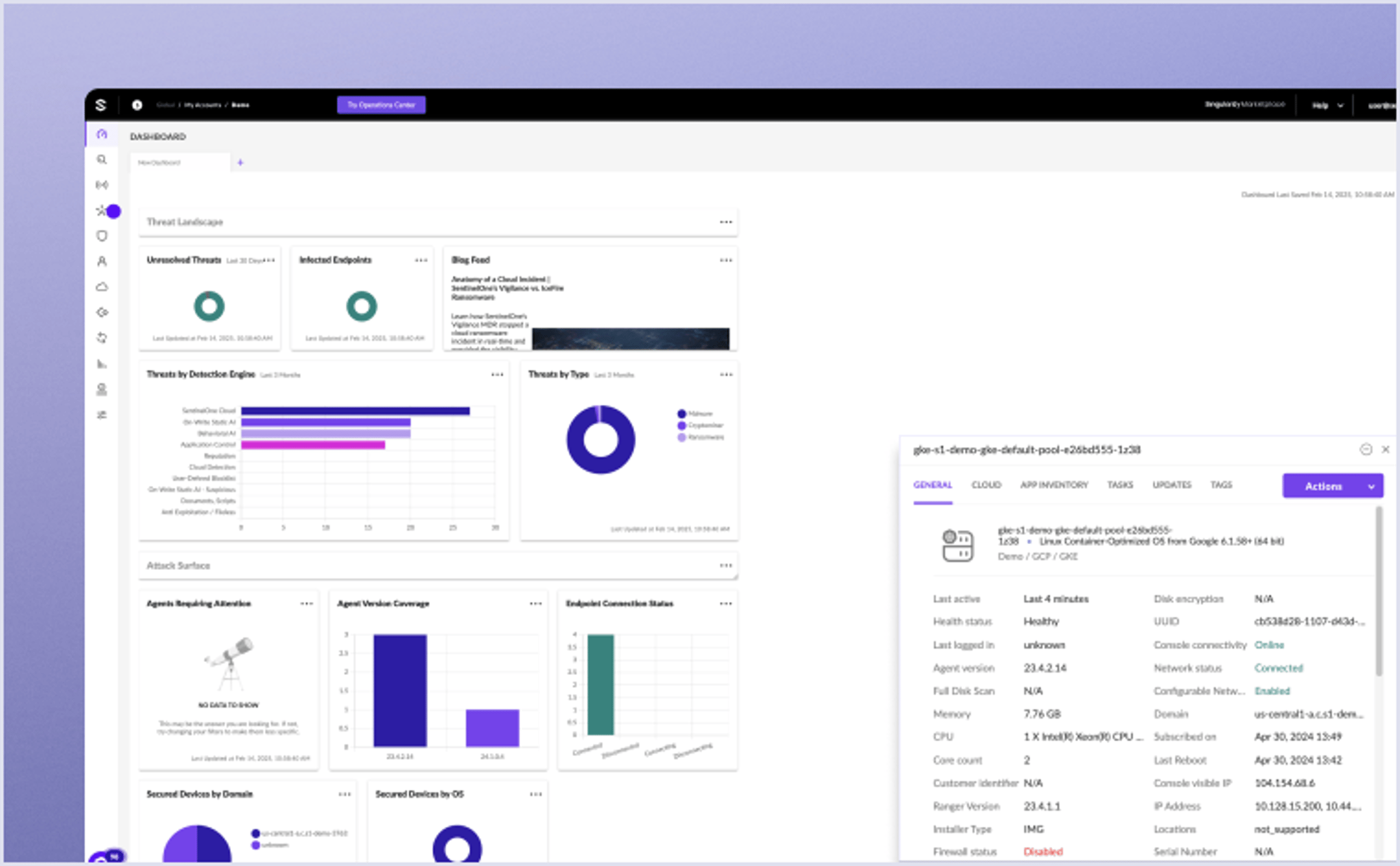
AI-powered cloud workload protection (CWPP) for servers, VMs, and containers, that detects and stops runtime threats in real time.
Container Security Posture Management
With Singularity™ Cloud Security, you can look to assess the security posture of the containers on the AKS. Continuous evaluation of Kubernetes clusters identifies vulnerabilities and compliance gaps with actionable insights into ways to enhance security configurations. This proactive stance augments better security practices and thus ensures that the containers are optimized for security and remain compliant with industry standards and regulations.
Centralized Management and Unified Visibility
The centralized management console in the platform allows security teams to view all Kubernetes environments, workloads, and the threats associated with these in just one interface. This makes the AKS security operations easier while ensuring increased visibility across the cloud infrastructure to allow faster response and more streamlined threat management.
Endpoint Security Integration
Protection of endpoints that interact with AKS is a must in ensuring the security of Kubernetes environments. Singularity™ Cloud Security secures such endpoints and prohibits unauthorized entry or lateral movement in the Azure Kubernetes infrastructure. Through this, protections to the cloud and endpoint environments are provided such that an organization will have a holistic, robust security strategy for its containerized applications.
The integration of SentinelOne will ensure that organizations obtain advanced security technologies, boost the security of Azure Kubernetes, and ensure containerized applications continue to be kept safe against evolving cyber threats.
See SentinelOne in Action
Discover how AI-powered cloud security can protect your organization in a one-on-one demo with a SentinelOne product expert.
Conclusion
In conclusion, Azure Kubernetes environments are secured by critical organizational necessities that are focused on the power of cloud-native applications. This guide has listed the several components of Azure Kubernetes security, its best practices, and the challenges of effectively securing Kubernetes deployments. As the cybersecurity landscape continues to grow into complexity, businesses should take a proactive approach to securing their digital assets.
However, well-tested best practices and the usage of solutions like the SentinelOne Singularity™ platform go a long way to improving an organization’s Azure Kubernetes security posture. This will not only secure applications within the organization but will also build trust with their customers and stakeholders in the dynamic digital world.
FAQs
To secure Azure Kubernetes, you can use Role-Based Access Control, implement network policies to block unnecessary ingress, and regularly scan container images for vulnerabilities. Ensure to manage secrets with Azure Key Vault and keep the logs under continuous monitoring.
Azure RBAC operates at the Azure resource level for access management to be done on the Azure subscription, while Kubernetes RBAC allows the assignment of permissions to human users or service accounts for their access to the Kubernetes resources described in the cluster. They complement each other to secure the Azure platform and its application layers.
Azure Kubernetes Service comes with several native capabilities such as IAM through Azure Active Directory, RBAC, monitoring and alerting through Azure Monitor, automatic upgrading of security patches for the cluster masters, and native support for network policies, which can result in control over traffic between pods and resources.
Discover More About Cloud Security



Your Cloud Security—Fully Assessed in 30 Minutes.
Meet with a SentinelOne expert to evaluate your cloud security posture across multi-cloud environments, uncover cloud assets, misconfigurations, secret scanning, and prioritize risks with Verified Exploit Paths™.