ASPM vs. CSPM: Understanding the Key Differences
Compare ASPM vs CSPM and learn how these approaches protect applications and cloud infrastructure. Discover ASPM and CPSM benefits, use cases, and integration.

ASPM and CSPM are security strategies that address two distinct aspects of digital security: application and cloud-based assets. You must understand how they contribute to your data protection, as applications and cloud environments are interconnected and often share sensitive data. As per the 2024 State of Multicloud Security Report, over 86% of organizations have adopted a multicloud security strategy. Around half of the 51,000 permission cloud identities were considered high-risk.
A common challenge organizations face is determining whether to focus on securing their applications (ASPM) or their cloud infrastructure (CSPM). Many of them experience security blind spots because they fail to fully integrate both methodologies. While both methodologies share the same objective of securing your data, they differ in scope and focus. Knowing which security strategy to prioritize or how to integrate both could determine your security’s effectiveness in preventing breaches.
Read on to compare ASPM vs CSPM and understand how each methodology addresses security challenges in their respective ecosystems. We’ll also cover real-world use cases and guide when to choose one approach over the other.
 What is Application Security Posture Management (ASPM)?
Application Security Posture Management (ASPM) refers to the modern way of assessing and improving the security level of applications throughout their lifecycle. Traditionally, application security was handled through manual code reviews, periodic security testing, and isolated vulnerability scans. According to the State of DevOps Report by Contrast Security, 99% of technologists report that applications in production have a minimum of four vulnerabilities. Manual methods often leave gaps, as they are reactive, performed at specific points in the development cycle, and lack continuous oversight.
ASPM challenges the traditional approach by offering continuous, automated monitoring, vulnerability scanning, and automated risk assessments that integrate directly into the development pipeline. These actions allow security teams to address risks at every application lifecycle stage rather than reacting after vulnerabilities are exploited.
ASPM’s Role in Assessing & Managing Application Security Risks
ASPM proactively identifies and manages application security risks. It can uncover potential vulnerabilities and security loopholes that might become part of the applications through constant scanning and monitoring performed in development and production.
This allows teams to fully assess risks and prioritize remediation actions based on issues with the highest impact. Automating much of the process with ASPM helps reduce human error and prevents security gaps, such as missed vulnerabilities and misconfigurations.
Key Features and Benefits of ASPM Tools
Gartner reports that over 40% of organizations developing proprietary applications will adopt ASPM to rapidly identify and resolve application security issues.
ASPM tools reduce application threats starting from the developmental phase to deployment by detecting vulnerabilities, providing continuous monitoring, and automatically remediating them. The following are some of the key features and benefits that make ASPM crucial to application security:
- Continuous monitoring: ASPM tools continuously monitor applications in real-time to be ready immediately to act upon any security threat arising to the system.
- Automated remediation: Most ASPM tools have built-in automation workflows to precisely remediate much more quickly, thereby shrinking the window of exposure. For example, if a newly deployed feature contains vulnerabilities, the tool should automatically roll back the deployment or installation to patch the vulnerabilities.
- Risk prioritization: ASPM tools prioritize risks to assist the organization in concentrating on what is most critical related to security. For instance, a financial application would flag a high-severity vulnerability in the payment processing module and address lower-risk matters later.
- Compliance management: ASPM tools help ensure that applications comply with industry regulations and standards to reduce non-compliance risk. For instance, an ASPM tool can continuously check that a healthcare application meets Health Insurance Portability and Accountability Act (HIPAA) requirements by generating compliance reports and highlighting any areas for improvement.
- Integration with DevOps: ASPM tools integrate with the DevOps pipeline to inject security into development time. For example, when the ASPM tool is integrated with continuous integration/continuous deployment (CI/CD), automatic scanning of code for vulnerabilities before deployment will be initiated.
What is Cloud Security Posture Management (CSPM)?
Cloud Security Posture Management (CSPM) refers to a category of security tools and processes designed to manage and improve the security of cloud environments. As organizations continue to migrate their operations to the cloud, they face a range of security challenges including misconfigurations, which are one of the leading causes of cloud security breaches.
For instance, publicly exposed databases, weak access controls, and misconfigured storage buckets are common vulnerabilities that attackers can easily exploit. These security gaps often go unnoticed in cloud environments without proactive monitoring.
CSPM solutions ensure that cloud environments adhere to best practices, comply with industry standards, and are free from misconfigurations that could expose sensitive data to threats.
Role in Assessing & Managing Cloud Security Risks
An IBM report states that 40% of data breaches involve data stored across multiple environments, such as on-premises, public, and private clouds. This practice can create vulnerabilities, such as the risk of misconfigurations, insecure access controls, and compliance challenges.
It is common for cloud security failures to occur by misconfigured cloud settings, such as leaving databases open to the public. CSPM tools ensure that cloud resources are configured correctly so that organizations can avoid security risks and maintain compliance with industry regulations.
Key Features and Benefits of CSPM Tools
CSPM tools improve cloud security and ensure compliance with industry standards. They provide organizations with the necessary visibility and control to manage their cloud security effectively. Here are the key features and benefits they offer.
- Continuous compliance monitoring: CSPM-related tools automatically check cloud environments for configurations against predefined regulatory frameworks. This involves checking permissions, access controls, encryption settings, and storage configurations to identify any non-compliant elements. For instance, in any financial services company that uses AWS and Azure, these tools will continuously monitor to ensure that all cloud resources comply with Payment Card Industry Data Security Standard and (PCI DSS) standards.
- Misconfiguration detection: CSPM solutions are responsible for detecting and alerting users to misconfigurations that could lead to security vulnerabilities. For example, when an organization’s cloud environment has misconfigured security with open access to the database, the CSPM tool will locate this misconfiguration and alert the right teams, such as the cloud security team, IT administrators, or DevOps engineers, about the information.
- Risk assessment and prioritization: CSPM tools assess how critical the detected issues are based on the level of risk and help organizations prioritize remediation measures based on potential impact. By allowing organizations to focus on addressing the severe vulnerabilities first, CSPM tools improve operational efficiency by reducing the time and resources spent on lower-priority issues.
- Automated remediation: Most CSPM solutions allow automatic correction of misconfigurations by applying predefined security policies and automated corrective actions such as adjusting access controls or guiding security teams with recommended action. This reduces the manual workload for IT teams and ensures faster, more consistent responses to vulnerabilities
- Visibility across multi-cloud environments: It allows an organization to handle multi-cloud platform security from one interface. For instance, a global enterprise using AWS, Google Cloud, and Azure can use a CSPM tool to monitor key security elements such as access controls, encryption policies, firewall configurations, and compliance status across all platforms.
ASPM vs CSPM: Key Differences
This comparison table summarizes the key differences between ASPM and CSPM. Determine which tool best fits an organization’s security needs, whether for application-focused protection, cloud infrastructure management, or both.
| Feature/Aspect | ASPM (Application Security Posture Management) | CSPM (Cloud Security Posture Management) |
|---|---|---|
| Focus area | Application security throughout the development and deployment lifecycle. | Cloud infrastructure security, including configurations and compliance. |
| Primary Function | Identifies and mitigates vulnerabilities within applications. | Detects and remediates misconfigurations in cloud environments. |
| Integration | Seamlessly integrates with DevOps pipelines to embed security in development. | Provides visibility and control across multi-cloud environments. |
| Compliance management | Ensures applications meet industry security standards. | Ensures cloud configurations comply with regulatory requirements |
| Threat detection | Continuous monitoring for application-specific threats | Continuous monitoring for cloud-specific vulnerabilities |
| Risk prioritization | Prioritizes application vulnerabilities based on severity | Prioritizes cloud misconfigurations and risks based on potential impact |
| Automation | Automates remediation of application vulnerabilities | Automates correction of cloud misconfigurations and compliance issues |
| Best use case | Ideal for organizations focused on secure software development | Best for organizations managing complex or multi-cloud environments |
How to Choose Between ASPM vs CSPM?
ASPM is the ideal solution for protecting applications throughout the development and deployment phases. It is particularly helpful for development teams, security operations, and DevOps teams when integrating security into DevOps processes or ensuring compliance with strict application security regulations.
Meanwhile, if your top priority is securing your cloud infrastructure within multi-cloud environments, CSPM can help. CSPM excels at monitoring cloud configurations for vulnerabilities such as open ports, overly permissive access controls, and unencrypted data storage while complying with industry standards. It allows for the control and visibility necessary to maintain a secure cloud environment.
ASPM vs CSPM Use Cases
If you compare the use cases of both approaches, you can identify which tool is most appropriate for your organization and improve your security accordingly.
ASPM Use Cases:
- Application-centric environments: ASPM is crucial when an organization develops, deploys, or manages a large number of applications dealing with sensitive data. It continuously monitors applications throughout the development lifecycle by integrating static application security testing (SAST). Once the application is live, ASPM can integrate dynamic application security testing (DAST) to identify vulnerabilities early in development and ensure ongoing security.
- DevSecOps integration: ASPM works well when security needs to be integrated into the DevOps pipeline. It ensures that security is integrated into applications right from the start by including security checks during the development process. This will cut down the likelihood of any vulnerability during development.
- Regulatory compliance: ASPM tools become very important for organizations exposed to stringent regulatory requirements. These include the General Data Protection Regulation (GDPR) for data privacy and the Payment Card Industry Data Security Standard (PCI DSS) for securing payment card information. ASPM continuously monitors and generates compliance reports to confirm that the application is in compliance with industry standards and regulations.
CSPM Use Cases:
- Multi-cloud environments: CSPM is valuable for organizations managing complex, multi-cloud environments. It ensures complete visibility and control over cloud configurations so that security settings, such as access controls, encryption policies, firewall rules, and network configurations, are consistent across all cloud platforms.
- Infrastructure-centric security: If your concern is around the infrastructure that holds your applications, then CSPM has got you covered. It performs frequent scans through your cloud infrastructure for misconfiguration, vulnerabilities, and compliance.
- Compliance in cloud environments: Compliance in cloud environments is an important issue for organizations that operate under regulatory frameworks. CSPM allows the automation of compliance processes through real-time alerts and remediation steps when needed.

CNAPP Market Guide
Get key insights on the state of the CNAPP market in this Gartner Market Guide for Cloud-Native Application Protection Platforms.
Why is ASPM & CSPM Important in the Modern Landscape?
As applications grow with various functionalities and cloud services, the risk of security breaches increases. Based on the 2023 report, more than 74% of applications have at least one security vulnerability. Therefore, specialized tools like ASPM vs CSPM are used to protect applications and cloud infrastructure.
ASPM provides proactive remediation for detected vulnerabilities to ensure the application’s safety throughout development and deployment. CSPM adds continuous monitoring of cloud environments to detect misconfigurations that may lead to wider breaches.
Enhancing Security Through ASPM and CSPM Integration
The debate of ASPM vs CSPM isn’t that of “which to choose,” but when and how to use each for maximum security.
Integrating ASPM vs CSPM helps organizations create a security framework that addresses both application and cloud-level risks. This integrated strategy allows for better threat detection, prioritization, and response.
ASPM provides visibility into applications’ security status by mapping every service, database, API, and dependency. Meanwhile, CSPM gives detailed insight into cloud environments to detect misconfigurations and compliance violations.
Both ASPM and CSPM offer the capability to automate the identification and remediation of security risks. ASPM can address coding flaws during the development process, while CSPM can correct cloud misconfigurations in real-time. This automation reduces the manual workload for security teams.
Bringing both together can help organizations create a more secure yet smooth process without giving room for errors.
See SentinelOne in Action
Discover how AI-powered cloud security can protect your organization in a one-on-one demo with a SentinelOne product expert.
ASPM or CSPM or Integrated: Summing Up
When comparing ASPM vs CSPM, there are different levels of protection in both application and cloud security challenges. The decision should be based on a careful assessment of your specific needs, the complexity of your environment, and your security objectives.
ASPM suits organizations focused on application development and regulatory compliance, while CSPM is essential for those managing complex, multi-cloud environments. Together, they create a unified security posture for complete protection across applications and cloud environments.
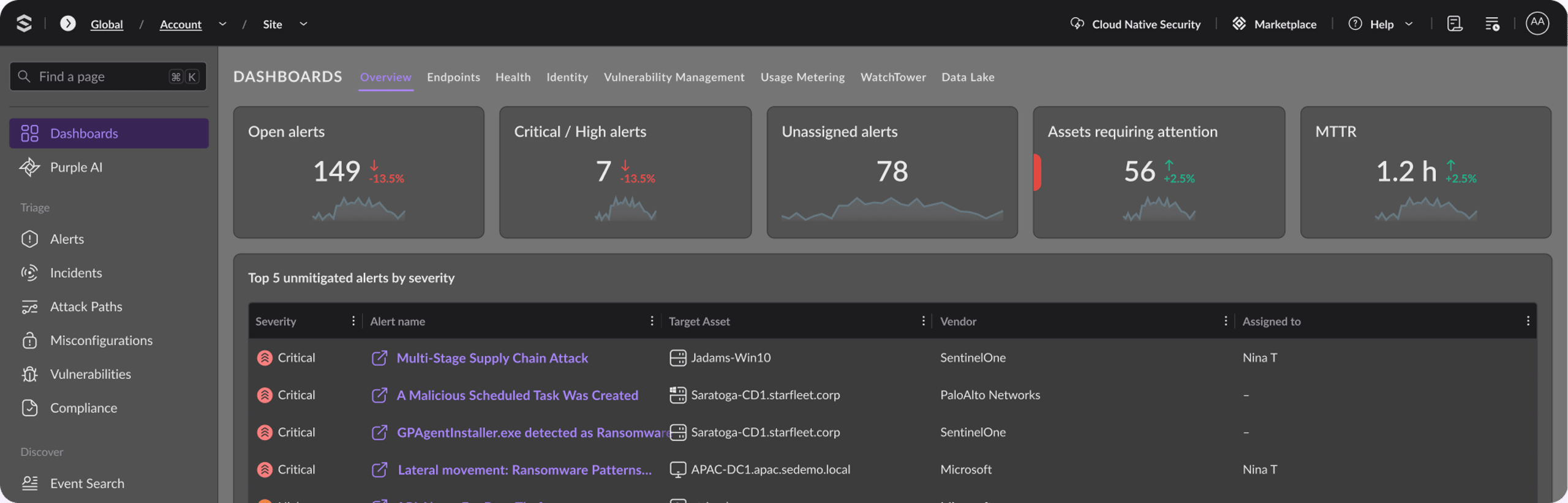
SentinelOne’s Cloud Security platform delivers a unified solution that integrates ASPM and CSPM functionalities with automated threat detection, compliance management, and seamless scalability. The Cloud-Native Application Protection Platform (CNAPP) provides comprehensive, real-time protection across your cloud infrastructure and applications.
Book a demo to see how SentinelOne protects your applications and cloud infrastructure.
FAQs
Vulnerability management is the identification, evaluation, and fixing of the security vulnerabilities in an organization. ASPM on the other hand, is focused entirely on protecting applications for their entire lifespan. They continuously scan applications to detect vulnerabilities and automatically resolve them in real time with application security.
CSPM is focused on the security of cloud infrastructure and detects/remediates misconfigurations, as well as ensures compliance. ASPM focuses on securing applications in the long run by finding vulnerabilities and fixing them automatically within your development pipeline. In other words, CSPM covers cloud environments and ASPM focuses on the security of applications.
ASPM is an essential component of today’s cybersecurity strategies for many reasons. It helps improve security and risk management with vulnerability management, allowing enterprises to identify vulnerabilities proactively for continuous assessment and prioritization. It also helps to automate security management operations, which leads to operational efficiency and cost reduction.
ASPM is a holistic framework that protects and secures an application at any given stage. Its core function is to monitor and evaluate applications for misconfigurations, compliance, etc. It also helps promote and support DevSecOps by incorporating security into the software development lifecycle, which allows for detecting and fixing the vulnerabilities early.
Static Application Security Testing (SAST) is a type of testing method that analyzes an application’s source code and examines the entire flow without executing it. On the other hand, ASPM is concentrated on securing security and safety for applications in their complete life cycle. It incorporates different security tools, such as SAST, to provide a holistic view of the security posture.
Discover More About Cloud Security



Your Cloud Security—Fully Assessed in 30 Minutes.
Meet with a SentinelOne expert to evaluate your cloud security posture across multi-cloud environments, uncover cloud assets, misconfigurations, secret scanning, and prioritize risks with Verified Exploit Paths™.