
The Good, the Bad and the Ugly in Cybersecurity - Week 48 (2026)
The Good | Police Disrupt Illegal Streaming Services & WhatsApp Patches Three Mobile Flaws
Law enforcement agencies from 11 nations partnered with Europol, INTERPOL, and others to disrupt 57 illegal IPTV streaming services this week. Across Europe, these syndicates operated 321 pirate websites drawing over 7.3 million visits annually. The effort was coordinated by Europol's Intellectual Property Crime Coordinated Coalition (IPC3), a multi-agency operation formed in 2016 to target criminal providers selling unauthorized access to premium broadcasts, films, and live sports.
European Audiovisual Anti-Piracy Alliance (AAPA) assessments estimate €4.83 billion in annual losses for legitimate European broadcasters alongside €1.08 billion in lost tax revenues. Pivoting toward disrupting these financial infrastructures, investigators collaborated with cryptocurrency analysts from Binance, Coinbase, and Chainalysis to trace digital transactions. Since then, authorities have identified key operators and followed cross-border blockchain payment trails, uncovering more than €26 million in illicit cryptocurrency transfers.
Also this week, Meta-owned WhatsApp has addressed three security vulnerabilities, including an Android defect suspected of active exploitation in targeted scam campaigns. Tracked as CVE-2026-23871, the vulnerability stemmed from incomplete validation of external ad-reply URLs within WhatsApp for Android before version 2.26.17.4. The issue allowed crafted “Click-to-WhatsApp” messages to force recipient devices to render attacker-controlled media, leaking victim IP addresses to external servers.
Developers also fixed CVE-2026-102769, an SQL injection vulnerability in Android clients. Triggered by malformed order-detail messages from unofficial clients, the flaw could delete local files and leak database information via timing side channels.
Additionally, WhatsApp patched CVE-2026-44908, a trust-validation defect in Meta AI's confidential computing infrastructure across Android, iOS, and macOS platforms. While the flaw risked hardware root-of-trust bypasses, public transparency ledger audits confirmed no exploitation occurred.
The Bad | Com-Affiliated Hackers Hijack Cloud Accounts via Vishing for Data Extortion
Threat actors affiliated with The Com cybercrime ecosystem are executing widespread voice phishing (aka vishing) campaigns to compromise corporate cloud environments and steal sensitive records to extort organizations across the globe.
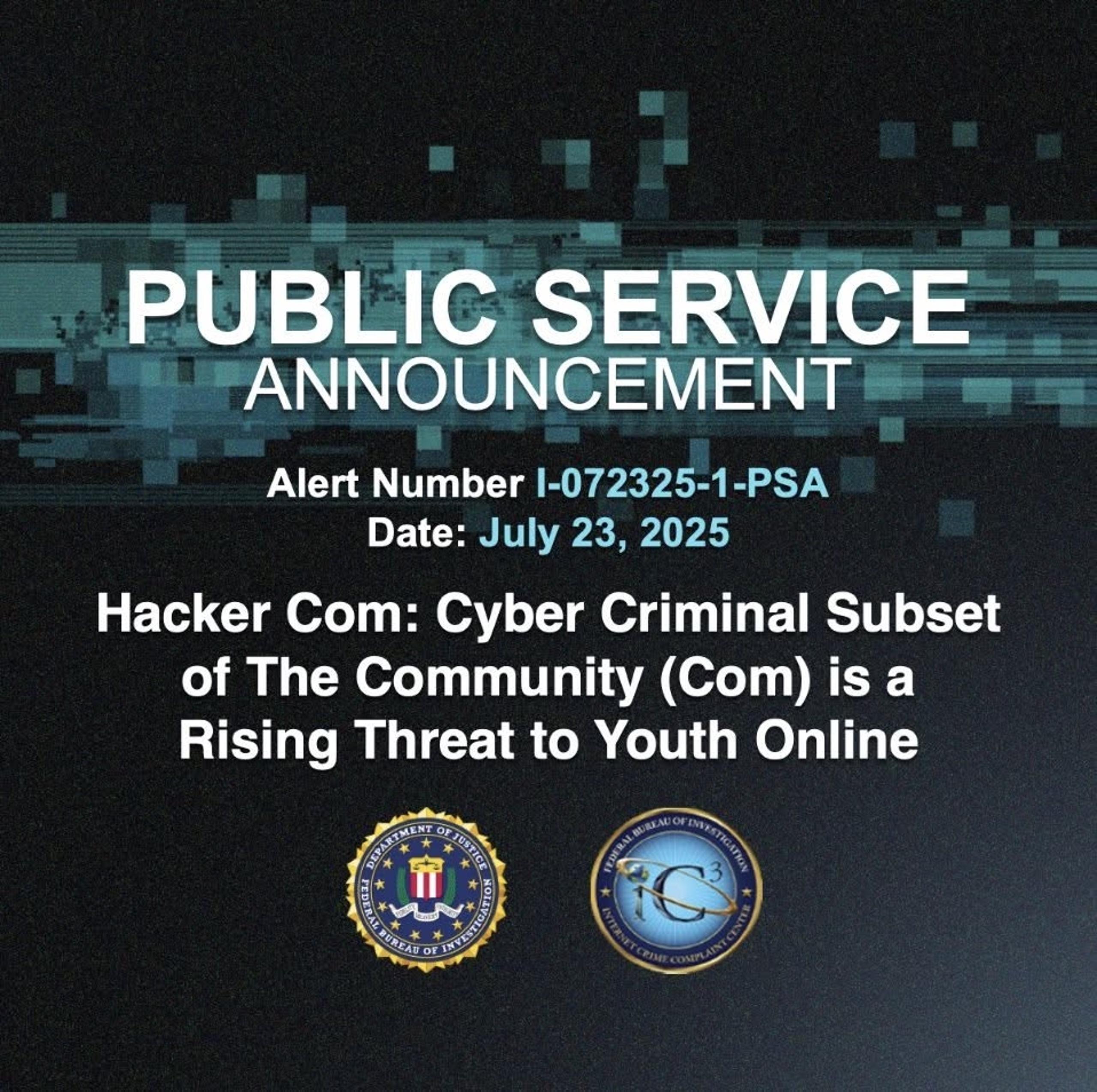
According to a new report, the intrusions have already hit financial services, healthcare, legal, and technology sectors throughout the U.S., the U.K., and Australia since August 2026. In September, researchers identified a new cluster focused specifically on healthcare, pharmaceutical, and medical organizations.
The attack lifecycle begins with vishing where operators pose as internal IT help desk technicians and contact employees on corporate workstations and personal mobile devices under the guise of resolving urgent authentication issues. Threat actors direct victims to spoofed single sign-on portals hosted on customized domains.
Backed by adversary-in-the-middle (AitM) phishing kits such as Doko's Panel, the portals act as AitM proxies that intercept login credentials, session cookies, and multi-factor authentication (MFA) approvals in real time. Underground syndicates actively support these operations through a vishing-as-a-service model, recruiting native English speakers via Telegram to conduct targeted calling campaigns.
Once inside, adversaries establish multi-layered persistence across cloud infrastructure. Attackers register unauthorized MFA devices, frequently reusing identical mobile hardware profiles across victim tenants, while provisioning temporary cloud credentials and approving rogue third-party OAuth applications. The attackers then modify mailbox forwarding rules, suppress security alert events, and route administrative traffic through residential proxies to conceal illicit actions.
Rather than deploying traditional ransomware payloads, syndicates leverage native cloud utilities, Python automation scripts, and the Microsoft Graph SDK to rapidly siphon data from SharePoint, OneDrive, and corporate mailboxes. Intruders then contact staff directly through Microsoft Teams and internal email, demanding ransom payments on Tor-hosted negotiation portals.
The Ugly | Hackers Reportedly Use ARTEX AI to Breach CIA Intelligence System
Unknown threat actors have reportedly compromised an open-source intelligence analysis system (OSINT) used by the CIA, deploying the ARTEX AI pentesting framework to breach federal systems. The cyberattack is said to have reached unclassified infrastructure across the Office of the Director of National Intelligence (ODNI) and the National Geospatial-Intelligence Agency.
Though the CIA has yet to comment on the incident, there have so far been no reports of classified information being exposed. The source that first flagged the event has said that the incident was strictly confined to unclassified environments, emphasizing that classified operations, analytical products, and mission-critical databases remained unaffected.
However, just hours after the reports on CIA intrusion, the Treasury Department's Financial Crimes Enforcement Network (FinCEN) disclosed that it was investigating unauthorized access to a limited subset of its systems.
As the nation's primary financial intelligence unit safeguarding the economy against illicit activities, FinCEN collects and analyzes suspicious activity reports and Bank Secrecy Act filings submitted by financial institutions nationwide. Post discovery of the unauthorized access, the bureau took select systems offline as a precaution, disrupting automated batch filing services, including the Secure Data Transfer Mode (SDTM) protocol commonly used by major banks.
FinCEN issued a relief order, extending filing deadlines through December 30 for covered reports originally due between November 18 and December 29. FBI, CISA, and third-party forensic examiners investigating so far note that ongoing examinations have uncovered no evidence of compromises to beneficial ownership registries or Bank Secrecy Act repositories.
These breaches follow a series of other recent cyber intrusions targeting US federal agencies, including a breach of the Office of Foreign Assets Control (OFAC) by PRC-backed actors and attacks on the FBI’s National Crime Information Center (NCIC) and its recruitment website, FBIjobs.gov.
Related Articles