Leader nel Gartner® Magic Quadrant™ 2026 per Endpoint Protection. Sei anni consecutivi.Sei anni. Gartner® Magic Quadrant™ Leader.Scopri perché
La tua azienda è stata compromessa?Blog
IniziareContattaci
Header Navigation - IT
  • Piattaforma
    Panoramica della piattaforma
    • Singularity Platform
      Benvenuti nella Sicurezza Aziendale Integrata
    • IA per la sicurezza
      Leader nelle Soluzioni di Sicurezza basate su AI
    • Sicurezza dell’IA
      Accelera l’adozione dell’IA con strumenti, applicazioni e agenti di IA sicuri.
    • Come funziona
      La Differenza di Singularity XDR
    • Marketplace di Singularity
      Integrazioni con un solo clic per sbloccare la potenza di XDR
    • Prezzi e Pacchetti
      Confronti e indicazioni in sintesi
    Data & AI
    • Purple AI
      Accelerare la SecOps con l'IA generativa
    • Singularity Hyperautomation
      Automatizzare facilmente i processi di sicurezza
    • AI-SIEM
      Il SIEM AI per il SOC autonomo
    • AI Data Pipelines
      Pipeline di dati di sicurezza per AI SIEM e ottimizzazione dei dati
    • Singularity Data Lake
      Alimentato dall'IA, unificato dal lago di dati
    • Singularity Data Lake for Log Analytics
      Ingestione dei dati da ambienti on-premise, cloud o ibridi senza soluzione di continuità
    Endpoint Security
    • Singularity Endpoint
      Prevenzione, rilevamento e risposta autonoma
    • Singularity XDR
      Protezione, rilevamento e risposta nativa e aperta
    • Singularity RemoteOps Forensics
      Orchestrare l'analisi forense su larga scala
    • Singularity Threat Intelligence
      Intelligence avversaria completa
    • Singularity Vulnerability Management
      Scoperta di risorse illecite
    • Singularity Identity
      Rilevamento e risposta alle minacce per l'identità
    Cloud Security
    • Singularity Cloud Security
      Bloccare gli attacchi con una CNAPP basata sull'IA
    • Singularity Cloud Native Security
      Proteggere il cloud e le risorse di sviluppo
    • Singularity Cloud Workload Security
      Piattaforma di protezione del carico di lavoro del cloud in tempo reale
    • Singularity Cloud Data Security
      Rilevamento delle minacce potenziato dall'intelligenza artificiale
    • Singularity Cloud Security Posture Management
      Rilevare e correggere le configurazioni errate del cloud
    Protezione dell’IA
    • Prompt Security
      Proteggere gli strumenti di IA in tutta l’azienda
  • Perché SentinelOne?
    Perché SentinelOne?
    • Perché SentinelOne?
      Cybersecurity per il futuro
    • I nostri Clienti
      Scelta dalle aziende leader nel mondo
    • Riconoscimenti dal mercato
      Testato e comprovato dagli esperti
    • Chi siamo
      Il leader del settore nella sicurezza informatica autonoma
    SentinelOne a confronto
    • Arctic Wolf
    • Broadcom
    • CrowdStrike
    • Cybereason
    • Microsoft
    • Palo Alto Networks
    • Sophos
    • Splunk
    • Trellix
    • Trend Micro
    • Wiz
    Settori Verticali
    • Energia
    • Governo Federale
    • Servizi Finanziari
    • Sanitario
    • Scuola Superiore
    • Istruzione Primaria e Secondaria
    • Manifatturiero
    • Retail
    • Settore pubblico statale e locale
  • Servizi
    Managed Services
    • Panoramica dei Managed Services
      Wayfinder Threat Detection & Response
    • Threat Hunting
      Competenza di livello mondiale e Threat Intelligence.
    • Managed Detection & Response
      MDR esperto 24/7/365 per tutto il tuo ambiente.
    • Incident Readiness & Response
      DFIR, preparazione alle violazioni & valutazioni di compromissione.
    Supporto, implementazione e igiene
    • Gestione tecnica dei clienti
      Customer Success con un servizio personalizzato
    • SentinelOne GO
      Consulenza per l'onboarding e l'implementazione
    • SentinelOne University
      Formazione live e on-demand
    • Panoramica dei Servizi
      Soluzioni complete per operazioni di sicurezza senza interruzioni
    • SentinelOne Community
      Community Login
  • Partner
    La Nostra Rete
    • Partner MSSP
      Successo più veloce con SentinelOne
    • Marketplace di Singularity
      Amplia la potenza della tecnologia SentinelOne
    • Partner specializzati nel Cyber Risk
      Ingaggiare i team per gestire le risposte agli incidenti
    • Alleanze Tecnologiche
      Soluzione aziendale integrata su larga scala
    • SentinelOne per AWS
      Ospitato nelle regioni AWS di tutto il mondo
    • Partner di canale
      Offriamo le soluzioni giuste, insieme
    • SentinelOne for Google Cloud
      Sicurezza unificata e autonoma che offre ai difensori un vantaggio su scala globale.
    Per saperne di più sul Programma→
  • Risorse
    Centro Risorse
    • Schede tecniche
    • eBook
    • Video
    • Whitepaper
    • Events
    Accedi a tutte le risorse→
    Blog
    • Riflettori puntati sulle funzionalità
    • Per CISO/CIO
    • Direttamente dalla prima linea
    • Identità
    • Cloud
    • macOS
    • Blog di SentinelOne
    Blog→
    Risorse Tecniche
    • SentinelLABS
    • Glossario del Ransomware
    • Cybersecurity 101
  • Chi siamo
    Informazioni su SentinelOne
    • Informazioni su SentinelOne
      Il leader di mercato nella sicurezza cyber
    • SentinelLABS
      Ricerche sulle minacce per il moderno Threat Hunter
    • Carriere
      Opportunità di lavoro
    • Stampa e notizie
      Annunci dell’azienda
    • Blog
      Tutto sulle minacce alla cyber security, le ultime notizie e molto altro
    • FAQ
      Ottieni risposte alle domande più frequenti
    • DataSet
      La Piattaforma dal vivo
    • S Foundation
      Garantire un futuro più sicuro per tutti
    • S Ventures
      Investire nella sicurezza e nei dati di prossima generazione
IniziareContattaci
Back to Anthology
LockBit 3.0 (LockBit Black)
Published: November 30, 2022Last updated: September 17, 2025
LockBit 2.0Lorenz

LockBit 3.0 Ransomware: In-Depth Analysis, Detection, and Mitigation

Summary of LockBit 3.0 (aka LockBit Black) Ransomware

In February 2024, an international coalition of law enforcement, led by the NCA (National Crime Agency), disrupted LockBit ransomware infrastructure and operations. LockBit’s Data Leak Sites (DLS) and victim portals have been updated, as part of Operation Cronos, to distribute data about the LockBit seizure and provide links to victim resources. Details around LockBit’s in-house exfiltration tool called “StealBit” have also been released as part of the operation.

The Cronos Task Force has made several resources available to assist potential victims of LockBit ransomware, including decryption tools. Over 30 associated servers have been seized across multiple countries including Finland, Germany, Netherlands, France, Australia, the United States, and the United Kingdom.

Those in the United States can direct related inquiries to the LockBit Victims IC3 portal here. Those in the United Kingdom are encouraged to submit inquiries to the Cyber Incident Signposting Site. LockBit decryption tools have been posted to the NoMoreRansom project portal here.
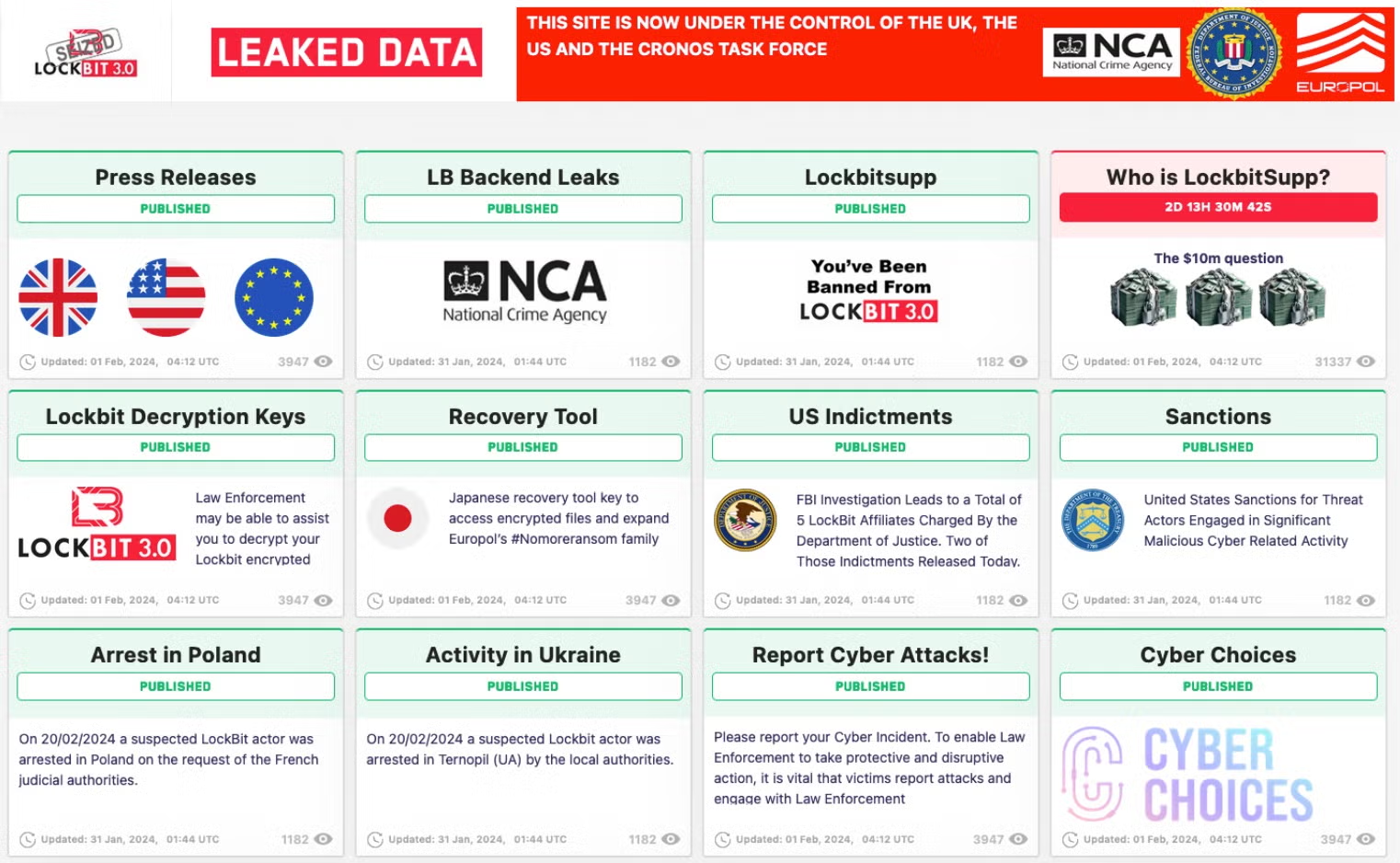
LockBit 3.0 Ransomware - Leaked Data | SentinelOne

  • LockBit 3.0 was first observed around June 2022. At this time, new infections were observed, and existing LockBit 2.0 infections were upgraded to 3.0.
  • LockBit 3.0 operators offered an open Bug Bounty during the span of their operation.
  • Primary new features (from 2.0 to 3.0) include support for Zcash, updated Management capabilities, and anti-analysis and evasion.
  • The builder tools and source for LockBit 3.0 were “leaked” in September of 2022.
LockBit 3.0 Ransomware - Featured Image | SentinelOne

What Does LockBit 3.0 Ransomware Target?

LockBit’s direct affiliates and rogues (those attacking outside the affiliate structure, or with leaked builder tools) combined have accounted for thousands of worldwide attacks, costing billions of dollars in ransom payouts and/or recovery costs. They typically target:

  • Large enterprises, high-value targets
  • Small and medium businesses (SMBs)
  • Manufacturing, technology, education, and engineering industries (heavy targeting)

How Does LockBit 3.0 Ransomware Spread?

  • Phish and spear phishing emails
  • Exposed and vulnerable applications and services
  • Third-party framework (e.g., Empire, Metasploit, Cobalt Strike)

LockBit 3.0 Ransomware Technical Details

Initial delivery of the LockBit ransomware payloads is typically handled via third-party frameworks such as Cobalt Strike. As with LockBit 2.0, we have seen infections occur down the chain from other malware components as well, such as a SocGholish infection dropping Cobalt Strike, which in turn delivers the LockBit 3 ransomware.

The payloads themselves are standard Windows PE files with strong similarities to prior generations of LockBit as well as BlackMatter ransomware families.

LockBit 3.0 achieves persistence via installation of System Services. Each execution of the payload will install multiple services. We have observed the following service names in conjunction with LockBit 3.0 ransomware payloads. On execution, the LockBit 3.0 ransomware will drop newly-formatted ransom notes along with a change to the desktop background. Interestingly, Notepad and Wordpad are included in the list of prescribed processes as noted above. Therefore, if a victim attempts to open the ransom note immediately after it is dropped, it will promptly close since the process is blocked until the ransomware completes its execution.

How to Detect LockBit 3.0 Ransomware

  • The SentinelOne Singularity XDR Platform detects and prevents malicious behaviors and artifacts associated with LockBit 3.0 ransomware.

How to Mitigate LockBit 3.0 Ransomware

  • The SentinelOne Singularity XDR Platform detects and prevents malicious behaviors and artifacts associated with LockBit 3.0.

How to Remove LockBit 3.0 Ransomware

  • SentinelOne customers are protected from LockBit 3.0 ransomware without any need to update or take action. In cases where the policy was set to Detect Only and a device became infected, remove the infection by using SentinelOne’s unique rollback capability. As the accompanying video shows,  the rollback will revert any malicious impact on the device and restore encrypted files to their original state.

Frequently Asked Questions

LockBit 3.0 is the most recent version of the LockBit ransomware, which was released in June 2022. It has an RaaS model in which the affiliates are rewarded 80% of the ransom payment. They encrypt the information with a hybrid encryption method and pledge not to leak stolen data on dark web forums.

LockBit 3.0 features AES + ECC encryption and a bug bounty for exploit submission. Unlike earlier versions, it will target ZeroLogon and PrintNightmare vulnerabilities. Ransomware now supports self-destruct mechanisms to evade detection.

LockBit 3.0 employs AES-256 encryption for files and ECC for key exchange. The public key is hardcoded into the ransomware binary. Individual keys will be used for each infection to prevent cross-system decryption.

The encrypted files get an extension of.lockbit3. The ransomware also drops a ransom note titled Restore-My-Files.txt in all directories. If you notice these extensions and notes, they will reflect LockBit 3.0 activity.

Yes. LockBit 3.0 attackers will threaten to disclose data, perform DDoS attacks, and harass clients/vendors if ransoms are unpaid. They will contact victims via Tox ID or dark web portals.

Affiliates use Cobalt Strike, AnyDesk, and PowerShell Empire to move laterally. They also use GMER or Process Hacker to kill antivirus processes. When you observe these tools, they will show pre-ransomware behavior.

IOCs also include the file icacls.exe.lockbit3, traffic to 194.36.191.131, and mutexes like “Global\\LockBit3.0.” They will also modify firewall rules to enable command-and-control communication.

Look for mass file renaming, suspicious use of Windows native binaries like vssadmin.exe, and the creation of new administrator accounts. If you have Sysmon logging turned on, it will reveal malicious process subtrees.

EDR solutions supporting ransomware rollback can prevent LockBit 3.0. Block password-protected ZIP file baits by phishing via email gateways. If you mandate MFA for RDP, they won’t be able to privilege escalate.

Disable NTLM authentication and require SMB signing. Privileged accounts should be audited weekly. If you partition Active Directory, they will have difficulty moving laterally. Train employees to identify double-extortion attacks in phishing emails.

Block the internet to avoid data exfiltration. Restore systems from offline backups. Without backups, contact law enforcement before negotiating. Pay only if decryption is feasible through the attackers’ test tool.

Anthology Prefooter | Experience the World’s Most Advanced Cybersecurity Platform

Experience the World’s Most Advanced Cybersecurity Platform

See how our intelligent, autonomous cybersecurity platform harnesses the power of data and AI to protect your organization now and into the future.

Request Demo
  • Iniziare
  • Richiedi una demo
  • Presentazione del prodotto
  • Perché SentinelOne
  • Prezzi e Pacchetti
  • Contattaci
  • Contattaci
  • Supporto
  • SentinelOne Status
  • Lingua
  • Piattaforma
  • Singularity Platform
  • Singularity Endpoint
  • Singularity Cloud
  • Singularity AI-SIEM
  • Singularity Identity
  • Singularity Marketplace
  • Purple AI
  • Servizi
  • Wayfinder TDR
  • SentinelOne GO
  • Gestione tecnica dei clienti
  • Servizi di Supporto
  • Settori Verticali
  • Energia
  • Governo Federale
  • Servizi Finanziari
  • Sanitario
  • Scuola Superiore
  • Istruzione Primaria e Secondaria
  • Manifatturiero
  • Retail
  • Settore pubblico statale e locale
  • Cybersecurity for SMB
  • Risorse
  • Blog
  • Labs
  • Video
  • Presentazione del prodotto
  • Events
  • Cybersecurity 101
  • eBooks
  • Stampa
  • Pers
  • Notizie
  • Glossario del Ransomware
  • Azienda
  • Chi siamo
  • I nostri clienti
  • Opportunità di Lavoro
  • Partner
  • Legale e conformità
  • Sicurezza e conformità
  • S Foundation
  • S Ventures

©2026 SentinelOne, Tutti i diritti riservati.

Informativa sulla privacy Condizioni di utilizzo

Italiano